
Think a hot tub has to smell like bleach to be clean? Think again. Salt water hot tubs use salt to make their own chlorine. That means softer water, less work, and fewer chemicals. In this guide, we’ll cover how salt water systems work, the pros and cons, what they cost to buy and run, and how to keep yours in great shape. By the end, you’ll know if a salt water hot tub is right for you.
What Is a Salt Water Hot Tub?
A salt water hot tub isn’t a hot tub filled with ocean water. It’s a regular hot tub with a special device called a salt chlorine generator. This generator uses electricity to turn salt into chlorine. The chlorine then cleans the water. It’s still chlorine, but it’s made on the spot from salt. That’s the big difference.
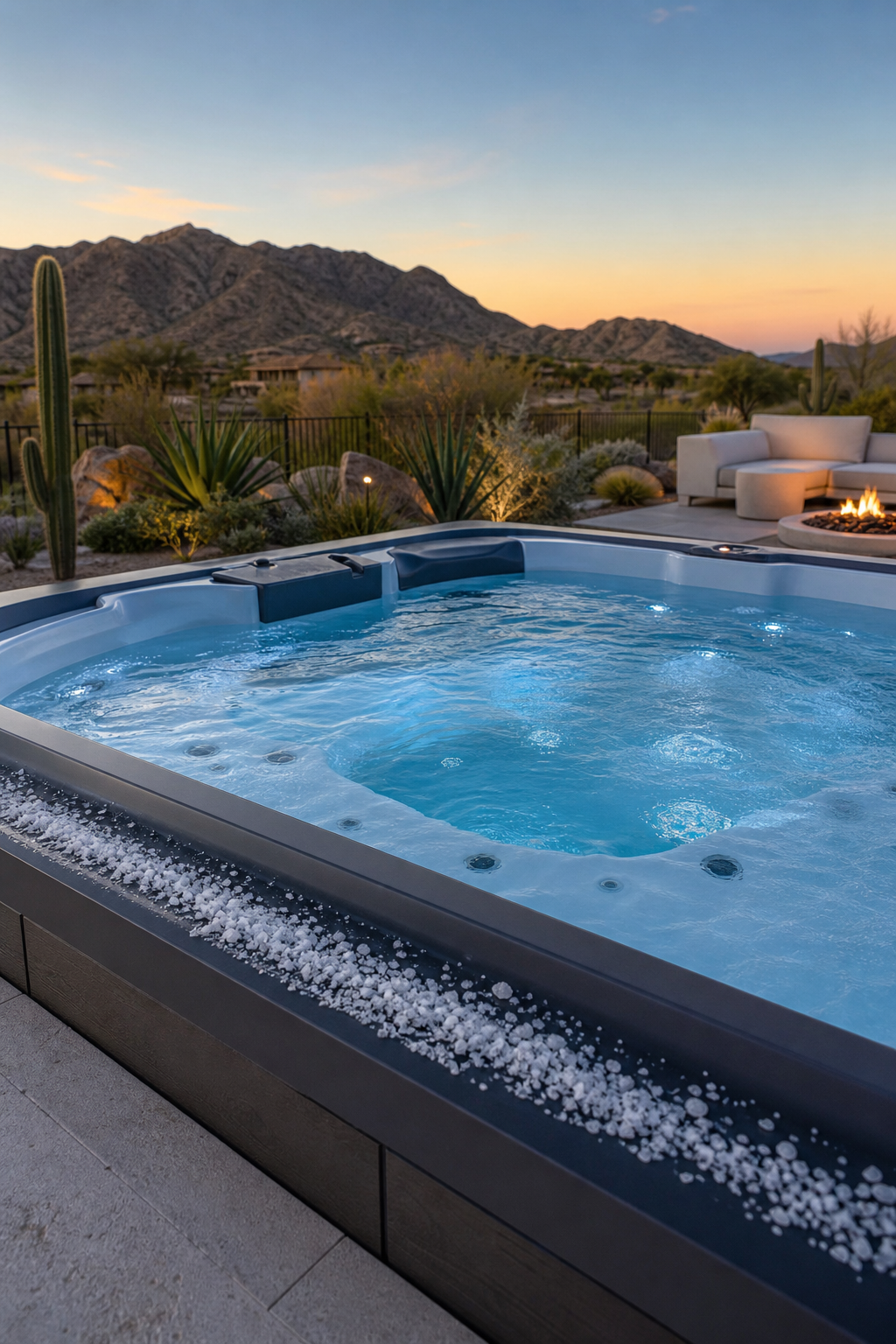
Most salt water hot tubs operate at a salinity of about 2,000 to 3,000 parts per million (ppm). That’s way less than the ocean, which is around 35,000 ppm. You can’t taste the salt. It feels silky on your skin. The system automatically produces just enough chlorine to keep the water clean. You add salt manually when you fill the tub, and the generator does the rest.
Salt water systems are not new. They’ve been used in swimming pools for years. But in hot tubs, they’re becoming more popular because hot tubs have smaller water volumes and higher temperatures. The technology has gotten better, too. Systems like the Master Clear Salt System (used in Caldera spas) can adjust chlorine output based on need. Some even let you control them from your phone.
Bottom line:A salt water hot tub uses a salt cell to create chlorine from salt, so you get clean water without handling harsh chemicals.
How Does a Salt Water System Work?
The science behind a salt water hot tub is simple. You add pool-grade salt to the water. The water runs through a salt cell, which has metal plates. When electricity passes through the plates, it breaks the salt molecules apart. This is called electrolysis. The result is chlorine, which kills bacteria and algae. Once the chlorine does its job, it turns back into salt. The cycle keeps going.
You control how much chlorine the system makes. Most salt cells have a dial or setting. If you use the hot tub a lot, you turn it up. If it’s just you soaking once a week, you keep it low. Some smart systems, like those from Caldera made by Master Spas, automatically monitor the water and adjust output. According to Wikipedia’s page on salt water chlorination, these systems are used in pools and spas to reduce the need for chemical handling.
But here’s the catch: the salt cell won’t last forever. Over time, calcium can build up on the plates. You’ll need to clean it with a mild acid solution every few months. Most cells last about one to three years, depending on how often you use the tub and how well you balance the water. Replacing a cell can cost between $100 and $400.
Bottom line:The salt cell converts salt into chlorine through electrolysis, giving you a steady supply of sanitizer with less manual work.
Benefits of Salt Water Hot Tubs vs. Traditional Chlorine
So why would you pick a salt water hot tub over a regular one? Let’s break down the main benefits.
Softer, smoother water
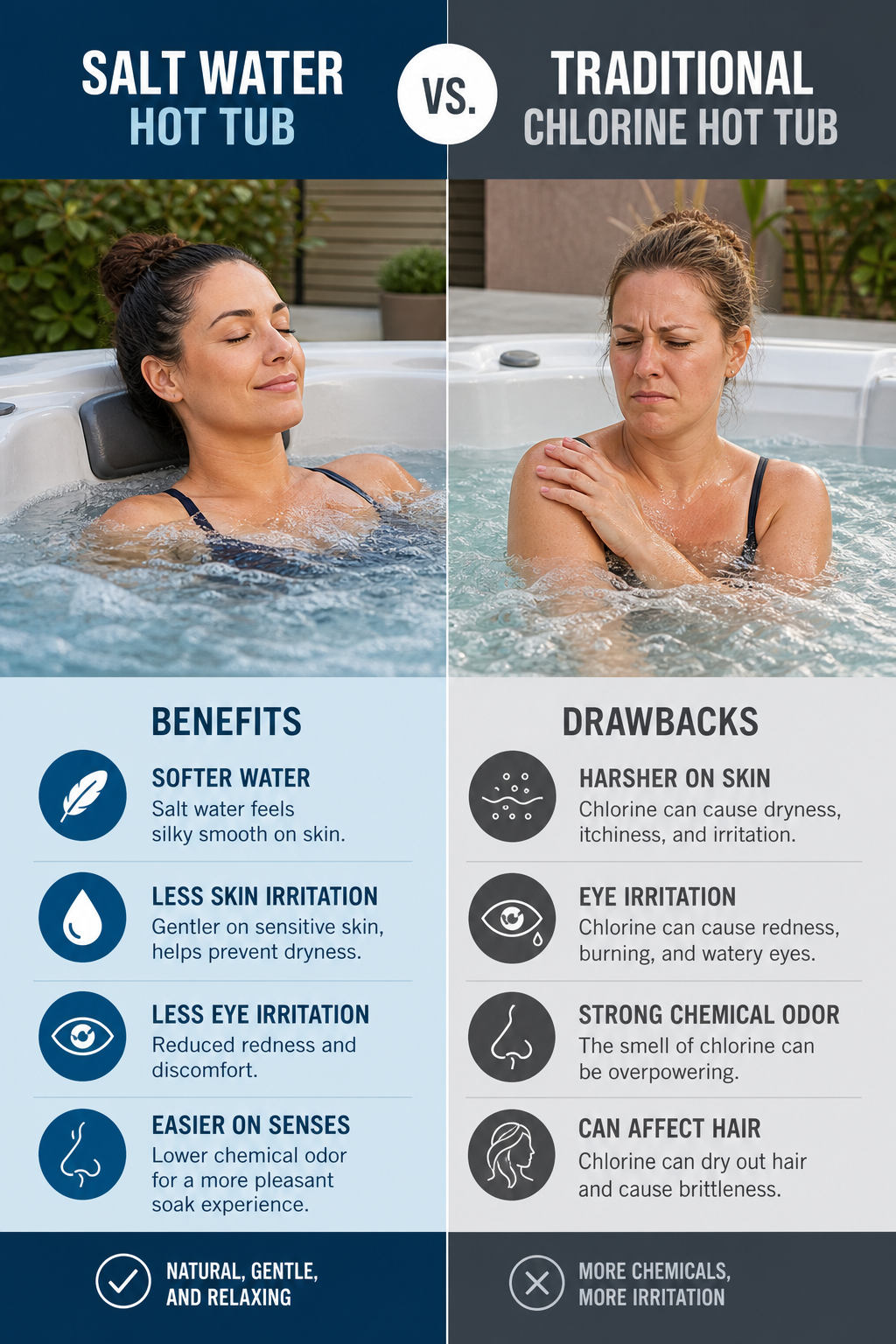
People often say salt water feels silkier. That’s because the chlorine level is more consistent and lower than a traditional tub. You’re not getting hit with high chlorine spikes right after you add chemicals. Your skin and eyes feel better.
Less harsh on skin and hair
Traditional chlorine can dry out your skin and make your hair brittle. Salt water is gentler. Many people with sensitive skin or allergies find they can soak longer without irritation.
Lower maintenance
You don’t have to buy, store, or handle chlorine tablets or granules. The system makes its own. You still need to check pH, alkalinity, and calcium hardness once a week. But you’ll spend less time fiddling with chemicals. The CDC notes that proper chlorine levels are crucial for safe water, and salt systems help maintain those levels steadily.
Fewer chemical odors
That strong “chlorine smell” comes from chloramines, which form when chlorine reacts with contaminants. Salt systems produce fewer chloramines because the chlorine is constantly being regenerated. The water smells cleaner and fresher.
Potential long-term savings
Salt costs less than bottles of chlorine. A bag of pool-grade salt is about $10, $15 and can last months. Plus, you’re not buying shock treatments as often. Over a year, you might save $200, $300 on chemicals.
| Factor | Salt Water Hot Tub | Traditional Chlorine Hot Tub |
|---|---|---|
| Water feel | Soft, silky | Can be harsh, drying |
| Chemical handling | Minimal – just add salt | Regular dosing and storage |
| Skin/eye irritation | Low | Moderate to high |
| Odor | Mild, clean | Strong chlorine smell if unbalanced |
| Upfront cost | Higher ($500–$1,500 extra) | Lower |
| Ongoing chemical cost | Low (~$50–$100/year) | Moderate (~$200–$400/year) |
| Eco-friendliness | Less waste, fewer chemicals | More chemical packaging |
Bottom line:Salt water hot tubs offer softer water, less irritation, lower maintenance, and long-term savings compared to traditional chlorine systems.
Salt Water Hot Tub Maintenance and Costs
Salt water doesn’t mean zero maintenance. You still need to keep an eye on your water chemistry. Here’s what’s involved.
Weekly checks
Test your water at least once a week. Use test strips that measure chlorine, pH, alkalinity, and calcium hardness. pH should be between 7.2 and 7.8 for most systems. For some like the Master Clear system, the ideal pH is 7.0 to 7.2. Follow your manufacturer’s guidelines.
Cleaning the salt cell
Every few months, inspect the salt cell for white calcium buildup. If you see it, you need to clean it. Turn off the power, remove the cell, and soak it in a mixture of water and white vinegar (or a commercial cell cleaner) for 15, 30 minutes. Rinse and reinstall. A clean cell works better and lasts longer.
Shocking the water
Yes, even a salt system needs to be shocked occasionally. Shock helps break down organic contaminants that the salt cell might miss. Use a non-chlorine shock (like potassium monopersulfate) once a week or after heavy use. Your water will stay clear and fresh.
Keeping calcium in check
Hard water is a problem in many areas, especially in the desert. High calcium levels can cause scaling on the cell and spa surfaces. Keep calcium hardness below 75 ppm if possible. You can use a water softener or a sequestering agent to manage it.
Costs
The upfront cost for a salt water hot tub is higher. You’re paying for the salt cell and controller. Expect to spend $500 to $1,500 more than a comparable chlorine-only model. But ongoing costs are lower. A bag of salt costs about $10 and lasts a month or two. Replacement cells run $100, $400 every 1, 3 years.
If you’re considering a Luxury Hot Tubs salt water model from Caldera, the Master Clear system operates at a very low salinity (1,200 ppm), which is gentler on equipment and reduces corrosion risk.
“The best time to start enjoying a salt water hot tub was yesterday. The second best time is now.”
Bottom line:Regular testing, occasional cell cleaning, and proper water balance keep your salt water hot tub running smoothly, with modest ongoing costs.
Frequently Asked Questions
Can I convert my existing hot tub to salt water?
Yes, if your hot tub is compatible. You can buy a drop-in salt chlorine generator kit. These usually cost $200, $500 and are easy to install. However, some older spas may have components that aren’t corrosion-resistant. Check with your dealer or manufacturer first. For most modern hot tubs, conversion is straightforward.
How much salt do I need to add?
It depends on your tub’s size and the system. A typical 300-gallon hot tub needs about 6, 7 pounds of salt to reach 1,500 ppm. Always follow the owner’s manual. Add salt slowly and let it dissolve before testing. Use only high-purity salt, not table salt.
Will salt water damage my hot tub?
Salt is slightly corrosive, but modern hot tubs are built with corrosion-resistant materials like stainless steel, titanium, and plastic. Systems like the Master Clear use low salinity (1,200 ppm) to minimize risk. Keep your chemistry balanced, and you’ll have no problems. Proper maintenance is key.
Do salt water hot tubs still need chemicals?
Yes. The salt system produces chlorine, but you still need to balance pH, alkalinity, and calcium hardness. You may also need a shock treatment. Some users add a small amount of chlorine booster during heavy use. So it’s not chemical-free, but it’s much simpler.
How often do I need to drain and refill?
Every 3, 4 months, just like a regular hot tub. Salt doesn’t evaporate, so salt levels can build up over time. Draining resets the mineral content. Follow the same schedule as you would for any spa.
What happens if the salt cell stops working?
You’ll notice the water isn’t as clear, or your test strips show low chlorine. Some systems have alerts. You can manually add chlorine until you replace the cell. Keep a bottle of granular chlorine handy as a backup. Replacing the cell is a simple DIY job.
Is a salt water hot tub worth the extra cost?
For most people, yes. The softer water, lower maintenance, and saved time offset the higher initial price. If you have sensitive skin or want a more natural experience, it’s a smart investment. Many owners say they’d never go back to traditional chlorine.
Can I use bromine instead of chlorine in a salt system?
Some salt systems can be set up for bromine, but most are designed for chlorine. If you prefer bromine (which is less harsh on skin), look for a system that supports it. Otherwise, stick with chlorine. Check your manual or ask your dealer.
Conclusion
Salt water hot tubs give you a better soak. The water feels softer. Your skin won’t dry out. You spend less time messing with chemicals. The trade-off is a higher upfront cost and the need to clean the salt cell occasionally. But for most people, the benefits win out.
If you live in the Coachella Valley and you’re thinking about a new hot tub, consider a salt water model. Places like Luxury Hot Tubs in Palm Desert carry Caldera spas with the Master Clear Salt System. They can help you choose the right size and install it properly.
Ready for a hot tub that takes care of the water so you can just relax? Contact a local dealer and ask about salt water options. Your backyard oasis is only a soak away.