
Picture this: you’ve got a small backyard, but you’re dreaming of a private spa you can step into after a long day. The good news is you don’t need a huge yard to get that experience. I’m going to walk you through the five best hot tubs for small backyards in 2026, plus share some space-saving tricks that turn even the tiniest patio into a relaxation haven. We’ll look at inflatable models, plug-and-play tubs, and built-in options. I’ll also cover privacy ideas and energy upgrades. By the end, you’ll know exactly which hot tub for small backyard fits your space and budget.
Here’s something surprising: most compact hot tubs crowd into a narrow sweet spot. They take up about 42 square feet of floor space and hold around 225 gallons of water. That means many models are nearly the same size. But there’s a blind spot , almost none of them give you desert-ready specs or energy use data. That’s why you need to look carefully before you buy.
1. Inflatable Hot Tubs: Best for Budget and Portability
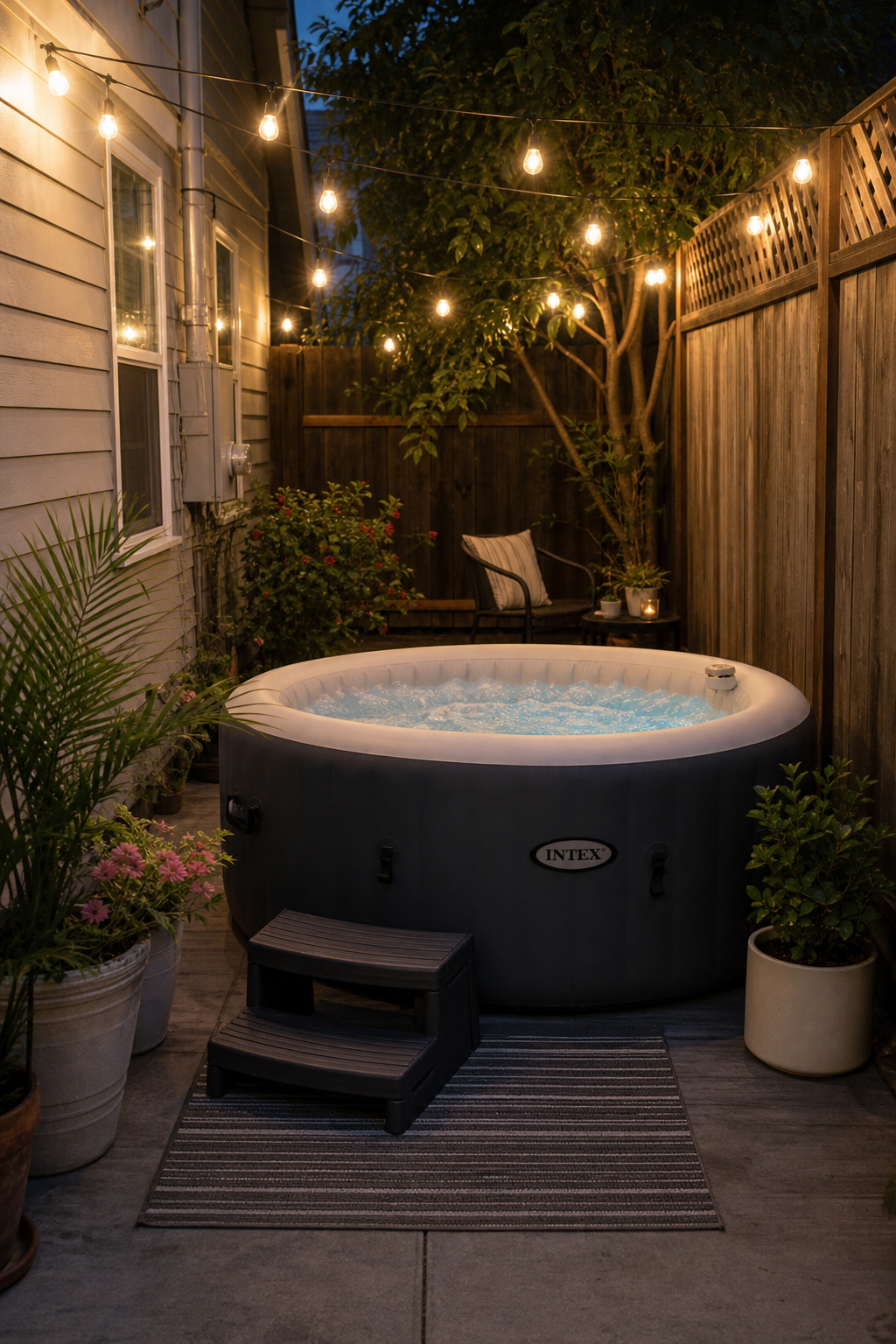
If you’re on a tight budget or you rent your home, an inflatable hot tub for small backyard might be your best bet. These tubs are affordable, portable, and surprisingly easy to set up. You don’t need any special electrical work , just plug them into a standard outlet.
One popular model is the RelxTime inflatable hot tub. It takes about 25 minutes to fill and 24 to 48 hours to heat up. The water goes up to 104°F, but in really hot weather, it can get even warmer. The floor is padded, so it feels comfortable even on pavers. And the built-in pump is inside the wall, so you don’t need extra space around it.
But inflatable hot tubs have trade-offs. They don’t last as long as hard-shell tubs. The jets are less powerful. And they won’t hold temperature as well in cold wind. Still, for under $500, it’s a great way to start.
I’ve seen a lot of people set these up on concrete patios or even on grass. Just make sure the ground is level and clear of sharp objects. And always use the included cover , it keeps heat in and cuts evaporation. One owner said they never had to top off the water for three months with the cover on.
“The best hot tub for a small backyard is the one you actually use.”
Another bonus: inflatables come with a carrying bag. You can take them camping or pack them up for winter. Just deflate, dry, and store. If you want a premium hot tub that lasts, though, you might want to skip the inflatable and look at plug-and-play models.
Bottom line: An inflatable hot tub for small backyard is cheap and portable, but it won’t give you the power or durability of a hard-shell spa.
2. Plug-and-Play Models: Easy Installation for Tight Spaces
Plug-and-play hot tubs are a step up from inflatables. They have hard shells, better jets, and better insulation. And they still plug into a standard 120-volt outlet , no electrician needed. For many people, this is the sweet spot when choosing a hot tub for small backyard.
The LifeSmart LS100 is a great example. It runs under $3,000, holds four people (though it’s snug), and heats up about 1.5 to 2 degrees per hour. It maxes out at 104°F. The light changes colors, and each seat has a different jet pattern. One owner said it added only $20-30 to his electric bill during winter in Indiana. That’s impressive.
These tubs don’t need a concrete pad. You can put them on a sturdy deck or compacted gravel. Just make sure the surface is level. Some brands like Sundance Spas offer plug-and-play versions of their popular models. They’re built with better materials than inflatables, so they last longer.
But there’s a catch: the jets on 120-volt tubs aren’t as strong as 240-volt models. And the heater can struggle in very cold weather because it’s only 1.5kW. If you live somewhere with harsh winters, you might need to upgrade to a 240-volt version. on 120 vs 240 volt hot tubs, the 240-volt models heat faster and have stronger jets.
Installation is straightforward. Set the tub on a level surface, fill it with a garden hose, and plug it in. You’ll want to use a dedicated GFCI outlet to avoid tripping breakers. Also, get a cover lift , it makes opening and closing the tub way easier, especially in cold weather.
Bottom line: A plug-and-play hot tub for small backyard offers a good balance of price and performance, with easy installation and no rewiring needed.
3. Space-Saving Built-In Tubs: Custom Fit for Your Deck
If you own your home and want something permanent, a built-in hot tub for small backyard can be a beautiful addition. These tubs are often recessed into a deck or placed on a raised platform, saving precious floor space. You can customize the surround to match your home’s style.
One popular approach is to sink the tub into the ground. That makes it flush with the surrounding surface , no stepping up. You’ll need to excavate, add drainage, and waterproof the cavity. It’s a bigger project, but the result is smooth. You can even add a stone surround for a natural look.
Another idea is to build a multi-level deck with the hot tub on its own tier. This breaks up the yard into zones: one for the tub, one for seating, one for a fire pit. It works great on sloping lots. Just make sure the deck is reinforced , a full hot tub can weigh 3,000-5,000 pounds. , you should check your deck’s load capacity before installing.
Built-in tubs are usually 240-volt, so you’ll need an electrician to run a dedicated circuit. The cost is higher , $10,000 to $15,000 including electrical , but the look is premium. Brands like Caldera Spas offer compact models that fit perfectly into small decks. We’re proud to be the Coachella Valley’s authorized Caldera Spas dealer because they’re built for desert conditions , efficient in 115° heat and resistant to hard water.
If you’re planning a deck, consider adding removable panels for access to the tub’s equipment. The service panel needs to be reachable for maintenance. Also, think about stairs , built-in tubs require steps if they’re above ground level. And don’t forget about the cover lifter; it should not interfere with the deck rails.
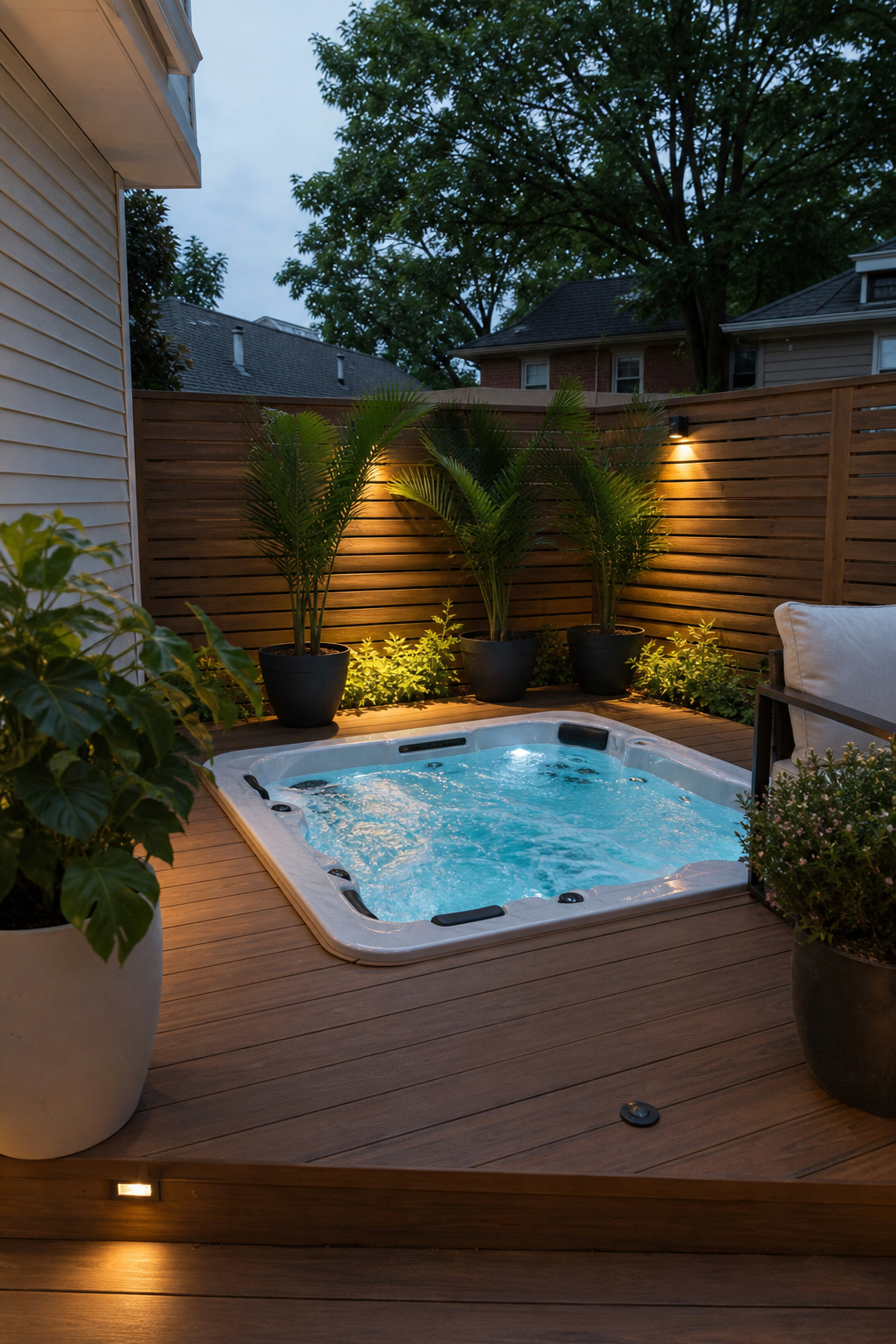
Bottom line: A built-in hot tub for small backyard offers the most smooth look and space efficiency, but requires professional installation and a higher budget.
4. Privacy and Shelter Add-Ons: Making the Most of Your Small Yard
Privacy is a big concern when your hot tub for small backyard is close to neighbors. The good news is there are many clever ways to create a private spa feel without sacrificing space.
One solution is a privacy screen. You can use horizontal wood slats, frosted glass panels, or tall planters. These block the view without closing in the space. A corner deck with a privacy fence works great in urban yards. For a modern look, try frameless glass panels , they protect from wind and prying eyes but don’t block sunlight.
Another popular option is a gazebo or pergola. A pergola gives shade and a place to hang curtains or climbing plants. The Covana automated cover and gazebo system is both a cover and a shelter. It has a privacy screen that rises from the back. You can open and close it with one hand. That’s a space-saving two-in-one solution.
Landscaping also provides natural privacy. Dense tropical foliage like bamboo, palms, and ornamental grasses create a wall of green. They absorb sound and cool the space. If you live in a dry climate, choose drought-tolerant plants. And don’t forget the lighting , string lights, path lights, and underwater LED lights make your hot tub for small backyard feel like a resort.
Here’s a quick comparison of privacy options:
If you’re thinking about a full pampering routine after your soak, you might also consider a numbing cream for waxing to make grooming pain-free before stepping in.
Bottom line: Adding privacy and shelter to your hot tub for small backyard turns it into a year-round retreat and maximizes your enjoyment of the space.
5. Energy-Efficient Upgrades: Save Space and Money
A hot tub can be a drain on your electric bill if you don’t choose wisely. But with the right upgrades, you can keep costs low while still enjoying your hot tub for small backyard.
The single most impactful upgrade is a high-quality insulated cover. Standard covers lose heat over time. A thick, multi-layer cover like a DuraTherm can cut heat loss significantly. According to a study by Spadepot, a good cover can reduce energy consumption by 20-30%. That translates to real savings on your monthly bill.
Another upgrade is a thermal blanket that floats on the water’s surface under the cover. It adds another layer of insulation and reduces evaporation. Some tubs come with them built-in, but you can buy them separately.
If you live in a hot climate, like the Coachella Valley, you might think you don’t need insulation. But even in the desert, nights get cool. Plus, a well-insulated tub keeps the heat in, so the heater runs less. That means lower electricity use. on energy costs, the biggest factor is temperature difference between water and air , so insulation matters year-round.
Energy-efficient pumps and heaters also help. Look for tubs with high-efficiency circulation pumps that use less wattage. Some models have low-wattage pumps that run 24/7 but use less electricity than a standard light bulb. Also, programmable thermostats let you lower the temperature when you’re not using the tub and heat it up right before you soak.
Placement matters too. If you put your hot tub for small backyard in a sunny spot, the sun can help heat the water during the day. In summer, that can cover all the heating needed. In winter, wind is the enemy , place the tub where it’s sheltered from prevailing winds. That can cut heat loss by a lot.
If you’re installing a built-in tub, consider a windbreak or a partial enclosure. That also adds privacy, as we discussed. And if you’re in a desert climate, having a reliable HVAC system in your home can help offset the heat from the tub. For that, Climapro Solution specializes in energy-efficient cooling equipment that can keep your home comfortable while you enjoy your spa.
Bottom line: Energy upgrades for your hot tub for small backyard pay for themselves over time and make your spa more sustainable.
Conclusion
Choosing the best hot tub for small backyard comes down to your budget, your DIY skills, and your long-term plans. If you want the lowest cost and easiest setup, go inflatable. If you want a step up in quality without an electrician, plug-and-play is the way. And if you’re ready for a permanent, custom installation, a built-in tub adds serious value to your home.
Don’t forget the extras: privacy screens, covers, and energy upgrades can make a huge difference. And always check the specs , especially if you live in a hot climate. Most compact tubs don’t provide desert-ready data, so ask your dealer for details.
Ready to find your perfect hot tub for small backyard? Get a yard consultation and let us help you pick the right model and plan the perfect setup. We serve the Coachella Valley from Palm Desert to La Quinta, and we’ll get your spa running quickly.
If you have any questions about specific models or installation, feel free to call us at (760) 874-3023. We’re here to make your small backyard feel like a luxury resort.
Frequently Asked Questions
What is the smallest hot tub for a small backyard?
The smallest hot tubs typically have a footprint around 40-43 square feet. Inflatable models like the RelxTime and compact hard-shell tubs like the LifeSmart LS100 both fit in this range. They hold about 200-245 gallons and seat 2-4 people. Always measure your space and account for the cover lifter and steps.
Do I need a concrete pad for a hot tub for small backyard?
Not always. Inflatable and plug-and-play tubs can sit on a level patio, compacted gravel, or a reinforced deck. Built-in tubs usually require a concrete pad or a deck that’s been reinforced to support the weight (3,000-5,000 lbs). Check the manufacturer’s recommendations before installation.
How much does it cost to run a hot tub for small backyard?
It varies. A plug-and-play tub in a moderate climate might add $20-30 to your electric bill in winter and less in summer. Inflatable tubs cost a bit more to heat because of poorer insulation. Energy upgrades like a thick cover can cut costs by 20-30%. Desert climates may see lower bills due to warmer ambient temperatures.
Can I put a hot tub on a deck?
Yes, but you must ensure the deck can handle the weight. A full hot tub weighs about 3,000-5,000 pounds (including water and people). Consult a structural engineer or your deck builder. Sundance Spas recommends checking load capacity before installing. Also, leave access to the service panel.
How do I get privacy for my hot tub in a small backyard?
You have many options. Privacy fences, frosted glass panels, tall planters, pergolas with curtains, and dense landscaping all work. For a high-tech solution, the Covana automated system provides both cover and privacy screen. Choose based on your budget and style.
What is the best brand of hot tub for small backyard?
There isn’t a single best brand, but Caldera Spas offers compact models built for desert conditions with energy efficiency in mind. LifeSmart and Sundance Spas also make reliable plug-and-play options. The best choice depends on your specific needs like budget, climate, and desired features.
How long does it take to heat a hot tub for small backyard?
Inflatables take 24-48 hours to heat up from cold. Plug-and-play tubs heat at about 1.5-2°F per hour, so 20-30 hours from tap water. Built-in 240V tubs can heat in 6-12 hours. To speed things up, fill with hot water from your water heater (mix with cold to avoid damage).
Do inflatable hot tubs work in winter?
Yes, but they struggle in freezing temperatures and wind. The heater runs constantly, raising the electric bill. You can only stay in for about 40-45 minutes in 0°F weather. Always keep the cover on when not in use. If you plan to winterize, drain and store indoors. Some people use them year-round with careful management.