
Hey there, DIY‑enthusiasts! If you’ve ever stared at that sleek hot‑tub and wondered what kind of electrical wizardry keeps it bubbling safely, you’re in the right spot. Let’s break down the voltage, GFCI rules, and wiring tricks you need to know before you flip that breaker on. In the scorching desert of the Coachella Valley, a single overlooked amp or missing GFCI can turn a dream soak into a costly code violation. This guide walks you through every step, from checking your tub’s specs to calling in the pros.
Step 1: Determine Your Hot Tub’s Voltage and Amperage Requirements
First things first: you gotta know what your hot tub needs. Most hot tubs run on either 120 volts or 240 volts. Small‑plug‑and‑play models use a standard 120‑V outlet, like a toaster or a lamp. Bigger tubs with multiple jets, a powerful heater, and fancy lights need 240‑V, just like your electric dryer or oven. The amperage (current) depends on the tub’s size and features. A typical 240‑V hot tub pulls between 30 and 60 amps, with 50 amps being the most common. You’ll find the exact numbers on the nameplate inside the control panel or in the owner’s manual.
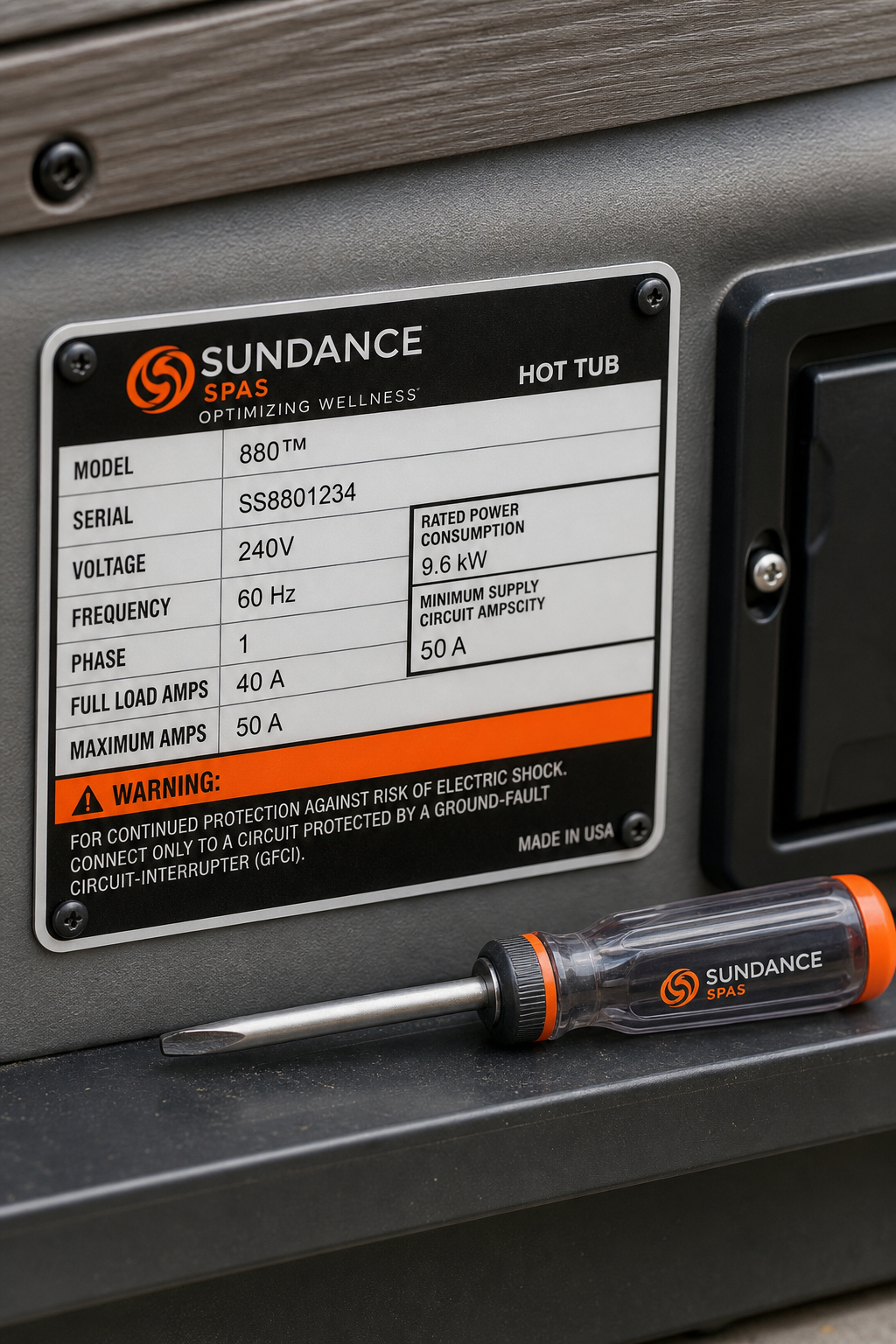
Why does this matter? Because the rest of your electrical setup—the wire size, the breaker, the GFCI—all depends on getting this number right. If you guess wrong, you could overload the circuit, trip breakers constantly, or worse, create a fire hazard. Check the manual, not the internet. Every model is different. For example, some energy‑efficient tubs like the Caldera® Utopia draw a specific amperage that you must match. According to Wikipedia’s article on the National Electrical Code, the NEC requires that the branch circuit conductor ampacity be sized at 125% of the continuous load. That means if your tub draws 40 amps, you need a circuit rated for 50 amps (40 x 1.25 = 50).
In the Coachella Valley, where summer temps hit 115°F, a 240‑V tub is the smart choice. It heats faster and recovers better between soaks. Plug‑and‑play 120‑V models may struggle to keep up in extreme heat. So if you plan to use your tub year‑round, invest in a 240‑V setup from the start.
Now that you know your numbers, let’s talk about the safety device that can save your life: the GFCI breaker.
Step 2: Install a Dedicated GFCI‑Protected Circuit
Water and electricity don’t mix. That’s why every hot tub must be installed on a dedicated circuit with Ground Fault Circuit Interrupter (GFCI) protection. A GFCI breaker monitors the current flowing through the hot and neutral wires. If even a tiny amount of current leaks to ground (like through a person in the water), the GFCI trips in milliseconds, cutting power and preventing electrocution. The NEC’s Article 680 specifically mandates GFCI protection for all spa equipment. A study from the research found that only 23% of online guides mention GFCI, yet it is the single most critical safety feature. Don’t skip it.
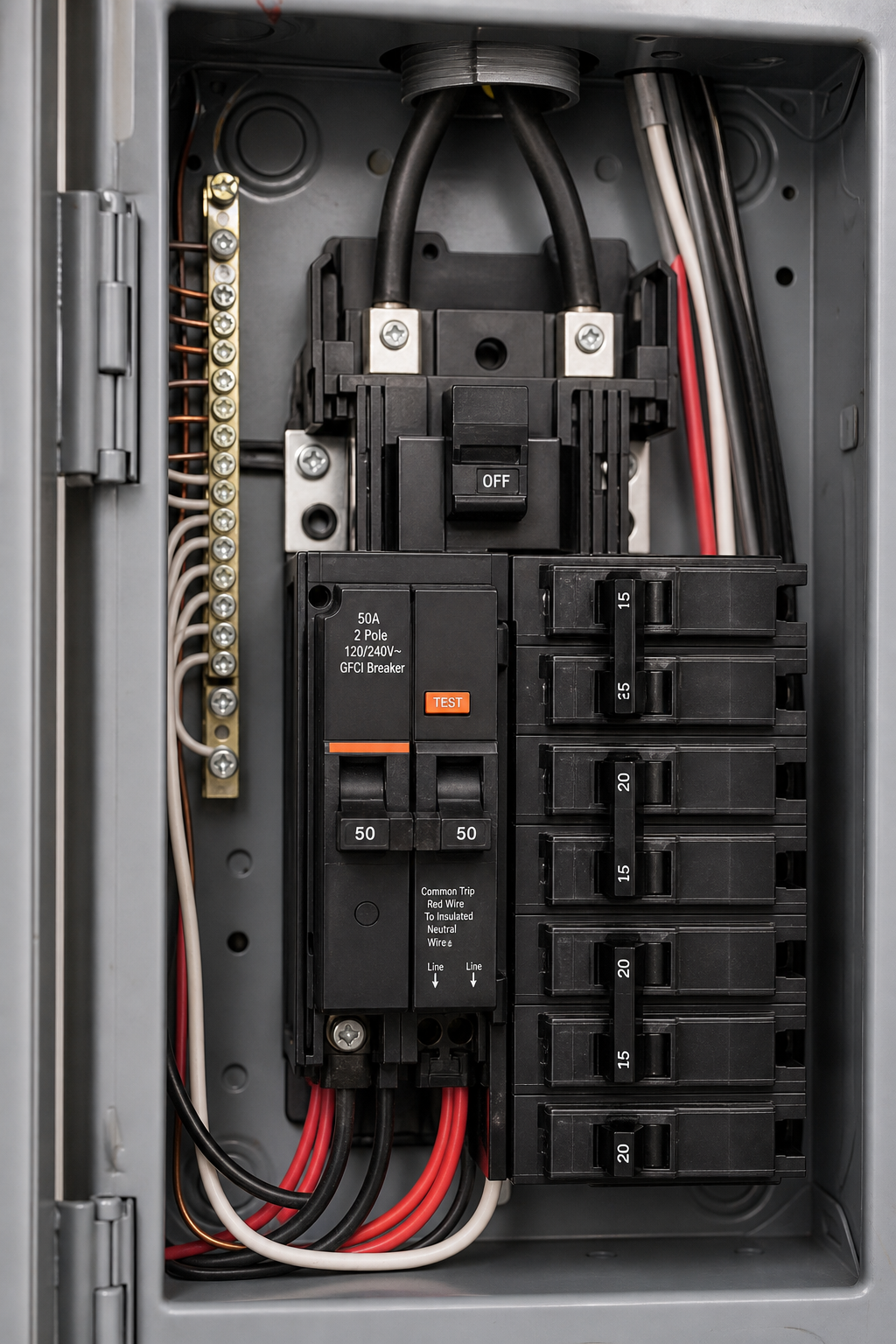
Your hot tub must have its own breaker in your main service panel. This breaker should be sized according to the tub’s amperage (usually 40 or 50 amps). Use a double‑pole breaker for 240‑V circuits. The GFCI breaker itself can be located in the main panel or in a separate spa disconnect panel outside. Many electricians prefer the spa panel because it places the GFCI closer to the tub and allows for easy disconnection for maintenance. Remember, the GFCI must be tested monthly. Simply press the “test” button—the breaker should trip and cut power. Press “reset” to restore. If it doesn’t trip, replace it.
One common mistake: running the hot tub on a shared circuit. Some folks try to plug a 120‑V tub into the same circuit as a garage outlet or patio lights. That’s dangerous. The tub’s constant current draw (especially when heating) can overheat wires and trip breakers. Always make the hot tub the only thing on that circuit. As one electrician on YouTube put it, “A dedicated circuit is non‑negotiable.”
Step 3: Run the Proper Wiring and Conduit
Now you need to get the power from your panel to the tub. Use wiring rated for wet locations: THWN‑2 or XHHW‑2 copper wire. The gauge (thickness) depends on the amperage and distance. For a 50‑amp circuit under 50 feet, #6 AWG copper is typical. For longer runs, you may need #4 or even #2 to prevent voltage drop. Aluminum wire is not recommended—it expands more with heat and can loosen connections. Run the wire inside schedule 40 PVC conduit buried at least 18 inches deep. Use sweep elbows for smooth bends, and include an expansion coupling if the climate experiences freeze thaw cycles (which you might not in the desert, but check local codes).
Start by digging a trench from your service panel to the hot tub location. Call 811 to mark underground utilities first! Lay the PVC conduit in the trench, gluing joints with PVC cement. Pull the wires through after the conduit is complete—it’s easier than fishing them later. Use a fish tape or vacuum to pull the wires. You need four wires: two hot (black and red), one neutral (white), and one ground (green or bare). For a 240‑V 4‑wire system, both hot wires carry 120‑V each, total 240‑V across them. The neutral is used for 120‑V items like lights and controls. The ground provides a safe path for fault current. Do not confuse the neutral with ground—they serve different purposes and must remain separate in the subpanel.
Connecting the wires at the spa disconnect panel requires careful attention. Tighten lugs to the manufacturer’s torque spec. Use a bonding bushing on metal conduits entering the panel. Test continuity before powering up. If you’re not comfortable with this, hire a licensed electrician.
Step 4: Install a Disconnect Panel Within Sight
The NEC requires a disconnect switch within sight of the hot tub and at least 5 feet away from the water’s edge. This allows you to kill power quickly in an emergency without running to the main panel. The disconnect can be a simple toggle switch or a spa panel with a GFCI breaker inside. It must be weatherproof and readily accessible. Mount it on a post or the side of the house, positioned so you can see it from the tub. The maximum distance is typically 50 feet—but closer is better.
When positioning the disconnect, consider the tub’s service door. You want easy access to the panel for testing and resetting. Also keep it away from sprinklers or direct spray. Use a “while‑in‑use” cover if it houses a receptacle. Mark the panel clearly as “Hot Tub Disconnect.”
The disconnect panel also serves as a convenient point for the GFCI breaker. Many spa panels come with a factory‑installed 50‑amp GFCI breaker. All you need to do is connect your incoming power from the main panel and run a second set of wires to the hot tub. Make sure the terminal screws are tight. Use a torque screwdriver per the manufacturer’s instructions.
Step 5: Bond Metal Components and Ensure Code Compliance
Bonding is different from grounding. Bonding connects all metal parts within 5 feet of the hot tub to the same electrical potential. This includes metal handrails, fences, downspouts, window frames, and even the metal shell of the spa itself. If a live wire touches any of these, bonding provides a low‑resistance path for fault current to trip the breaker or GFCI, preventing a dangerous voltage gradient that can shock you. NEC Section 680.26 requires a solid copper bonding conductor, typically #8 AWG, a minimum of #6 AWG for pools. Attach bonding lugs to each metal object using approved clamps or fasteners. Run the bond wire in a continuous loop or to a common bonding grid.
For in‑ground hot tubs, you also need a bonding grid under the concrete or deck. This is usually a #8 wire mesh or rebar tied together. Above‑ground tubs need bonding of any metal within reach. Don’t forget metal light fixtures, junction boxes, and equipment housings. If you have a metal‑framed gazebo near the tub, bond it too. Check with your local building department — they may require an inspection of the bonding system before you fill the tub.
Code compliance doesn’t stop at bonding. You also need a GFCI‑protected convenience receptacle within 6 to 20 feet of the tub. This is for pumps, radios, or maintenance tools. Use a weatherproof “while‑in‑use” cover. Also, ensure that no lighting fixtures are within 5 feet horizontally of the water, and any lighting above must be at least 12 feet high or GFCI protected. The NEC has detailed tables for clearance. If you’re unsure, an electrician can help.
Finally, don’t forget permits. Only two out of 35 online resources in our research mention permits, but they are required in most jurisdictions. A permit ensures your work is inspected and safe. California jurisdictions, including Coachella Valley, adopt the NEC. Skipping a permit can void your insurance and cause headaches when selling your home.
Step 6: Budget for Electrical Installation and Hire a Licensed Electrician
Electrical work on a hot tub is not a DIY project for most homeowners. The stakes are too high—one mistake can be fatal. A licensed electrician will pull permits, size the circuit correctly, install the GFCI, bond metal parts, and pass inspection. Cost varies by location and complexity. In 2026, expect to pay between $800 and $2,200 for a basic installation, more if a subpanel is needed or the run is long. Crane delivery for the tub might add $800–$1,500. Foundation work (concrete pad) runs $600–$3,000.
To save money, you can prepare the site yourself: dig the trench, pour the pad, and run the conduit. Then hire the electrician only for the connections. But check local codes — some jurisdictions require a licensed electrician to do everything. Always get multiple quotes. Ask for references and verify licensing. A good electrician will explain the NEC requirements and ensure your setup is safe.
Luxury Hot Tubs, the desert specialist in premium spas, offers a yard consultation that includes approval of your electrical contractor. That peace of mind is worth the investment. If you’re in Palm Desert or nearby, you can coordinate with professionals who understand desert conditions and code compliance.
Budgeting tip: include a line item for future maintenance. GFCIs can wear out. You may need to replace a breaker in five years. Add $100–$200 to your savings for that. Also, if your home has an older 100‑amp service, you might need a panel upgrade to 200‑amps to handle the hot tub. That can cost $1,500–$3,000. Factor it in.
Frequently Asked Questions
Can I plug a hot tub into a regular outlet?
Only small plug‑and‑play hot tubs that run on 120 volts and draw 15‑20 amps can use a standard outlet. But even then, the outlet must be GFCI‑protected and dedicated to the tub. Most full‑sized hot tubs require a 240‑V circuit installed by a licensed electrician. Using a standard outlet for a 240‑V tub will trip breakers and damage equipment.
What size breaker do I need for my hot tub?
Check your owner’s manual. Most 240‑V hot tubs require a 50‑amp double‑pole breaker. Some larger models may need 60 amps. The breaker size must match the tub’s load rating. Installing a breaker that is too large can lead to overheating and fire. The National Electrical Code requires the breaker to be rated at 125% of the continuous load.
Do I need a permit for hot tub electrical work?
Yes, in most areas. Building codes require permits for new circuits, especially those involving pools and spas. A permit ensures the work is inspected for safety. In California, local jurisdictions adopt the NEC, so a permit is legally required. Your electrician should handle the permitting process. Skipping it can void your homeowner’s insurance and create problems when selling.
How far must the disconnect be from the hot tub?
The disconnect switch must be at least 5 feet away from the water’s edge to prevent accidental contact. It must also be within sight of the tub. The maximum distance is not explicitly stated, but most inspectors look for a clear line of sight and no more than 50 feet away. Place it where you can see it from the tub, like on a nearby post or wall.
Can I use aluminum wire for my hot tub?
It is not recommended. Aluminum wire is more prone to expansion and corrosion, especially in wet environments. Copper is the standard for hot tub wiring. It provides better conductivity and is less likely to cause loose connections. If you must use aluminum, ensure it is rated for outdoor use and properly terminated with anti‑oxidant compound. Always consult your electrician.
What does GFCI protection do?
GFCI stands for Ground Fault Circuit Interrupter. It monitors the current flowing through the hot and neutral wires. If a small amount of current leaks to ground (through a person or water), the GFCI trips in less than a second, cutting power and preventing electrocution. NEC Article 680 mandates GFCI protection for all hot tub electrical circuits. Test your GFCI monthly by pressing the “test” button.
Do I need to bond metal parts near the hot tub?
Yes. Bonding connects all metal objects within 5 feet of the tub to the same electrical potential, preventing dangerous voltage differences. This includes handrails, fences, downspouts, and metal equipment. Use a solid copper bonding wire (usually #8 AWG) attached to each metal part with approved clamps. Bonding is required by NEC Section 680.26.
How much does hot tub electrical installation cost?
Typical costs range from $800 to $2,200 for a basic 240‑V installation. If your home needs a new subpanel or a long wire run, costs can exceed $3,000. Additional expenses include trenching ($200–$600), permits ($100–$500), and a concrete pad ($600–$2,000). Always get multiple quotes from licensed electricians.
Conclusion
Getting the electrical right for your hot tub is not optional—it’s a safety requirement. Start by checking the manufacturer’s voltage and amperage. Install a dedicated GFCI‑protected circuit. Run proper wiring in conduit. Place a disconnect within sight. Bond every metal piece. And never skip the permit. The research shows that only a fraction of online guides provide complete info. Don’t be another statistic. If you’re in the Coachella Valley, consider working with Luxury Hot Tubs. They offer yard consultations that include electrical planning and approved contractors. Their Caldera® Spas are engineered for desert conditions, simplifying the entire process. Remember: a safe install means years of relaxing soaks. Take it step by step, and when in doubt, call a pro. Your family’s safety is worth every penny.