
Living in the desert means scorching sun and sky‑high electricity bills. A solar panel kit can heat your hot tub for pennies a day, but not every kit survives 115 °F afternoons and blowing sand. Below are the ten best desert‑ready kits, plus a quick checklist so you can pick the right one for your backyard.
1. Luxury Hot Tubs (Our Top Pick) , Professional Desert Solar Integration
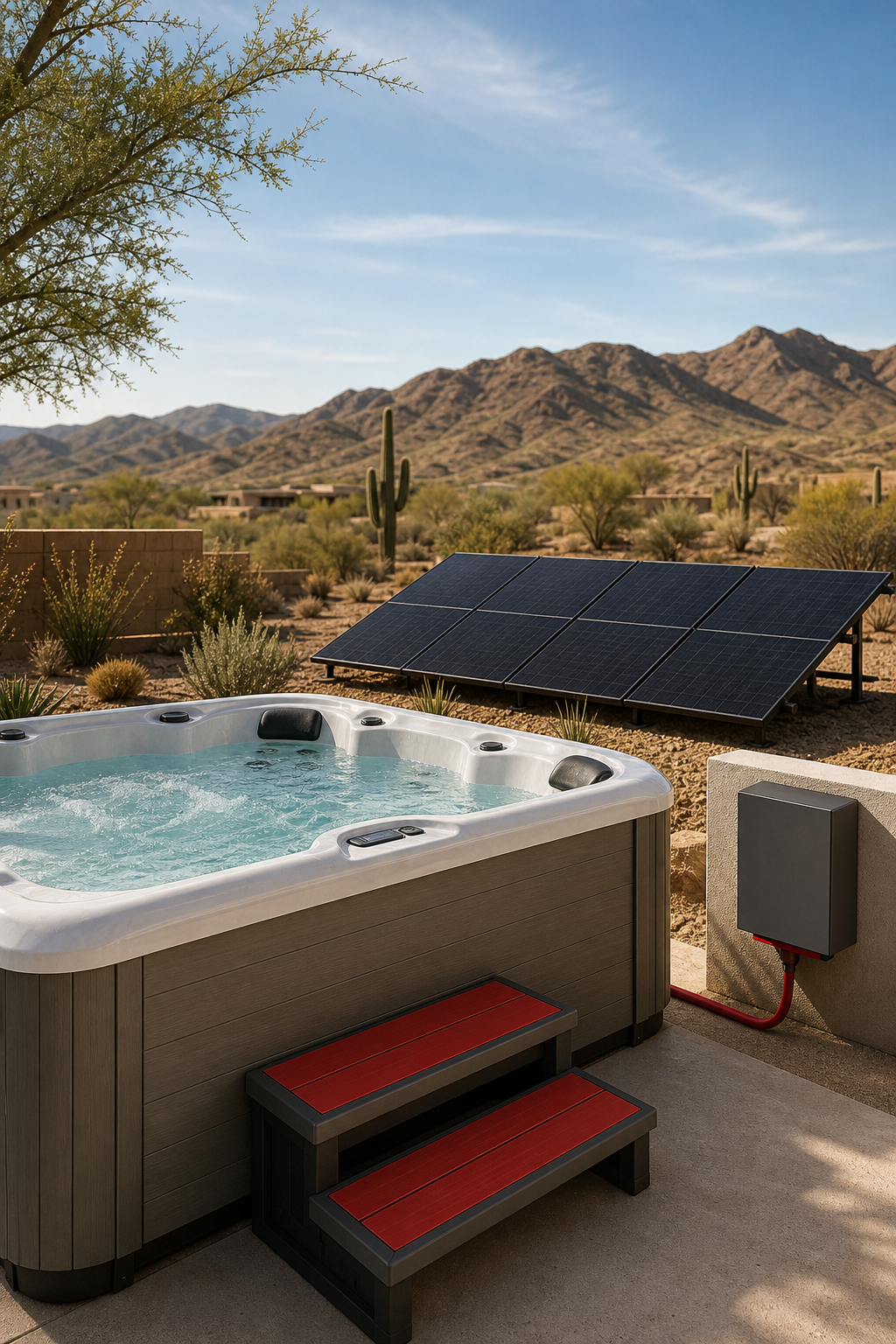
Luxury Hot Tubs designs, installs, and services custom solar‑heated spas for Coachella Valley homeowners. They start with an on‑site consultation to map placement, wiring, and shade. Their Caldera® tubs are engineered for 115 °F ambient temps and mineral‑heavy water, so the heater never overworks.
The company bundles high‑efficiency thermos‑coated panels with a smart controller that switches between grid power and solar when sunlight wanes. A built‑in heat‑retention cover cuts night‑time loss by up to 70 %.
Because the install team treats each job like moving a piano, you get precise mounting angles and sealed conduit that keeps sand out of connections. The downside? Professional install costs run higher than a DIY kit, but the long‑term savings often pay off in three to five years.
Ready to heat your spa without the hassle?
2. Complete Pre‑Engineered Kits , Turnkey Solar Heating for Hot Tubs
These kits bundle solar thermal collectors, a heat exchanger, and a durable cover in a single package. The SolarTubs brand has been engineering pool‑heating systems for over 25 years, using high-efficiency solar thermal panels and an inverter heat pump that can shave 80 % off traditional heating costs.
Installation takes a day: mount the collector rack, run insulated piping to the tub’s heat exchanger, and connect the pump. The kit includes a solar‑ready controller that monitors sun intensity and diverts excess heat to a storage tank.
Best for owners who want a plug‑and‑play solution but still prefer a pro to finish the wiring. The main caveat is the upfront price, these turnkey systems start around $3,000, though the payback can be under four years in a sunny desert.
Best Energy Efficient Hot Tubs: Top 5 Picks for 2026
3. DIY Solar Panel Bundles , Build Your Own Hot Tub Heater
For hands‑on owners, a bundle of photovoltaic panels, a charge controller, and a 12 V pump can be assembled in a weekend. A solar thermal kit, sold on Amazon, plugs directly into most spa pumps and claims to heat a 52‑gal tub in eight hours of strong sun.source
Because the kit is tool‑free, you can set it up without an electrician, just mount the panels on a sturdy frame, run the low‑voltage cable to the pump, and let the controller handle charging. The system works best when the tub sits in full sun; any shade drops output by about 40 %.
DIY bundles cost $1,200‑$1,800, a fraction of professional installs. However, they lack the high‑temperature ratings of desert‑grade panels and may need extra protection from sand abrasion.
Tip: Clean the panels weekly to keep dust from cutting efficiency by 5‑10 %.
4. Grid‑Tied Solar Kits , Offset Hot Tub Energy Costs in the Desert
An eight‑panel system can generate about 4 kW, enough to cover a typical hot‑tub’s daily 5‑7 kWh use during spring‑fall months.source
When the sun dips, the grid fills the gap, so you never run out of heat. This hybrid approach reduces the electric bill by roughly 30‑40 % in a desert climate, .
Best for homeowners who already have a roof‑mounted PV system and want to add hot‑tub support without batteries. The drawback is the seasonal shortfall, winter evenings still need grid power, and you may face a modest net‑metering fee.
5. Off‑Grid Solar Kits with Battery Storage , Autonomous Hot Tub Heating
A solar thermal kit with an integrated battery bank pairs a copper‑tube collector with a 20 kWh LiFePO4 battery bank. The kit can deliver substantial heat per sunny day and store enough heat to run the tub through the night. The system qualifies for a 30 % federal tax credit, which can significantly reduce the upfront cost.source
Installation is a one‑day retrofit: mount the collector, run a heat‑exchange loop to the spa, and connect the battery pack. The battery smooths out midday spikes and supplies power after sundown.
Great for year‑round users who want true independence from the grid. The downside is the higher upfront cost and the need for a climate‑controlled battery room to avoid accelerated degradation.
6. Monocrystalline Panel Kits , High Efficiency for Intense Desert Sun
Monocrystalline modules deliver 20 %+ efficiency and have a low temperature coefficient, meaning output drops only slightly as panel temperature climbs above 25 °C. source
These panels stay cooler thanks to their single‑crystal structure, which also gives them a longer 25‑year power‑output warranty. In the desert, where panel temps can hit 149 °F, that low coefficient translates to roughly a 5 % loss versus a poly‑crystalline rival.
They’re ideal for tight roofs because you get more watts per square foot. The trade‑off is a higher price per watt, with pricing available upon request.
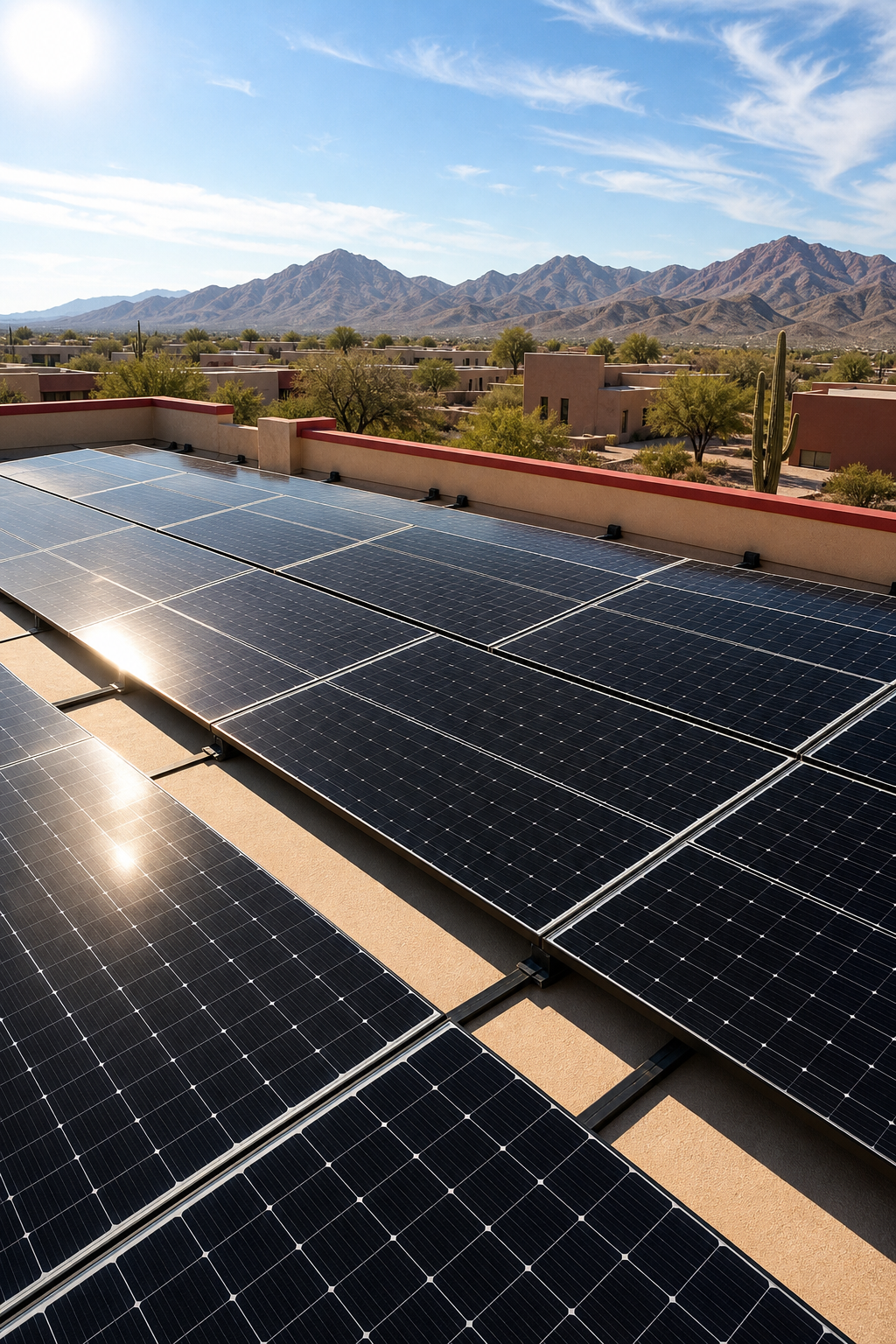
Pro tip: Tilt the panels 15‑20° north of due‑south to balance summer glare and winter sun angle.
7. Polycrystalline Panel Kits , Budget‑Friendly Desert Solar Options
Poly‑crystalline arrays from various manufacturers typically cost less per watt than monocrystalline. They still reach 15‑18 % efficiency, which is plenty for a hot‑tub that needs 5‑7 kWh per day.
Because the cells are made from multiple crystals, they handle high temperatures a bit less gracefully, output can dip 0.4 % for each degree Celsius above 25 °C. In the Coachella Valley, that means a 10‑15 % drop on the hottest days.
These kits are best when you have ample roof space and want a lower upfront spend. Expect a slightly larger array to hit the same daily kWh as a monocrystalline system.
8. Thin‑Film Panel Kits , Heat‑Resistant Technology for Extreme Temperatures
Thin‑film modules, such as CdTe or CIGS, tolerate high heat and partial shading better than crystalline panels. Wikipedia notes they can operate efficiently up to 185 °F without significant degradation. source
They’re lightweight and can be mounted on flexible substrates, which makes them a good fit for angled pergolas or shade structures where traditional panels would be heavy.
The main downside is lower efficiency, usually 10‑12 %, so you need a larger surface area to meet the tub’s demand. In a desert yard with abundant sun, the extra area isn’t a huge penalty.
Consider a thin‑film kit if you plan to integrate the panels into a custom shade sail or want a low‑profile look.
9. Smart Solar Controller Kits , Optimized Energy Management for Desert Spas
Smart controllers with advanced energy management features monitor real‑time irradiance and adjust pump speed to match available solar power. They can divert excess energy to a secondary battery or grid‑feed‑in, smoothing out the daily swing.
In a desert setting, the controller’s shade‑detection algorithm prevents the system from over‑charging when sand covers part of the array, extending panel life.
These kits add a cost that varies by configuration but can boost overall solar contribution by 15‑20 %.
10. Portable Solar Hot Tub Heaters , Flexible Desert Camping Solution
Compact roll‑out heater mats with built‑in photovoltaic cells let you power a pop‑up spa off the grid. The mats generate about 250 W each and can be stacked for larger tubs.
Because they’re lightweight, you can set them up at a campsite or a backyard patio and pack them away when not in use. They’re designed for 120 V AC output, so they work with most portable spa pumps.
The limitation is output: a single mat can’t keep a full‑size tub at 100 °F in peak desert heat, so they’re best for short‑duration use or for keeping the water warm enough to stay comfortable.
Pro tip: Angle the mats toward the sun’s highest point each day to squeeze out extra watts.
How to Choose the Right Kit
- Assess your tub’s daily kWh use (usually 5‑7 kWh).
- Calculate available roof or ground space for panels.
- Decide if you need off‑grid independence or are happy with grid‑tie.
- Factor in budget vs. long‑term savings.
- Check local rebate or tax‑credit programs.
FAQ
How much does a desert‑ready solar kit cost?
Pricing varies; DIY PV bundles start around $1,200, while professional turnkey systems and off‑grid battery kits cost more.
Can solar heat my hot tub all year in the desert?
Solar can cover most of the heating load during sunny months, but you’ll still need grid or backup power for winter nights when daylight drops.
What size solar array do I need for a 5‑kWh‑per‑day tub?
Assuming 5 peak sun hours, a 1 kW array (four 250 W panels) will produce roughly 5 kWh daily, which matches a typical tub’s consumption.
Do I need a permit to install a solar hot‑tub kit in the Coachella Valley?
Yes, most municipalities require an electrical permit and a short inspection to ensure wiring meets NEC standards.
Are there any rebates for solar hot‑tub systems?
Federal tax credits cover 30 % of the equipment cost, and local rebate programs may add additional rebates for eligible installations.
Pick the kit that fits your budget, space, and desire for independence. For most desert homeowners, a professional pre‑engineered system from Luxury Hot Tubs offers the best mix of performance, warranty, and hassle‑free setup.