
A solar blanket is one of the cheapest ways to cut hot tub heating costs, yet most buyers overpay or buy the wrong thickness. A thermal spa cover can reduce electricity consumption meaningfully, which means even a modest blanket pays for itself fast. Here are 10 solar blanket options compared by price, thickness, and fit , so you can pick the right one and stop losing heat overnight.
1. Luxury Hot Tubs Caldera® Spa Solar Blanket Package , Our Top Pick for Desert Climates
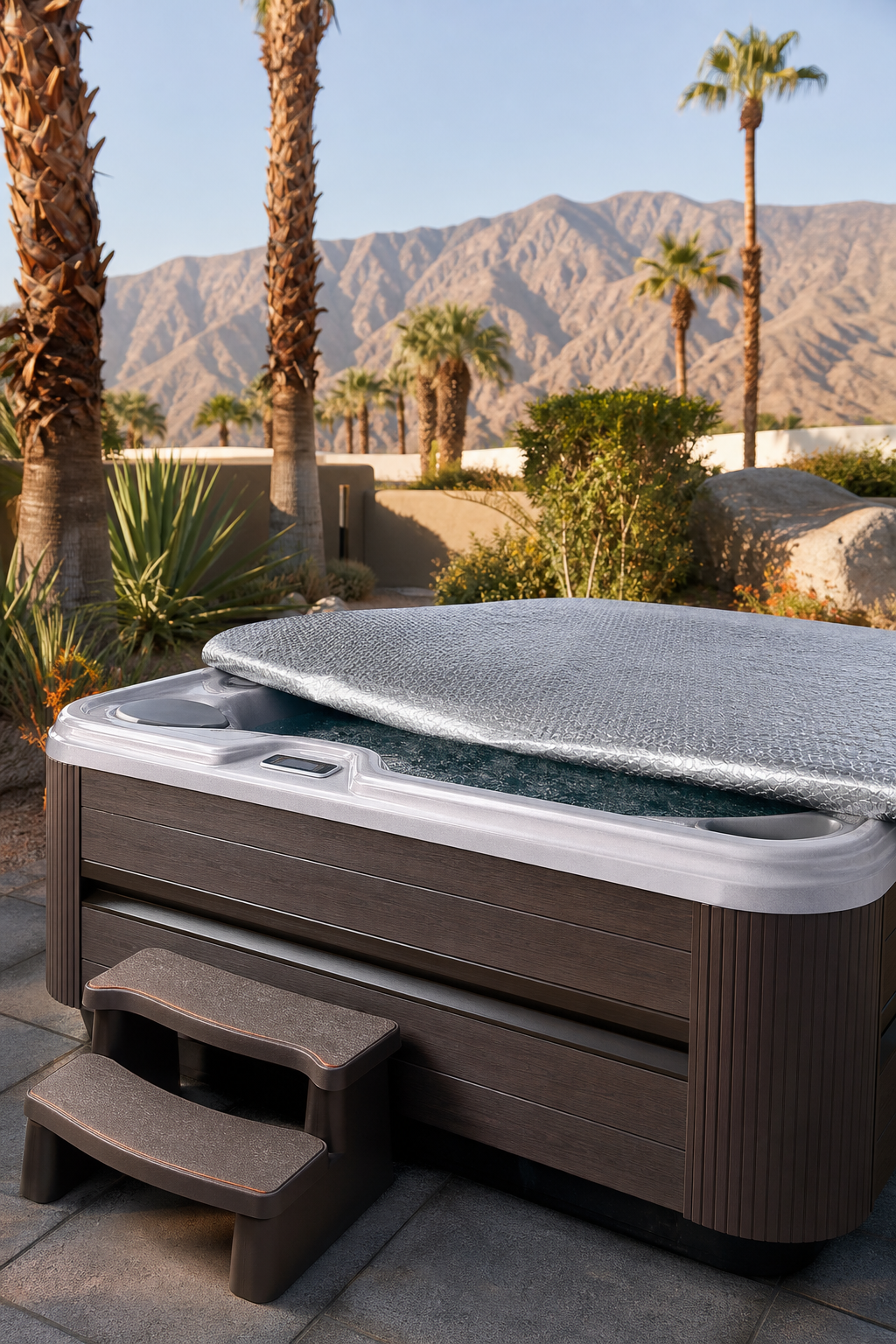
Luxury Hot Tubs is the Coachella Valley’s authorized Caldera® Spas dealer, and their solar blanket package is built specifically for the conditions desert spa owners actually face: 115°F summers, UV that degrades cheap materials in one season, and water that gets expensive to reheat after cool desert nights.
What separates this option from a generic Amazon purchase is context. Luxury Hot Tubs starts with an on-site consultation before anything ships. They match blanket size and thickness to your specific Caldera model, so you’re not trimming a pool-sized cover to fit a spa that seats four. They also factor in your placement , whether your tub sits on an exposed south-facing patio or tucked under a pergola in Rancho Mirage , because wind exposure changes how much heat you’re losing and which thickness makes financial sense.
For desert homeowners in Palm Desert, La Quinta, or Indian Wells, the ROI math is different than it is for someone in Seattle. Your tub is in use year-round, which means every degree retained overnight directly trims your monthly electric bill. A blanket that pairs correctly with a Caldera’s insulated base pan and energy-efficient foam shell compounds those savings further. Pricing varies by model and configuration , contact Luxury Hot Tubs directly to get a package sized to your exact spa.
The caveat: this isn’t an off-the-shelf buy. It’s a fitted, consultative purchase. If you want something shipped to your door tomorrow, look at options 2, 10. If you want something that lasts in the desert and integrates with a premium spa, this is where to start.
2. Entry-Level Solar Blanket , Budget-Friendly Pick
Entry-level 12-mil round solar blankets are a go-to pick for spa owners who want real performance without spending heavily. Available in multiple sizes , 15 ft through 30 ft round , they can be trimmed to fit a standard hot tub shell without losing structural integrity.
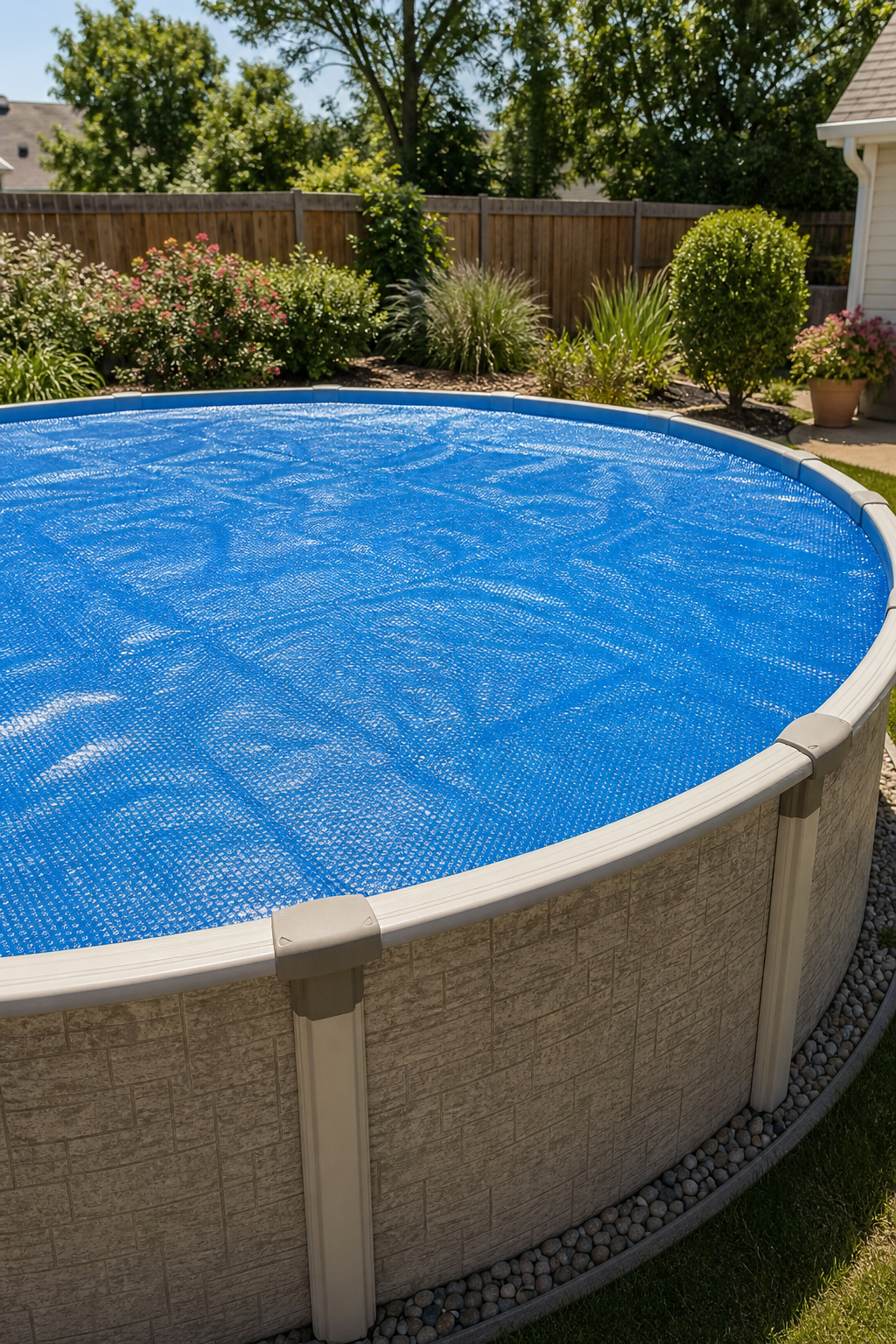
The bubble design traps solar energy and pushes it into the water while blocking up to 95% of evaporation. Buyers report water temperature increases in the range of 15°F over a couple of days of sun exposure, with noticeably warmer water by morning compared to leaving the surface uncovered. It also cuts down on debris and bugs, which reduces chemical use week to week.
Build quality is better than it looks in photos. The 12-mil material resists popping and won’t deteriorate quickly in UV-heavy climates , though desert owners should still expect to replace it every 2, 3 seasons rather than the 5-year warranty ceiling. It’s also genuinely easy to trim: standard scissors, no fraying.
At this price tier, don’t expect a tight custom fit or the durability of a 16-mil option. These blankets often come with a 5-year limited warranty, which lags behind the 10-year coverage found on some heavy-duty alternatives. Good starter blanket; not a forever blanket.
3. Solar Blankets for Portable and Inflatable Spas
Inflatable and portable hot tubs are a different beast. Their walls are thinner, their water volume is smaller, and their owners usually want something that stores easily between uses. Solar blankets designed for this use case are sized for round inflatable pools and spas, lightweight enough to fold and stow, and priced to match the modest investment most inflatable spa owners have already made.
The blanket floats bubble-side down, which is correct placement for heat transfer. Air bubbles absorb solar energy during the day and act as an insulating layer overnight, slowing the temperature drop that inflatable spa owners battle more acutely than hardshell tub owners. Reviewers of compatible hot tub bubble blankets in this category report seeing water temperature start rising almost immediately after placing the cover , a common observation given how quickly a small water volume responds to reduced surface exposure.
For anyone pairing an inflatable spa with a solar panel system, the combination can be surprisingly effective. As shown in operational testing with a 3.8kW solar array, a portable spa running roughly 2kW for heating can be powered almost entirely by solar on sunny days , though a battery buffer is needed for evenings. The blanket reduces how long the heater runs in the first place, stretching battery reserves further.
The limitation is durability. Thinner material means shorter life, particularly in high-UV environments. Budget for replacement every 1, 2 seasons if you’re in a desert climate.
4. Custom-Cut Solar Blankets , Best for Odd-Shaped Spas
Standard solar blankets come in round, square, or rectangular shapes. But plenty of hot tubs , particularly inground models, swim spas, and custom acrylic shells , have irregular footprints that make off-the-shelf covers a bad fit. A blanket with a 6-inch gap along one edge loses a significant portion of its heat-retention value, because that exposed water surface still evaporates freely.
Some manufacturers address this with custom-cut solar blankets sized to your tub’s exact dimensions. You submit measurements, they cut. The material is UV-stabilized polyethylene in standard mil thicknesses, and the cut edges are sealed so they won’t unravel at the trim line. For spa owners with non-standard shapes, the price premium over a generic blanket is usually worth it within a single season of reduced heating costs.
One usable note: measure twice before ordering. Inground spa interiors often taper slightly toward the bottom, so measure at the waterline , not the outer lip , to get the right fit. A blanket that’s slightly too large will buckle at the edges; slightly too small leaves gaps.
Lead times can run 1, 2 weeks depending on order volume, so this isn’t a same-week solution. But if your spa has an unusual shape and you’ve wasted money on ill-fitting blankets before, custom-cut is the end of that problem.
5. Round Solar Blankets , Best for Round or Plug-and-Play Spas
Round hot tubs and plug-and-play spas represent a specific sizing challenge. Most solar blankets are designed for rectangular above-ground pools, which means round spa owners end up trimming rectangular corners and dealing with awkward leftover flaps. Some manufacturers produce blankets in true round sizes , which reduces waste and gives you better edge-to-edge coverage from day one.
These blankets typically use a standard thermal bubble construction, bubble-side down, and are available in clear and blue colorways. Clear lets more direct sunlight through to the water, which can add a degree or two of passive solar gain on sunny days. Blue absorbs more surface heat. In a desert climate, clear is generally the better call because maximum solar transmission during daylight hours offsets the overnight heat loss that’s otherwise your biggest cost driver.
Prices for round solar blankets vary by size and thickness, and quality materials hold up reasonably well over multiple seasons. Reviewers in warm climates note that the film can become more brittle after extended UV exposure, so inspect the bubble integrity at the start of each season.
6. UV-Resistant Solar Blanket , Best for Durability and UV Resistance
UV degradation is the primary failure mode for solar blankets in sunny climates. Cheap polyethylene gets brittle, bubbles collapse, and what started as a 12-mil blanket behaves like a 6-mil one within two seasons. Some manufacturers build their blankets with UV inhibitors integrated into the material, not just applied as a surface coating , which means the protection doesn’t wash off or fade away.
The construction uses a tear-resistant base fabric layered with protective material, making it meaningfully more durable than standard oxford or thin polyethylene alternatives. One key distinction: unlike some round pool covers with a silver coating that can delaminate in direct sun, blankets with material-through UV stability keep performing season after season.
This is the right pick if you live somewhere with intense, year-round UV exposure , the Coachella Valley, Phoenix, or similar desert climates where a cheap blanket might last one summer before the bubbles start popping. The durability advantage compounds over time: paying more upfront for a blanket that lasts four seasons costs less per season than replacing a budget cover every 18 months.
The trade-off is weight. More durable material means heavier handling, which can be awkward for one person managing a large spa cover alone. A blanket reel or a second set of hands helps considerably.
7. Solar Blankets Paired with Solar Panel Systems
If you’ve already invested in a rooftop or ground-mount solar panel system to help power your spa, a well-matched solar blanket amplifies that investment. Solar blankets designed for solar-assisted heating setups optimize solar energy transmission to the water rather than simply insulating the surface.
The logic here is simple. A solar panel system feeding a hot tub heater reduces grid electricity draw. The blanket reduces how long the heater needs to run in the first place. Together, they can drop the tub’s net energy demand dramatically. Operational solar panel testing with hot tubs shows that on sunny days, a 3, 4kW system can handle most of the heating load , but cloud cover and evening use still require battery storage or grid backup. The blanket handles the overnight piece, slowing temperature drop so the solar system doesn’t need to work as hard the following morning.
For desert homeowners considering a full solar integration, the top hot tub solar panel kits for desert homes pair well with a mid-to-heavy-mil blanket as a complete system , the blanket handles passive retention while the panels handle active heating.
Solar blankets suited for this application are available in standard spa sizes and trim cleanly. They are a specialized pick , if you don’t have a solar panel setup, a standard thermal blanket serves you just as well at a lower price point.
8. Mid-Range Thickness Solar Blanket , Best Mid-Range Thickness Option
Most buyers fall somewhere between “I just need something basic” and “I want the thickest thing available.” Mid-range solar blankets occupy that middle ground with a thickness around 12-mil , enough to provide meaningful heat retention without the weight and handling challenges of a 16-mil cover.
The bubble construction follows the standard floating design: bubbles down, smooth side up. The 12-mil material is substantial enough to slow overnight temperature loss, and the UV-stabilized polyethylene holds color and bubble integrity through multiple seasons under normal use conditions. It’s available in sizes that cover most standard spa footprints, and it trims without fraying.
, buyers who work with specialized dealerships rather than big-box stores get meaningfully better long-term outcomes with spa accessories , because sizing advice and compatibility guidance come with the purchase. That principle applies to solar blankets too: a mid-range blanket that fits correctly outperforms a premium blanket that’s the wrong size.
A dependable mid-range blanket won’t out-insulate a 16-mil cover on cold nights, but for most spa owners in moderate to warm climates, it hits the right balance of cost, weight, and performance.
9. Lightweight Solar Blanket , Best Pick for Windy Backyards
Wind is a silent heat thief. The more air moves above your spa surface, the faster heat and water evaporate , which drives up both heating costs and chemical use. A heavier blanket in a windy yard becomes a liability: it catches the wind, gets displaced, and ends up folded in the corner instead of on the water.
Lightweight solar blankets take a different approach. They’re lighter than most 12-mil alternatives, which makes them easier to lay flat and re-cover the tub after each use. That consistency matters more than most buyers realize , a blanket used every day provides far more value than a heavy one that gets skipped because it’s annoying to handle. Designs in this category also tend to sit lower to the water surface, which reduces the effective wind catch profile.
The usable trade-off is insulation. A lighter blanket retains less heat overnight than a 16-mil option. In a desert climate where nights can drop 40°F below daytime highs, that difference is real. But in a partially sheltered backyard where wind is the main problem , not extreme cold , a lightweight solar blanket is a sensible choice. Use it consistently and it will outperform a heavier blanket that gets skipped half the time.
10. Heavy-Duty 16-Mil Solar Blanket (Generic / OEM) , Best for Maximum Heat Retention
Thickness matters at night. The difference between an 8-mil and a 16-mil blanket isn’t just durability , it’s how slowly your spa cools after the sun goes down. Buyers of 16-mil spa-sized covers consistently report that water temperature climbs noticeably faster in the morning compared to thinner alternatives, and that overnight temperature loss is dramatically reduced. One buyer reported a water temperature jump of 14°F after just three days of use.
Heavy-duty 16-mil spa bubble blankets are a well-reviewed example of this category. They are typically available in 7×7 ft square sizes, which fit most standard hot tubs without requiring significant trimming. The heavy-duty polyethylene is genuinely thick , not the thin, floppy material common in budget options , and it trims cleanly with standard scissors. Buyers who’ve tried multiple brands over the years consistently call this thickness the most durable option they’ve used.
The research gap in this category is worth acknowledging: when searching broadly for hot tub-specific solar blankets, most results surface pool-sized covers (18×36 ft and larger) that are far too big for a spa. The 16-mil spa-specific blanket category is real, but it requires more deliberate searching to find correctly sized options. Measure your tub’s interior at the waterline before ordering.
Weight is the main drawback. A 7×7 ft 16-mil blanket is significantly heavier than a thin alternative, and single-handed removal before a soak requires some effort. A blanket reel makes a real difference here.
Hot Tub Solar Blanket Cost Compared: Price, Thickness, and ROI at a Glance
One of the most useful things you can do before buying is look at cost alongside performance, not just sticker price. A lower-cost blanket that you replace every 18 months costs more over five years than a premium blanket that lasts the full term. Add in the energy savings difference between an 8-mil and a 16-mil option on cold nights, and the math tips further toward buying once and buying right.
On ROI: a blanket that meaningfully reduces heating electricity on a tub costing a moderate amount per month to run can generate noticeable monthly savings. Depending on the blanket’s price point, payback periods typically fall well within a few years for most spa owners. The primary mechanisms behind these savings are preventing evaporative heat loss and passively absorbing solar radiation — both of which compound in climates with high sun exposure and large day-to-night temperature swings.
For spa owners who want a broader comparison of compatible accessories, reviewing the best hot tub solar covers alongside bubble blankets is worth doing — some top-performing covers combine blanket-style insulation with a rigid outer shell for even better overnight retention.
The environmental angle is also worth a mention. Reducing heating electricity cuts your spa’s carbon footprint. A tub that runs fewer heater cycles uses less power, and if that power comes from a solar-assisted setup, the net emissions can drop close to zero on sunny days. For spa owners who track their energy use, a blanket is one of the simplest, cheapest changes with measurable results.
How to Choose: A Quick Buyer’s Checklist
Hot tub solar blanket cost is only one variable. Here’s how to make the actual decision quickly:
- Measure your tub’s interior at the waterline, not the outer shell. This is the number that determines fit.
- Match thickness to climate. In desert climates with large overnight temperature swings, 16 mil is worth the extra weight. In mild climates, 12 mil is usually enough.
- Check UV resistance if you’re in a high-sun area. A blanket that degrades in one season costs more over time than a UV-stable option at a higher upfront price.
- Factor in handling. A blanket you skip using because it’s heavy or awkward saves you nothing. Match the weight to your willingness to use it daily.
- Consider total cost of ownership. Divide the price by expected seasons of use, then compare that to your projected monthly energy savings.
If you’re in the Coachella Valley or a similar desert climate and you own a Caldera® spa, the above checklist still applies , but the starting point is talking to Luxury Hot Tubs, who can match a blanket to your specific model and placement before you spend anything.
Frequently Asked Questions
How much does a hot tub solar blanket cost?
Pricing for hot tub solar blankets varies depending on size, thickness, and configuration. Entry-level options for inflatable or portable spas are generally the most affordable. Heavy-duty 16-mil blankets sized for standard hardshell tubs run higher. Custom-cut blankets for unusual spa shapes and premium dealer packages cost more, with pricing that varies by configuration.
Does a solar blanket actually reduce hot tub heating costs?
Yes, measurably. Thermal spa covers are well documented to reduce electricity consumption compared to running a tub uncovered. The primary mechanism is cutting evaporative heat loss — water that can’t evaporate retains its temperature longer, so the heater runs less often. The savings scale with how cold your nights are and how sunny your days are.
What thickness solar blanket should I get for my hot tub?
For most hot tubs, 12 mil is the usable minimum for meaningful overnight heat retention. In desert climates or anywhere with large day-to-night temperature swings, 16 mil is worth the extra weight. Thinner 8-mil options work for portable or inflatable spas where storage and weight matter more than maximum insulation. Thickness also correlates with durability — 16-mil blankets typically outlast 8-mil versions by 2–3 seasons.
Can I cut a solar blanket to fit my hot tub shape?
Yes. Most solar blankets trim cleanly with heavy-duty scissors or a box cutter. Cut slowly along a marked line at the waterline measurement, not the outer shell edge. Good-quality material like 12 or 16 mil polyethylene won’t fray at the cut edge. For very irregular spa shapes — L-shaped, inground, or custom acrylic — a custom-cut blanket is worth the extra lead time and cost.
How long does a hot tub solar blanket last?
Under normal use, a 12-mil blanket lasts 3–5 seasons. A 16-mil heavy-duty version can last 5 or more seasons with proper storage. UV exposure is the primary degradation factor — in desert or high-sun climates, expect the lower end of those ranges unless the material has integrated UV inhibitors. Store the blanket out of direct sunlight when not in use to extend its life significantly.
Should I use a solar blanket in addition to a regular hot tub cover?
Yes, and it works better than either alone. A rigid foam hot tub cover handles the heavy insulation and keeps weather out. A floating solar blanket sits directly on the water surface, cutting evaporation and adding passive solar gain during the day. Together, they form a two-layer thermal barrier — the blanket slows heat loss from the water itself while the rigid cover handles the air gap above. The combination can reduce heating costs more than either does alone.
Conclusion
If you want the fastest payback, a 12-mil blanket in the $50, $90 range gets most spa owners to break-even in under a year. If you’re in a desert climate with a Caldera® spa and want a blanket that actually fits your setup and survives the UV, reach out to Luxury Hot Tubs for a consultation , they’ll size it correctly the first time and back it with the same service they bring to every spa installation in the Coachella Valley.