
Finding a way to keep your spa warm without spiking the electric bill can feel impossible in the desert heat. Here’s a quick rundown of the ten hottest solar‑cover solutions and who each one works best for.
1. Luxury Hot Tubs (Our Top Pick) , Premium Solar‑Enhanced Covers
Luxury Hot Tubs outfits its Caldera® spas with a solar‑enhanced cover that blends a thick 16‑mil bubble layer with a UV‑resistant vinyl skin. The cover traps sunlight while resisting the blistering Coachella Valley sun, letting water stay 5‑15 °F warmer after a sunny day.
Homeowners who demand a low‑maintenance, long‑lasting solution love the way the cover slides onto the spa’s rim without any tools. It also cuts evaporation, which means fewer chemicals and less water waste.
Luxury Hot Tubs backs the product with a solid warranty and a free‑return policy, so you can try it risk‑free.
The 16‑mil thickness provides excellent durability while still allowing for optimal sunlight absorption.
2. Standard Insulated Solar Blanket
This insulated solar blanket spreads over a typical hot‑tub surface, providing an air‑pocket layer that helps retain heat even on cloudy days.
It can be trimmed to size with scissors, and the reflective side should face upward for optimal solar capture.
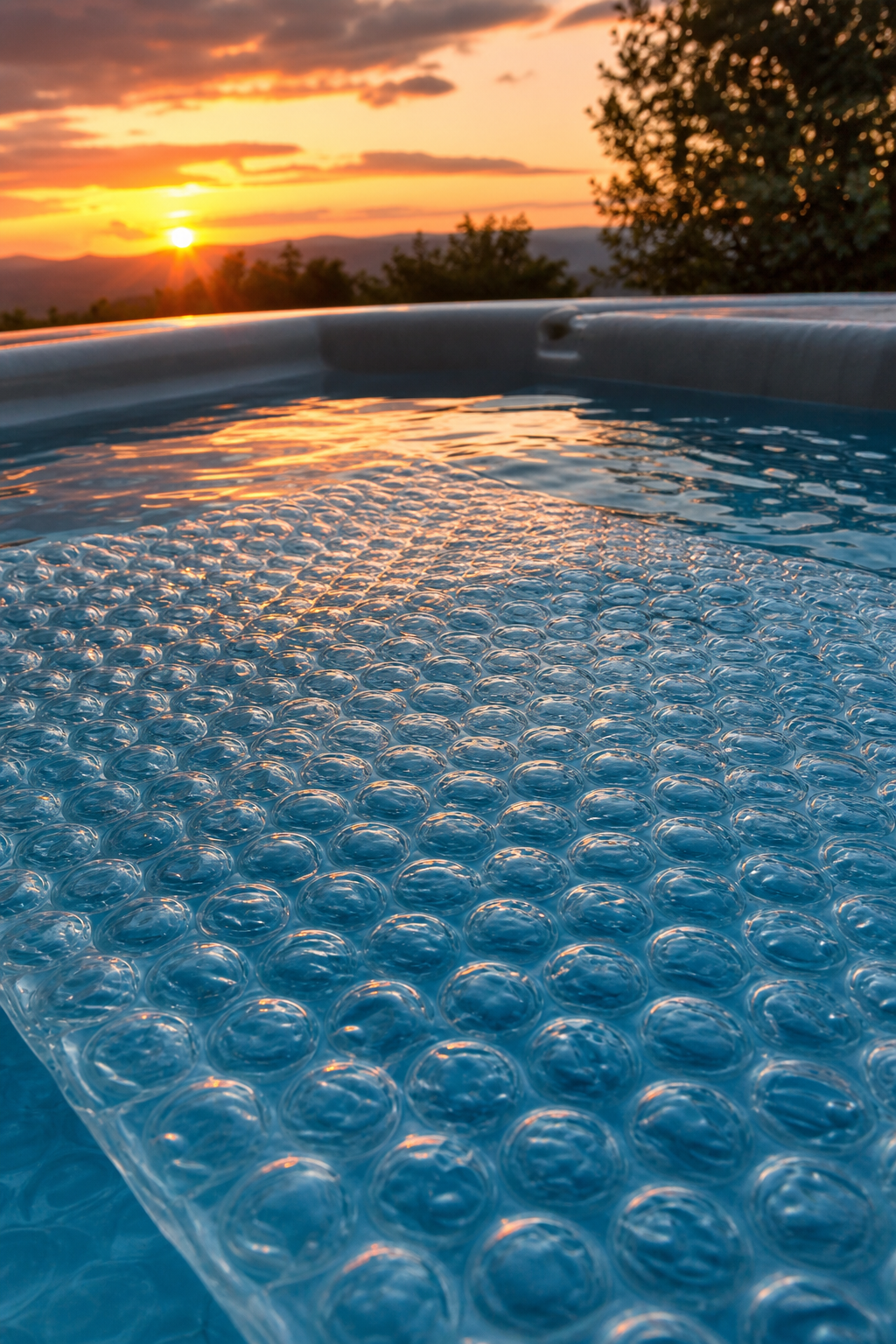
Installation involves laying the blanket on the water and tucking the edges under the existing cover.
For a deeper look at how solar blankets work, see the explanation on Wikipedia.
Vinyl Solar Blanket – Durable Outdoor Option
A vinyl blanket combines a tough outer skin with a classic bubble interior. The vinyl resists tears from wind‑driven debris, making it a solid choice for exposed patios.
Its dark gray color absorbs more heat than lighter shades, providing a modest temperature boost during peak sun hours.
Owners appreciate that the material tolerates occasional rain without sagging, and it can be rolled onto a storage reel for the off‑season.
4. Standard Circular Tub Cover
Standard circular tub covers often use interlocking plastic segments that float around the rim of round spas. The design lets you snap the rings on quickly without wrestling with a large sheet.
Each segment typically includes built‑in drainage holes, allowing water to escape without flooding the interior.
Because the rings sit just above the waterline, they do not interfere with jets or steps.
5. Active Solar Cover System
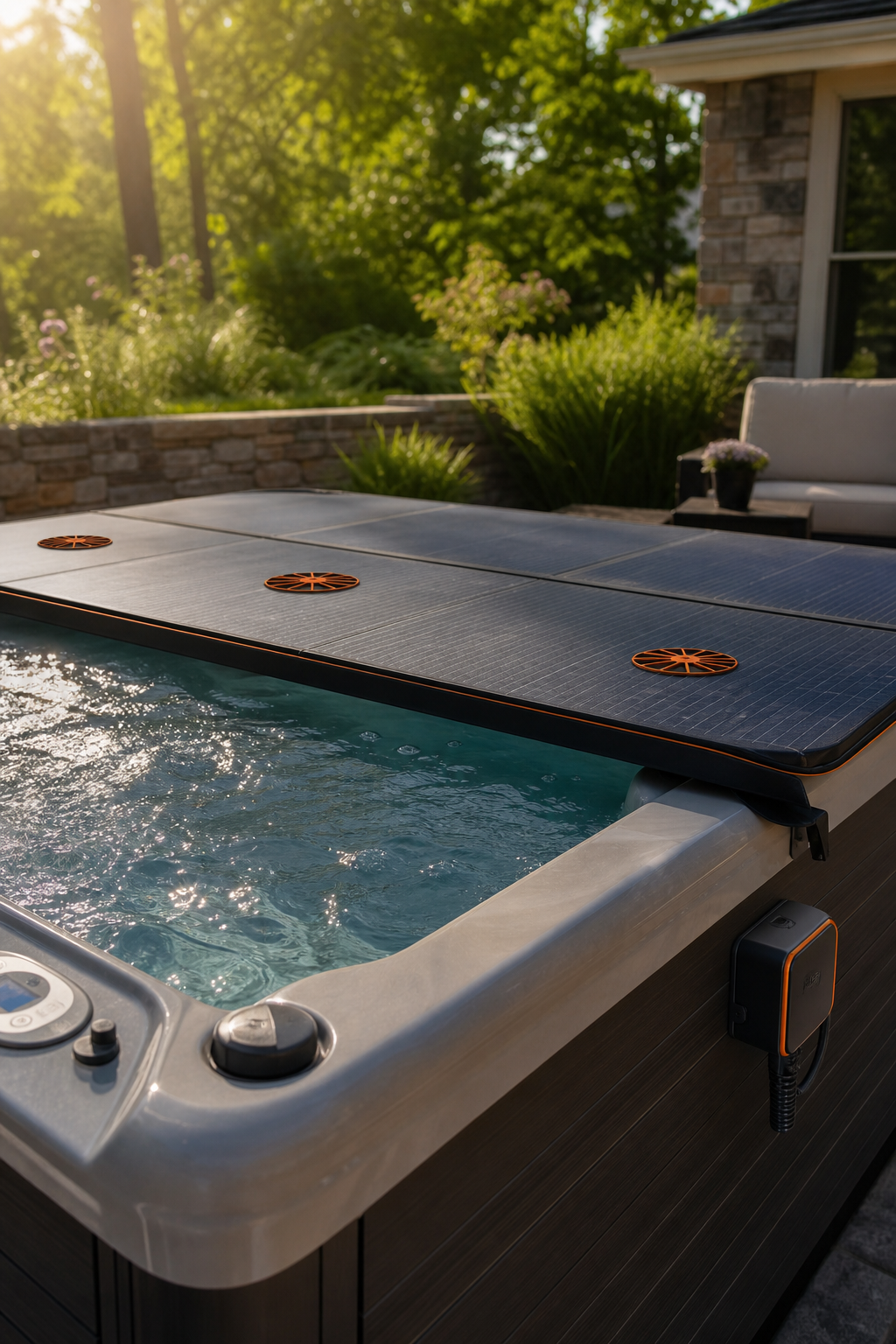
Some solar blankets embed tiny fans that pull warm air from the top of the cover down into the water. Sensors detect temperature and turn the fan on only when the sun is shining.
This active system can raise water temperature by a few degrees more than a passive blanket alone.
It’s a good fit for owners who want a set‑and‑forget solution without manual adjustments.
6. DIY Low‑Cost Solar Cover , Foam Board Build (Video)
If you’re handy, you can craft a solar blanket from rigid foam board, plywood, and a weather‑proof tarp. The foam traps heat while the wooden frame adds rigidity.
Measure your tub, cut the foam to size, wrap it in a 4‑mil plastic sheet, then glue it to the wood. Finish with hinges so the cover can lift like a lid.
A step‑by‑step guide walks you through each stage and warns about sealing the edges to keep moisture out.
DIY builds can cost under $200, a fraction of a commercial blanket, but they require regular inspection for wear.
7. Liquid Solar Cover , Chemical Heat Retention
Liquid solar covers are a silicone‑based spray that forms a thin, invisible film on the water surface. The film reduces evaporation, which indirectly keeps the water warmer.
Because the coating is invisible, it doesn’t interfere with the spa’s aesthetic.
It’s especially handy for owners who dislike handling large blankets.
The product helps retain heat by limiting water loss and works best when the spa is covered at night.
Integrated Solar Heating System
An integrated system combines a solar blanket with an auxiliary electric heater powered by rooftop solar panels. The heater activates when sunlight diminishes, helping maintain water temperature.
Smart controllers can monitor water temperature and switch between solar and electric sources automatically.
Users with partially shaded tubs find the consistent warmth beneficial while keeping energy use modest.
Video demonstrations often show the controller interface and how it balances solar input with heater output.
Recycled Solar Blanket
These blankets are constructed largely from post‑consumer recycled plastic that meets recognized recycling standards. They incorporate an insulating bubble core to retain heat effectively.
Using a recycled solar blanket helps reduce landfill waste and can lower the overall carbon footprint of a spa setup.
Users report that such blankets perform well against UV exposure, comparable to those made from virgin plastic.
Durable UV‑Resistant Solar Covers
UV‑stabilized polyethylene covers are designed to withstand intense sunlight for many years. The material resists cracking and fading, helping to maintain its insulating properties.
These covers typically achieve an R‑value of 14 or higher, indicating strong resistance to heat loss.
Long‑term users often note that the cover remains snug and effective even after several years of use.
What to Look For When Choosing a Solar Cover
First, check the cover’s thickness. A 16‑mil blanket retains the most heat, while an 8‑mil sheet is cheaper but less effective.
Second, verify UV resistance. In desert climates the sun can degrade thin plastics within months.
Third, consider fit. Measure the exact diameter or length of your spa and choose a cover that can be trimmed without compromising the bubble layer.
Finally, think about maintenance. Covers that can be rolled onto a reel are easier to store and clean.
Comparison Table: All 10 Solar Cover Options
FAQ
Can a solar cover replace my hot‑tub heater?
No, a solar cover alone only reduces heat loss; it won’t bring water up to a set temperature on its own.
How much can I expect my electricity bill to drop?
Typical savings range from 15 % to 30 % depending on cover thickness, sun exposure, and how often you run jets.
Do solar covers work on indoor spas?
They can help a little, but indoor tubs already have limited exposure to sunlight, so the benefit is modest.
How often should I clean a solar blanket?
Rinse it with a garden hose after each use to remove debris, then let it dry in the sun before storing.
Will a solar cover damage my spa’s vinyl?
When used correctly, bubble side down and kept clean, a solar cover protects the vinyl by shielding it from UV rays.
Conclusion
For desert owners who want the biggest temperature lift with the least hassle, the Luxury Hot Tubs premium solar‑enhanced cover is the clear winner. If you’re ready to upgrade, order the cover online and schedule a quick installation with the dealer.