
Living in the desert means the sun is relentless, and your hot‑tub needs a break from the glare. The right shade not only makes soaking comfortable, it protects your spa’s components from UV damage. Below is a usable, step‑by‑step guide to choose, install, and care for hot‑tub shade that works in the Coachella Valley.
Step 1: Assess Sun Exposure and Privacy Needs
Start by watching the sun’s path for a full day. Note where the tub sits in full sun, where it gets dappled light, and when the afternoon heat peaks. In the desert, afternoon temperatures often top 115°F, so a spot that stays in shade after 2 p.m. will keep water cooler and reduce energy use.
Next, think about who will use the tub. If you soak alone, a narrow shade sail might be enough. If families or guests join often, you’ll want broader coverage and extra privacy. Privacy screens, tall bamboo, or climbing vines can block neighbors’ sight lines without trapping heat.
Measure the area around the tub and sketch a simple plan. Mark any existing structures, walls, patios, fences, that could support a pergola or deck overhang. This sketch will guide the size of the shade you need.
For desert‑specific UV protection, look for materials rated for high UV resistance. The Ultraviolet index often reaches extreme levels in the Coachella Valley, so a fabric with a UV‑protective coating is essential.
Step 2: Choose the Right Shade Structure Type
With your sun map in hand, match the exposure pattern to a structure type. Permanent options like enclosures, pergolas, or a patio roof give full‑day protection and create a micro‑climate that traps heat, great for cooler evenings. Flexible solutions such as shade sails, retractable fabric tops, or a pop‑up canopy let you open up the sky when the sun isn’t a problem.
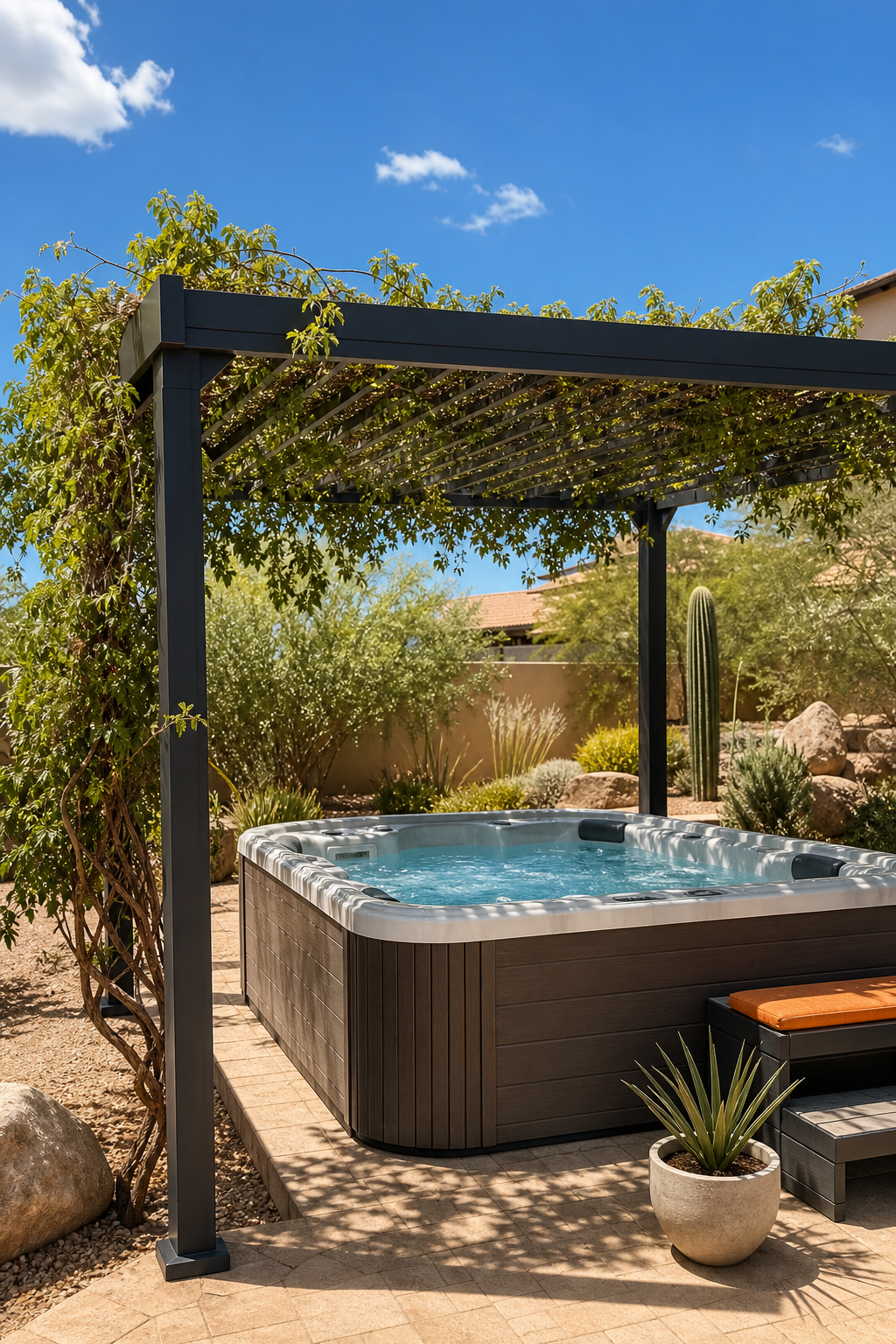
If you want year‑round comfort and a sense of enclosure, anenclosure(wood, aluminum, or vinyl) blocks wind, rain, and sandstorms. It also reduces heater run‑time by keeping the hot‑tub’s heat from escaping. For a lighter feel, apergola with retractable curtainsgives shade in the summer and can be opened for starlit nights.
When space is limited, atemporary gazebo or pop‑up canopywith UV‑protective fabric is a quick win. It’s easy to set up for a weekend party and pack away when not needed.
Luxury Hot Tubs offers design‑and‑install services that include custom pergolas, enclosures, and UV‑rated fabric tops, so you can skip the DIY guesswork and get a desert‑ready solution.
For more inspiration on how to integrate shade with your overall backyard layout, see our Backyard hot tub ideas guide.
Step 3: Select Materials and Design for Desert Conditions
Desert heat stresses both fabric and frame. Choose materials that stay stable under 115°F plus sand‑blasted winds. Aluminum or powder‑coated steel frames resist corrosion, while cedar offers a natural look and tolerates temperature swings.
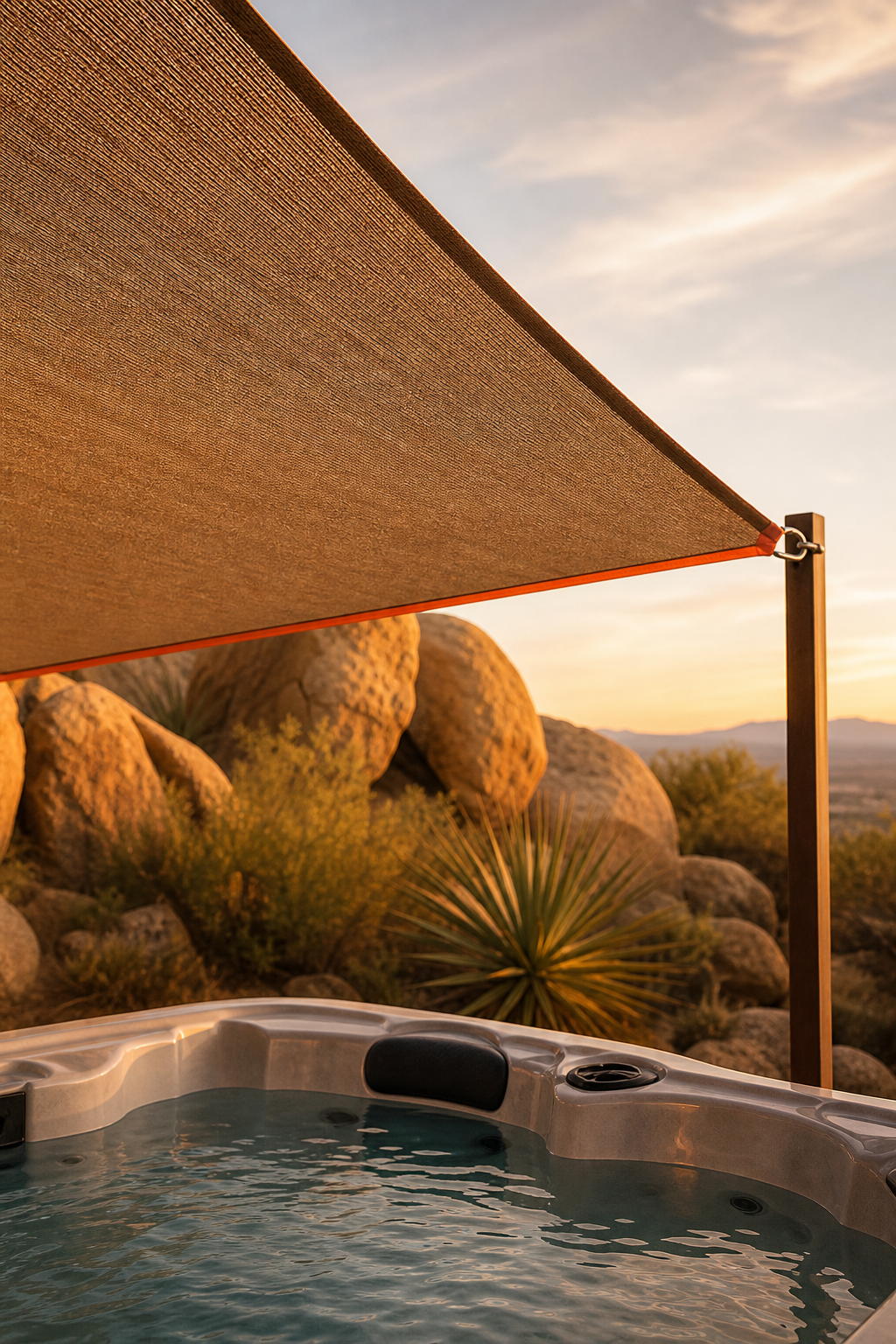
For fabric roofs, look for UV‑stabilized polyester material. These fabrics keep their color and tensile strength after months of exposure. If you opt for a shade sail, pick a sail rated for at least 300 g/m² and with a UV‑protection factor of 90% or higher.
When you add plants, select drought‑tolerant vines like wisteria or bougainvillaea. They grow fast, provide a living privacy screen, and shade the structure itself, lowering surface temperatures by a few degrees.
Design details matter: a modest overhang on a pergola helps channel rain away from the tub, while integrated gutters prevent water pooling. If you choose an enclosure, ensure the roof has a low‑slope to shed sand and debris.
Modern pergolas often include motorized louvers, perfect for desert owners who want instant sun control.
Step 4: Install or Hire Professionals for Your Shade Solution
Installation starts with a solid foundation. If you’re adding a permanent pergola or enclosure, the base should sit on a level concrete slab or a pre‑made spa pad that can bear the weight of the frame and any wind load.
Check local building codes for wind‑rating requirements, desert zones often demand structures that can withstand 90 mph gusts. A licensed contractor can verify the slab’s reinforcement and ensure the footings meet code.
Electrical work is another must‑consideration. Motorized louvers or automated retractable tops need a dedicated 120 V circuit installed by a qualified electrician. Electrical requirements are outlined in standard hot‑tub installation guidelines.
If you prefer a DIY route, start by assembling the frame on the ground, then lift it onto the slab with a few helpers. Use a level at every joint, and anchor the posts with concrete footings or heavy‑duty brackets. For fabric tops, attach the hardware according to the manufacturer’s instructions, making sure the tension is even to avoid sagging.
Luxury Hot Tubs can coordinate the whole process, design, permits, foundation, and final installation, so you don’t have to juggle multiple contractors.
Step 5: Add Finishing Touches and Maintain Your Shade
Once the structure is up, think about the little things that keep it looking good. Apply a UV‑resistant sealant to wooden beams every two years to prevent cracking. For fabric roofs, clean the surface with a mild soap solution and a soft brush; avoid pressure washers that can tear the weave.
Integrate privacy screens or outdoor curtains that match your décor. Heavy‑weight curtains can be drawn at night for added seclusion and pulled back during the day for airflow.
Maintenance routines matter most in the desert. Inspect fasteners quarterly, sand can corrode bolts. Tighten any loose connections before the summer heat hits. Check the shade’s drainage after a rainstorm to ensure water isn’t pooling near the tub’s base.
Consider a solar‑enhanced cover that works with your shade structure. Luxury Hot Tubs offers a premium solar‑enhanced cover that adds an extra 5‑15°F of warmth on sunny days while resisting UV fading.
FAQ
What type of shade works best for a hot tub in the Coachella Valley?
A pergola with UV‑rated fabric or an enclosure gives the most consistent protection from extreme sun and sand. A shade sail works well for partial coverage, but it needs a sturdy anchor to survive wind.
Can I install a shade structure myself, or do I need a pro?
You can DIY a simple shade sail or pop‑up canopy, but permanent pergolas, enclosures, or motorized tops usually require a licensed contractor to handle foundations and electrical work.
How does shade affect my hot‑tub’s energy use?
Shade reduces water temperature rise, so the heater runs less often. In the desert, a well‑shaded tub can cut heating costs by up to 30% during the hottest months.
Do I need UV‑protected fabric for my shade?
Yes. UV‑protected fabric stops the sun from breaking down the material and protects the spa’s cover from fading, extending its life by several years.
What maintenance does a shade structure need in a desert climate?
Check fasteners for sand corrosion, reseal wood annually, and clean fabric with mild soap. Inspect drainage after storms and tighten any loose brackets before the peak summer heat.
Pick a shade solution that fits your space, budget, and desire for privacy, then work with Luxury Hot Tubs for a smooth design and install. Start by mapping your sun exposure today, and turn your desert backyard into a cool, private oasis.