
Most people think the hot‑then‑cold order is the only way to go. The science says it’s more nuanced. In this guide you’ll learn how cold plunges work, what the body does when you flip the order, and which timing gives you the biggest health boost.
We’ll walk through the mechanics, the proven benefits, the safety basics, and a few easy timing tricks you can try tonight. By the end you’ll know exactly when to jump in and how to do it safely.
Understanding Cold Plunge and Sauna: How They Work
Sauna heat makes your skin sweat and your blood vessels open. The heat raises your core temperature a few degrees, which tricks the body into a mild fever. Your heart beats faster, blood flows to the skin, and you start to relax. Cold water does the opposite: it pulls blood toward the core, tightens vessels, and makes you gasp for breath. This quick switch is called contrast therapy.
The two steps together create a pump‑like effect. Heat dilates vessels, then cold squeezes them closed. The cycle forces blood to move faster, delivering oxygen and taking waste away. It also triggers hormones that help muscles heal and the mind feel calm.
“The back‑and‑forth of heat and cold gives the circulatory system a workout without any weights,” notes a researcher at a Finnish health institute.
Because water conducts heat 23 times faster than air, a cold plunge feels far more intense than a cold shower. That rapid heat loss spikes adrenaline for a few seconds, then the body settles into a calmer state.
When you sit in a sauna for 10‑15 minutes, you get a boost in heat‑shock proteins that protect cells. When you jump into a 10‑°C plunge for a minute, you get a surge of norepinephrine that sharpens focus.
These reactions happen whether you start hot or cold, but the order changes the overall balance. Starting with heat lifts your core temperature first, so the cold later brings it down fast. Starting cold first can raise your core a bit, but the heat that follows may keep you hotter for longer.
Below is a short video that shows how the body reacts to a hot‑then‑cold cycle.
Understanding these basic reactions helps you pick the order that matches your goal , be it lower blood pressure, faster muscle recovery, or a quick mood lift.
Bottom line:Heat opens blood vessels, cold closes them; the cycle creates a vascular workout that can improve circulation, hormone release, and cell repair.
Physiological Benefits of Cold Plunge Before Sauna
Starting with a cold plunge can give a quick jolt to your nervous system. The shock raises norepinephrine, which can improve focus and alertness right away. It also tightens skin pores, making the later sweat in the sauna feel cleaner.
When you move from cold to hot, your body works to warm back up. That warming phase triggers a larger release of heat‑shock proteins than a hot‑only session. Those proteins help muscles repair and can boost metabolism.
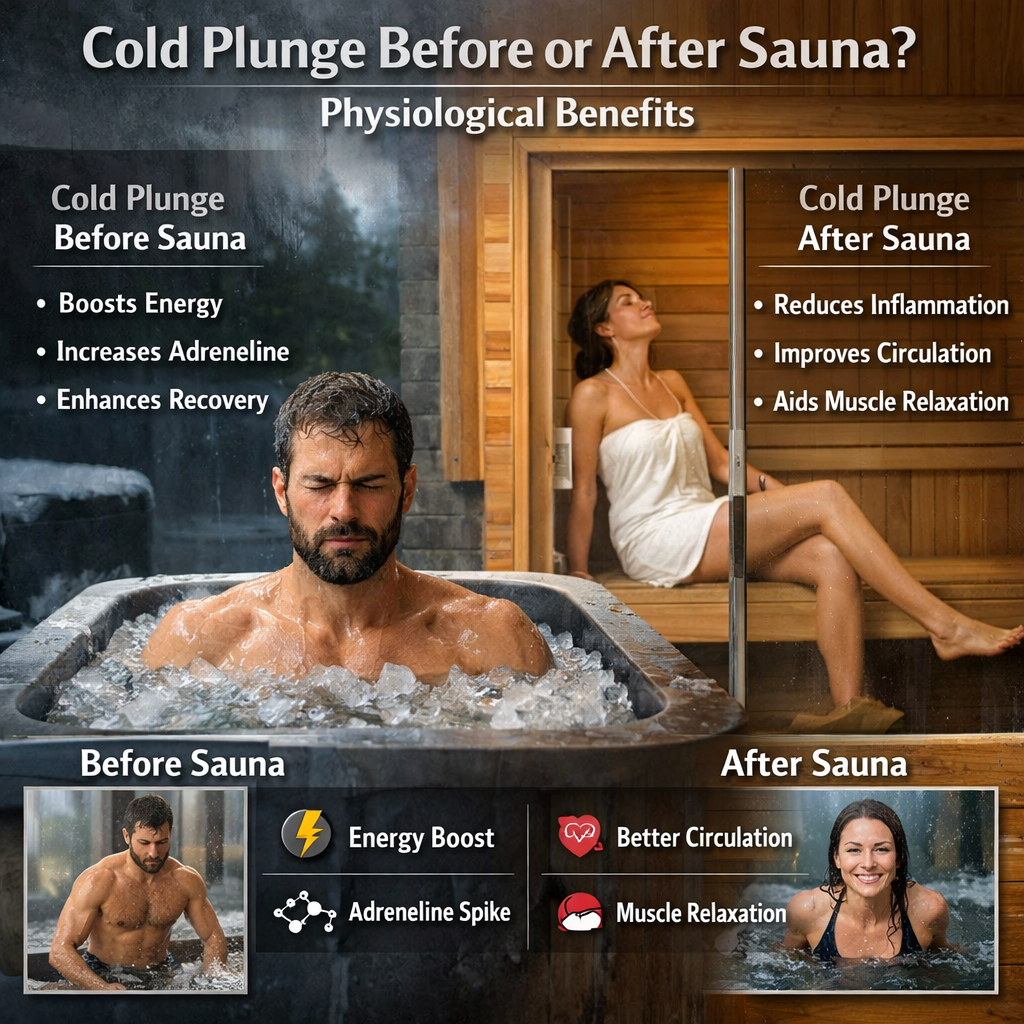
Cold first also activates brown‑fat tissue. Brown fat burns calories to keep you warm. A brief dip at 10‑15 °C can turn on this tissue, and the following heat can keep it active longer, which may aid weight management.
Some athletes use this order to prime their muscles before a workout. The cold reduces inflammation, and the heat then loosens joints, giving a balanced start.
Research from a Nordic health study found that a short cold dip before a sauna can improve lung function in people with mild asthma, likely because the cold helps open airways before the humid heat arrives.
Here’s a quick checklist if you want to try cold‑first:
- Set the plunge temperature between 10‑15 °C.
- Limit the dip to 1‑2 minutes.
- Stay hydrated; the cold can make you feel less thirsty.
- Warm up slowly after the plunge to avoid a sudden heart‑rate jump.
While the benefits exist, the overall research consensus still leans toward a post‑sauna plunge for most people. The cold‑first method can be useful if you need a quick mental boost or want to prep for a workout.
Bottom line:A pre‑sauna plunge spikes alertness and may boost brown‑fat activity, but the overall health impact is smaller than the post‑sauna approach.
Physiological Benefits of Cold Plunge After Sauna
Most studies agree that the best time for a plunge is after the heat. The body finishes the sauna with vessels wide open and the heart working hard. A quick cold dip then forces the vessels to close, sending blood back toward vital organs.
That rapid closure drops diastolic blood pressure. One Finnish study showed a 2‑minute immersion at 9‑11 °C after a 12‑minute sauna lowered diastolic pressure by an average of 5 mm Hg, even though systolic pressure rose briefly during the shock.
Beyond blood pressure, the cold after heat also reduces muscle inflammation. Heat raises muscle temperature and loosens fibers, while the cold slows metabolism and limits swelling. This combo speeds recovery after a hard workout.
The hormone response is also different. After the sauna you have high levels of endorphins. The cold then adds a surge of norepinephrine, which together improve mood for many users.
In a recent article on the health impacts of sauna‑cold contrast, the authors note that the post‑sauna plunge improves lymphatic drainage, helping the body clear waste faster.
For those focused on weight loss, the cold after heat triggers brown‑fat activation that can last 30‑45 minutes, turning more calories into heat.
Because the body is already warm, the cold feels less shocking than a plunge on its own, making it easier for beginners.
Bottom line:Post‑sauna plunges lower diastolic pressure, cut muscle soreness, boost mood, and keep brown‑fat active for longer.
Timing Strategies: When to Take the Plunge
Timing isn’t just about order. It’s also about how long you stay in each phase and how much rest you give yourself between them.
Most experts suggest a sauna session of 12‑20 minutes, followed by a 1‑3 minute cold dip. If you’re new, start with 5‑8 minutes in the heat and 30‑45 seconds in the cold.
After the cold, rest for 2‑5 minutes at room temperature. This lets your heart rate settle and gives your body a chance to adjust before the next cycle.
For athletes, doing a second hot‑cold round after a short break can amplify the vascular workout. A typical pattern looks like:
- Sauna 15 min
- Cold 2 min
- Rest 3 min
- Sauna 10 min
- Cold 1 min
When you want better sleep, schedule your session in the evening. The cooling phase signals the body that it’s time to wind down, which can improve sleep quality.
If you’re using a home sauna, you can set a timer that automatically starts a cooling fan or a water shower after the heat period. That helps keep the timing consistent.
Bottom line:Aim for longer heat, shorter cold, and brief rest periods; adjust length based on fitness level and goals.
Safety Tips and Common Mistakes
Contrast therapy feels great, but it can stress the heart if you’re not careful. Always check with a doctor first if you have heart disease, high blood pressure, pregnancy, or lung problems.
One common mistake is staying too long in the sauna. Most guidelines say 15‑20 minutes max. Going longer can cause dehydration, dizziness, or a rapid heart‑rate rise.
Another error is jumping straight into an icy plunge without a brief cool‑down. A 30‑second pause at room temperature lets your heart settle and reduces the risk of a sudden spike in blood pressure.
Hydration is key. Drink water before you start, sip during the sauna, and have a glass after the cold dip.
According to the American Lung Association, people with chronic lung disease should avoid rapid temperature changes because the sudden gasp can trigger breathing trouble.
Here’s a quick safety checklist:
- Check with a health professional if you have any condition.
- Stay under 20 minutes in the sauna.
- Keep cold immersion under 3 minutes.
- Hydrate before, during, and after.
- Have a towel and dry clothes ready after the cold dip.
Bottom line:Follow the time limits, stay hydrated, and get medical clearance if you have heart or lung issues.
FAQ
Can I do a cold plunge if I have high blood pressure?
High blood pressure patients should be cautious. A short, mild cold dip (30‑60 seconds) after a brief sauna (5‑10 minutes) is usually safe, but you need a doctor’s OK first. Monitor your pulse and stop if you feel dizzy.
How long should I stay in the sauna before the plunge?
For most people, 12‑15 minutes of heat is enough to raise core temperature and open vessels. Beginners can start with 5‑8 minutes and work up to longer sessions as they get comfortable.
Is a cold shower as good as a cold plunge?
A cold shower can give similar vascular effects, but water conducts heat much slower than a tub. A plunge at 10 °C for 2 minutes is more intense than a 10‑minute cold shower at the same temperature.
What temperature should the cold water be?
Research shows 9‑15 °C (50‑60 °F) works well for most adults. Below 9 °C the shock can be too strong for beginners, and above 15 °C the benefits drop.
Can I combine infrared sauna with a cold plunge?
Yes. Infrared heat raises core temperature more gently, so you can stay a bit longer. Follow the same timing rules , 15‑20 minutes heat, then 1‑2 minutes cold.
How often should I do the hot‑cold cycle?
Two to three times per week gives noticeable recovery benefits without over‑taxing the heart. If you feel great, you can add a fourth session, but listen to your body.
Do I need to dry off before going back into the sauna?
Yes. Dry skin helps the sauna stay hot and prevents excess steam. It also reduces the risk of feeling too cold when you return to heat.
Is it safe to do this routine after drinking alcohol?
Alcohol widens blood vessels and dehydrates you, which can make the temperature swing dangerous. It’s best to avoid sauna or cold plunge for several hours after drinking.
Conclusion
Choosing when to plunge depends on what you want most. If you aim for lower blood pressure, quicker muscle recovery, and a mood lift, the post‑sauna dip wins the scientific vote. If you need a sharp mental boost or want to prep for a workout, a quick cold start can help, but the overall benefits are smaller.
Keep the sessions short, stay hydrated, and listen to your body. With the right timing and safety steps, you can turn a simple sauna‑cold routine into a powerful health habit. Want a hassle‑free way to add both heat and ice to your backyard? Luxury Hot Tubs offers premium spa and plunge combos built for desert climates, so you can enjoy the cycle without worrying about extreme heat or water quality.
Start with a modest schedule, track how you feel, and adjust the lengths as you get used to the contrast. Your heart, muscles, and mind will thank you.
Bottom line:A post‑sauna plunge is the most evidence‑backed choice for overall health gains; use it wisely and safely for the best results.