
Your hot tub needs a solid, level base that can survive desert heat and heavy loads. Below is a shortlist of the ten most reliable hot‑tub‑base choices for Coachella Valley homes, plus a quick checklist to pick the right one.
1. Luxury Hot Tubs (Our Top Pick) , Full‑service desert‑ready base
Luxury Hot Tubs provides a complete, contractor‑installed concrete slab that meets Caldera Spas’ high‑heat specifications. The service includes site survey, grading, reinforcement, and a vapor barrier to stop moisture from seeping up. It’s built for the 115°F summers that define the desert, so the slab stays flat and crack‑free.
Homeowners who value warranty compliance love this option because Caldera Spas only backs their tubs when installed on a professional concrete base. The slab also supports future upgrades like built‑in steps or a surrounding deck.
One caveat: the installation takes a week of curing, so you must plan delivery around that timeline.
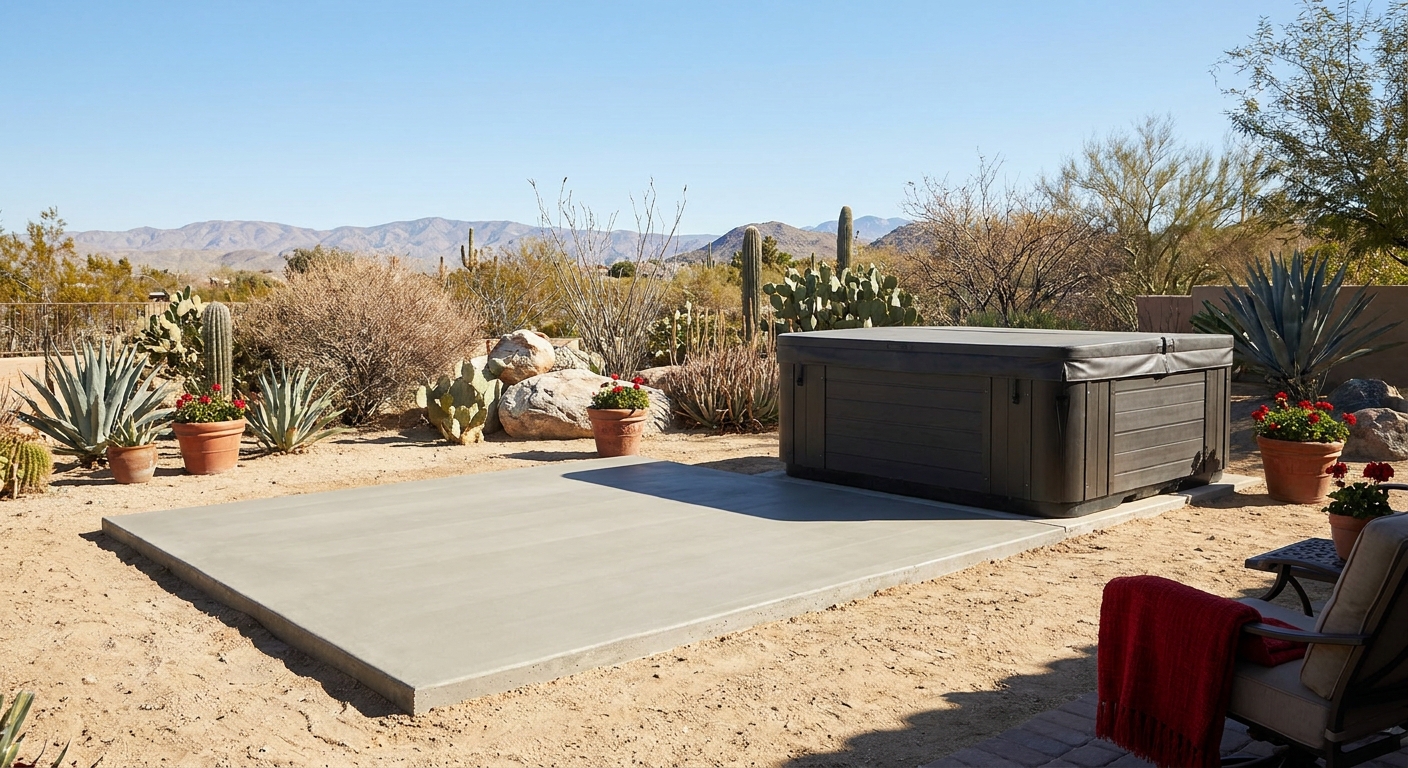
2. Standard Concrete Foundation
A poured concrete slab is the industry standard for weight‑bearing stability. A 4‑inch slab reinforced with rebar or mesh distributes the load of a 3,000‑lb hot tub evenly, preventing cracks and shifting.
Concrete offers a flat, strong surface and can handle thermal expansion in various climates.
Installation requires excavation, a compacted gravel sub‑base, forms, and a curing period of at least seven days. The slab can be poured to extend beyond the tub footprint, providing room for service panels and a safety perimeter.
Drawback: higher material and labor cost compared with DIY pads, and a permit may be needed in some municipalities.
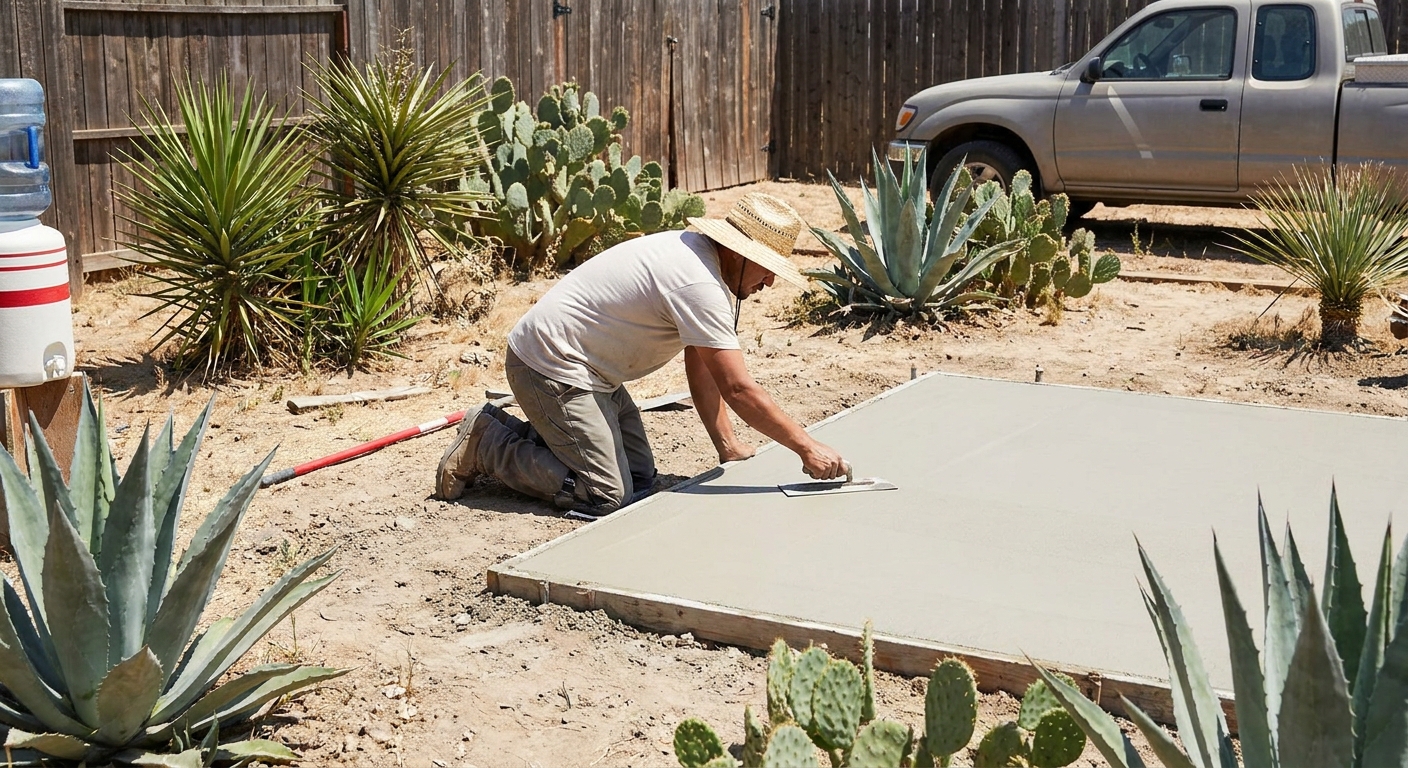
3. Paver/Stone Base , Elegant look with good drainage
Paver stones create a visually appealing platform that also drains water away from the tub. Interlocking pavers rest on a compacted sand‑and‑gravel bed, which cushions the slab and allows for easy leveling.
Homeowners in the Coachella Valley often choose this for its ability to blend with patio designs and because pavers can be replaced individually if damaged.
Installation steps include excavating to a depth of 6‑8 inches, laying a geotextile fabric, adding a 4‑inch crushed‑stone base, then setting the pavers with polymeric sand. Properly installed pavers can handle the weight of a typical spa.
Limitation: uneven sub‑grade can cause settling, so thorough site prep is essential.
4. Modular Synthetic Pad , Quick‑install, level‑adjustable
Modular synthetic pads consist of interlocking high‑density plastic tiles that snap together on a flat surface. These pads are engineered to support typical spa loads, making them suitable for larger models.
Because the tiles lock, the pad stays level even on slightly sloped ground, and it can be disassembled for relocation.
Setup takes minutes: lay a weed barrier, place the tiles, and secure them with the supplied clips. No concrete, no curing time.
One downside: the pad requires a perfectly flat substrate underneath; any major slope must be corrected first.
5. Crushed Gravel Base , Cost‑effective with excellent drainage
Gravel bases are a budget‑friendly choice that also excels at drainage. A typical design uses a 4‑inch layer of clean crushed stone topped with a weed‑cloth barrier.
This depth can support a comparable load to an equally thick concrete slab while costing a fraction of the price.
Installation involves excavating, compacting a layer of sand, laying the weed barrier, and filling with crushed stone. The stone interlocks, creating a stable platform that lets water seep through, reducing moisture buildup.
Beware: gravel can shift over time if not compacted well, so regular re‑leveling may be needed after heavy use.
6. Wood Frame with Shims , Customizable for uneven sites
A wooden frame built from pressure‑treated lumber can be sized to fit any tub footprint. Shims placed under joists level the platform on uneven ground.
This method is popular for DIYers who want a raised deck feel without a full‑scale deck construction.
Build a rectangular frame, attach cross‑beams, then add shims until the top is level. Secure the frame with lag bolts and add a vapor barrier if desired.
Limitation: wood can rot if exposed to moisture for years, so a protective sealant and proper drainage are critical.
7. Telescopic Leveling Columns , Precise height adjustment
Telescopic columns are adjustable steel posts that sit under a concrete slab or wooden platform. Each column can be raised or lowered in small increments, allowing fine‑tuning of the tub’s level after installation.
They are especially useful on sloped sites where a traditional slab would be impractical. The columns are anchored in concrete footings, then the slab is built on top.
Drawback: added cost and the need for professional installation to ensure structural integrity.
8. Landscape Fabric & Weed Barrier , Prevents soil migration
Placing a geotextile fabric beneath any base (gravel, pavers, or concrete) stops soil from mixing with the aggregate, which can cause settling. The fabric also blocks weeds.
Installation is simple: after excavation, lay the fabric, overlap seams by 12 inches, and secure with pins before adding the base material.
It adds a modest cost but greatly extends the life of the base by keeping the sub‑soil stable.
9. Polycarbonate Sheet Base , Moisture barrier with strength
A polycarbonate sheet acts as a rigid, waterproof membrane that sits directly under the tub. It prevents water from reaching the soil and adds a layer of strength to the base.
The sheet is cut to size, placed on a compacted sand bed, and then covered with a thin layer of pea gravel for drainage.
Limitation: the sheet can be slippery when wet and may require a non‑slip coating for safety.
10. Permeable Gravel System , Eco‑friendly groundwater management
CORE’s permeable gravel system replaces a solid slab with a grid that holds gravel, allowing rainwater to infiltrate the ground. This reduces runoff and lowers the carbon footprint of the installation.
The system is installed by excavating, placing the grid, and filling it with gravel. It’s DIY‑friendly and can be assembled in a few hours.
Potential issue: local codes may require a permit for alternative foundations, so check before proceeding.
How to Choose the Right Hot Tub Base for Your Desert Backyard
Start with the weight of your spa, including water and occupants. A typical four‑person tub holds about 300 gallons.
Next, evaluate your site’s soil stability. Sandy soils common in the desert need a compacted sub‑base or a concrete slab to prevent shifting.
Consider climate exposure. Materials that expand and contract with heat, like concrete, are proven to endure desert temperatures.
Check warranty requirements. Many manufacturers, including Caldera, require a professional concrete slab for warranty validity.
Finally, balance budget with longevity. While gravel is cheap, a concrete slab offers the longest lifespan with minimal maintenance.
FAQ
What is the best hot tub base for desert heat?
The best hot tub base for desert heat is a professionally installed concrete slab that meets manufacturer specifications for high temperatures.
Can I install a hot tub on a paver patio?
Yes, a paver patio can support a hot tub if it is built on a well‑compacted sand and crushed‑stone base and the pavers are rated for heavy loads.
How deep should a gravel base be?
A gravel base should be at least four inches deep, topped with a weed‑barrier fabric to keep soil from mixing with the stones.
Do I need a permit for a concrete slab?
Many desert municipalities require a permit for a new concrete slab, especially if it supports a heavy structure.
What maintenance does a synthetic pad need?
Synthetic pads need occasional cleaning to remove debris, and the surface should be inspected for cracks or warping after extreme temperature swings.
How do I prevent my hot tub from sinking into sand?
Lay a sturdy, level concrete slab or a compacted gravel base with a geotextile barrier to distribute the weight evenly and stop the tub from sinking.
Choose the base that matches your budget, site conditions, and warranty needs. If you want a worry‑free, desert‑ready solution, start with Luxury Hot Tubs’ full‑service concrete installation and enjoy your spa for years to come.