
Rising electric bills can make a nightly soak feel like a guilty pleasure. The good news? You can keep the water warm without blowing your budget. This guide walks you through the science behind hot tub energy use, the parts that matter most, and usable steps you can take today to make your spa run smarter.
We’ll cover how energy is consumed, which components you should watch, smart habits that pay off, a side‑by‑side look at heating tech, and the long‑term savings you can expect. By the end, you’ll have a clear plan to enjoy your hot tub while keeping costs low.
Understanding Hot Tub Energy Consumption
When you flip the switch, a hot tub draws power in two main ways: heating the water and running the pump. The heater usually eats the biggest chunk of electricity, while the pump runs constantly to keep water clean. The standard way to measure use is kilowatt‑hours per day (kWh/day). A typical inefficient model can sip 3.6‑6.0 kWh each day; a more efficient design may stay under 3.2 kWh.
Those numbers translate straight to your monthly bill. At $0.12 per kWh, a 6 kWh‑day tub costs about $262 a year. Drop the draw to 3 kWh and you pay roughly $131. That $131 difference is what you’ll save by tightening up the weak spots.
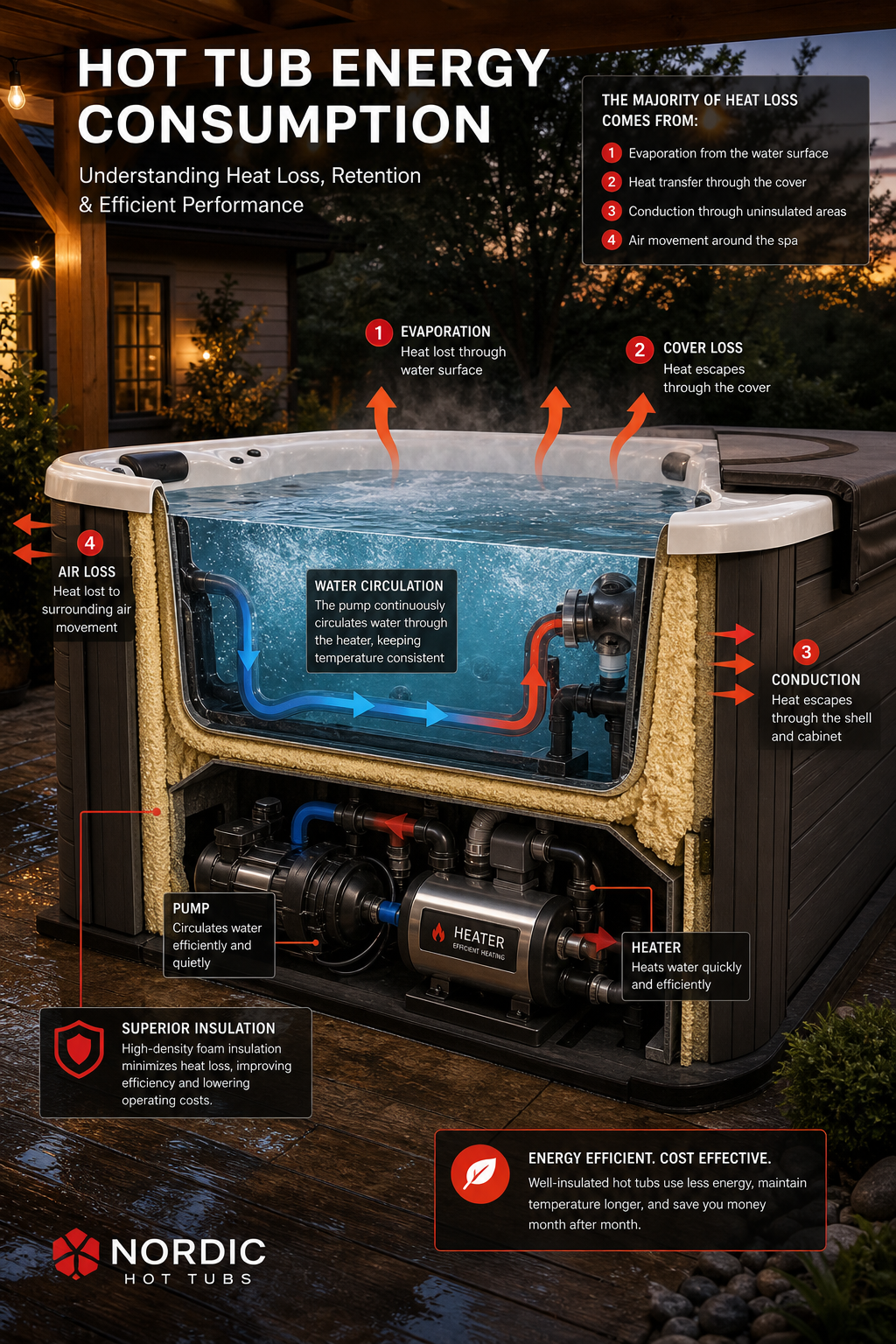
Why the gap? Heat loss through the cabinet, the water surface, and the plumbing can be huge. A well‑insulated shell and a tight‑fit cover keep warm air inside, forcing the heater to kick on less often. The California Energy Commission (CEC) tests many models and finds that certified tubs run about 22 % more efficiently than the baseline standard.Sundance Spa research backs that claim.
Temperature settings matter, too. A 2‑3 °F drop can shave 10‑20 % off the heating load. That’s because the heater cycles less often when the water sits a little cooler. For occasional users, lowering the set point to 85‑90 °F while away can cut energy use further without risking freeze damage.
Smart owners also program their spas to run during off‑peak hours if the utility offers time‑of‑use rates. Running the heater at night can drop the per‑kWh cost by up to 30 %.
Key Components That Impact Efficiency
Not every part of a spa is created equal. Let’s break down the pieces that either waste power or help you save it.
Insulation
Full‑foam insulation is the gold standard, but the type of foam matters. Open‑cell foam stays flexible and keeps its R‑value over time. Closed‑cell foam can harden, lose insulation value, and make future repairs a nightmare. Hot Tub University explains the difference. Caldera® Spas, for example, uses FiberCor® foam that’s four times denser than the half‑pound foam most budget tubs use. That density creates a tighter thermal barrier.
R‑values for premium foams range from R‑14 to R‑50. The higher the rating, the slower the heat leaks through the cabinet. In desert heat, a higher R‑value still matters because night‑time cooling can sap energy.
Covers
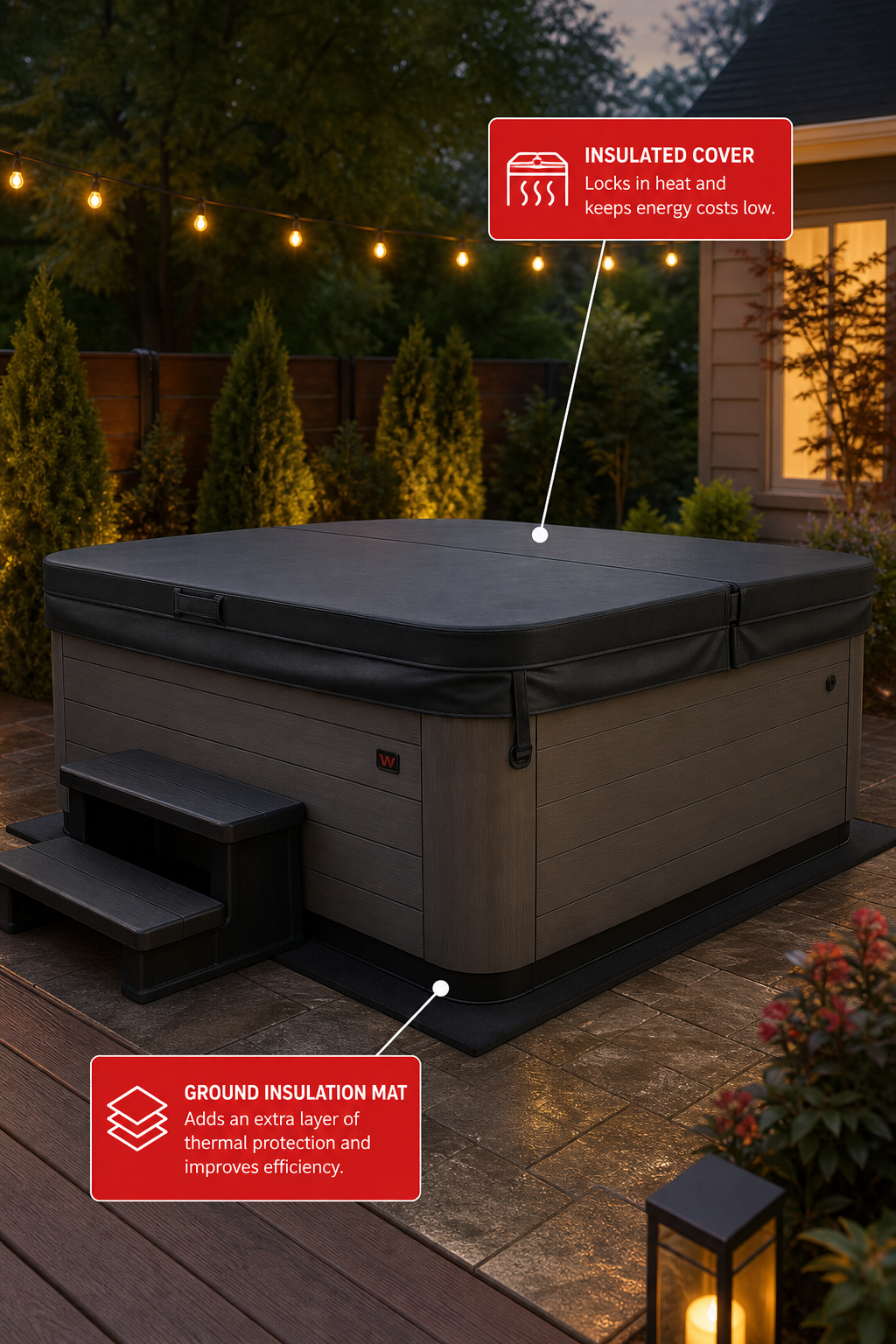
The cover is the spa’s first line of defense. A tight‑seal, high‑R‑value cover can stop up to 70 % of heat loss. If the cover sits loose or has waterlogged sections, you’ll see the heater running longer to make up for the leak.
Floating thermal liners add a second barrier right on the water surface. Wavespas notes that a good cover plus a floating liner can cut energy use by 40‑50 %.Wavespas cover guide
Pumps and Circulation
Variable‑speed pumps can use half the power of single‑speed units. They adjust flow to match filtration needs, so the motor doesn’t spin at full throttle when the water is already clean.
Dirty filters force the pump to work harder. A clogged filter can raise pump power draw by 5‑10 %. Regular cleaning keeps both water quality and energy use in check.
Heater Type
Most modern spas use electric resistance heaters, which are nearly 100 % efficient at converting electricity to heat. Gas heaters can heat faster but run at about 80 % efficiency, meaning you lose more energy as exhaust.
Air‑source heat pumps pull heat from the surrounding air and can cut heating energy by up to 50 % compared to straight electric elements. They work best in milder climates but still save money in hotter zones like the Coachella Valley.
Smart Strategies to Boost Efficiency
Even if your spa already has good parts, habits can push savings further. Below are actions you can take right now.
Temperature Management
Set the thermostat to 98‑100 °F for everyday use. Dropping a few degrees feels almost the same in the water but reduces heater cycles by roughly 20 %.
If you’re away for a week, lower the temp to 85‑90 °F. Keep the cover on at all times. When you return, raise the temp a day early so the heater can work during the cooler night hours.
Timing and Utility Rates
Many utilities charge less after 11 PM. Use the spa’s built‑in timer or a smart plug to schedule heating and filtration for those off‑peak windows. You’ll see a 15‑30 % bill drop without any hardware changes.
Cover Care
Inspect the cover monthly. Look for water pockets, tears, or worn hinges. A small leak can double heat loss. Replace a worn cover every 5‑7 years for optimal performance.
Filtration and Water Quality
Clean the filter at least once a month. A clean filter lets water flow freely, so the pump doesn’t have to work harder. Balance pH and alkalinity; out‑of‑range water forces the heater to work harder to keep temperature stable.
Upgrade Options
Consider a thermal floating liner under the cover. Wavespas says this extra layer can shave another 15‑25 % off heating costs.
Installing a ground insulation mat beneath the spa prevents 25‑30 % of heat loss through the base, especially on specific slabs.
Finally, if your model supports an “Eco” or “Economy” mode, enable it. The control system will learn your usage pattern and lower the heater output during idle periods.
Comparing Heating Technologies
Choosing the right heater sets the baseline for your energy bill. Let’s compare the four main types you’ll see on the market.
Electric Resistance Heaters
These are the most common. They sit inside a stainless‑steel tube and heat water directly. Efficiency is near 100 % because almost all the electricity becomes heat. They’re quiet and easy to install but can be pricey to run in very cold weather.
Gas Heaters
Powered by propane or natural gas, they heat water faster than electric units. The trade‑off is lower efficiency, about 80 %, and the need for a gas line and proper ventilation. They shine for spas that need a quick heat‑up for occasional use.
Heat Pump Heaters
These pull heat from the air and transfer it to the water. In moderate climates they can cut heating electricity by up to 50 %. They run quieter than electric elements but need space for the external unit and perform best when the outside air isn’t below 45 °F.
Wood‑Fired Heaters
Traditional wood fires heat water through a coil. The fuel cost can be low if you have a steady wood supply, and the carbon footprint can be smaller than gas. However, they require manual loading, generate smoke, and need regular cleaning.
When you line up the options, ask these questions:
- What is the typical daily use? (Frequent use favors electric or heat pump.)
- What fuel is readily available? (Gas‑rich homes may pick gas.)
- What is the local climate? (Cold winters favor heat pump or gas.)
- What is the upfront budget vs. long‑term operating cost?
In the Coachella Valley, where nights can dip but days stay hot, a heat pump paired with a high‑R cover often gives the best balance of comfort and cost.
According to Cedar Tubs’ heating guide, a well‑sized electric heater in a well‑insulated tub can match the comfort of a gas heater while using less energy overall.
Long‑Term Savings and ROI
Putting efficiency measures together isn’t just about lower bills; it’s about getting a solid return on the money you spend.
Let’s run a quick example. A 400‑gallon spa with a standard heater draws about 3 kWh per day. At $0.12/kWh that’s $131 a year. Upgrade the cover (cost $400) and add a variable‑speed pump (cost $250). Together they can cut daily draw to 2 kWh, saving $87 annually. The combined $650 investment pays for itself in roughly 7.5 years.
If you add a heat‑pump heater ($2,200) instead of a standard electric element, daily use may drop to 1.5 kWh. That’s a $157 yearly saving. The payback period shrinks to about 14 years, but you also enjoy a lower carbon footprint.
Don’t forget maintenance. A well‑maintained spa avoids costly repairs that can erase any energy savings. Regular filter changes, water chemistry checks, and cover inspections keep the system running efficiently for a decade or more.
Luxury Hot Tubs often recommends Caldera® models because their FiberCor® foam and certified tight‑seal covers give a strong baseline efficiency. Pair that with a heat‑pump heater and you’re looking at the lowest possible operating cost for a luxury spa in a desert climate.
When you total up the upfront cost, the annual savings, and the expected lifespan, you can calculate a clear ROI and decide which upgrades make sense for your budget.
Salt Water Hot Tub Guide: Benefits & Maintenance
Frequently Asked Questions
How much electricity does a typical hot tub use?
A typical hot tub uses between 3 and 6 kWh per day, depending on size, insulation, and temperature settings. The exact number varies with climate and how often you run jets. Expect an average of about 5 kWh/day for a mid‑size spa kept at 100 °F.
Can I improve efficiency without buying new parts?
Yes. Adjust the thermostat a few degrees lower, keep a tight‑fitting cover on at all times, and schedule heating for off‑peak hours. Cleaning the filter and balancing water chemistry also help the heater run less often.
Is a heat‑pump heater worth the extra cost?
In milder climates a heat‑pump can cut heating electricity by up to 50 %. The higher upfront price pays off over several years, especially if you use the spa regularly. In very cold regions the savings shrink, so weigh climate against budget.
What R‑value should I look for in foam insulation?
Higher is better. Aim for R‑14 or above for the cabinet walls. Premium models like Caldera® use FiberCor® foam that’s four times denser than standard half‑pound foam, delivering superior thermal performance.
How often should I replace my hot‑tub cover?
Most manufacturers suggest a 5‑to‑7‑year lifespan. If the cover shows water‑logging, cracks, or loss of fit, replace it sooner. A fresh, high‑R cover can reduce heating costs by up to 25 %.
Do variable‑speed pumps really save energy?
Yes. They adjust flow to match filtration needs, using roughly half the power of a single‑speed pump. Keep the filter clean, and the pump can stay at a lower speed for longer periods, cutting electricity use.
What maintenance tasks affect energy use the most?
Cleaning or replacing filters, checking for leaks in the plumbing, and maintaining proper water chemistry are the top three. Each of these reduces the workload on the heater and pump, directly lowering power draw.
Is there a quick way to estimate my monthly hot‑tub cost?
Improve your daily kWh use, multiply by 30, then by your local electricity rate (e.g., $0.12/kWh). For a 4 kWh/day spa, that’s 120 kWh per month, or about $14. Adjust the daily figure based on temperature settings and cover use for a more accurate picture.
Conclusion
Hot tub energy efficiency isn’t a mystery. It starts with solid insulation, a snug cover, and a well‑matched heater. From there, smart habits, like lowering the thermostat a few degrees, running the system during off‑peak hours, and keeping filters clean, add up to real dollar savings.
When you combine these actions with a quality spa, such as the Caldera® models that feature four‑times‑denser FiberCor® foam and a CEC‑certified cover, you set yourself up for the lowest possible operating cost in the desert heat. Over years of use, those savings turn into a healthy ROI and a smaller carbon footprint.
If you want to dive deeper into water‑care options or explore a salt‑water system that can also trim your chemical costs, . It’s a natural next step for anyone serious about keeping their oasis both relaxing and affordable.