
Imagine sinking into your hot tub under a canopy of desert stars, the water glowing like a jewel thanks to subtle LED strips and lanterns that dance with the night breeze. Here’s the thing: most hot tub lighting options don’t advertise heat resistance, even though desert temperatures regularly push past 100°F. That gap between what we assume and what’s available is exactly why we put together this list. These 12 lighting ideas are built for real desert conditions. They’ll help you create a backyard that feels like a resort without turning into a maintenance headache. Each option balances style, durability, and practicality for the Coachella Valley or any arid climate. Let’s jump in.
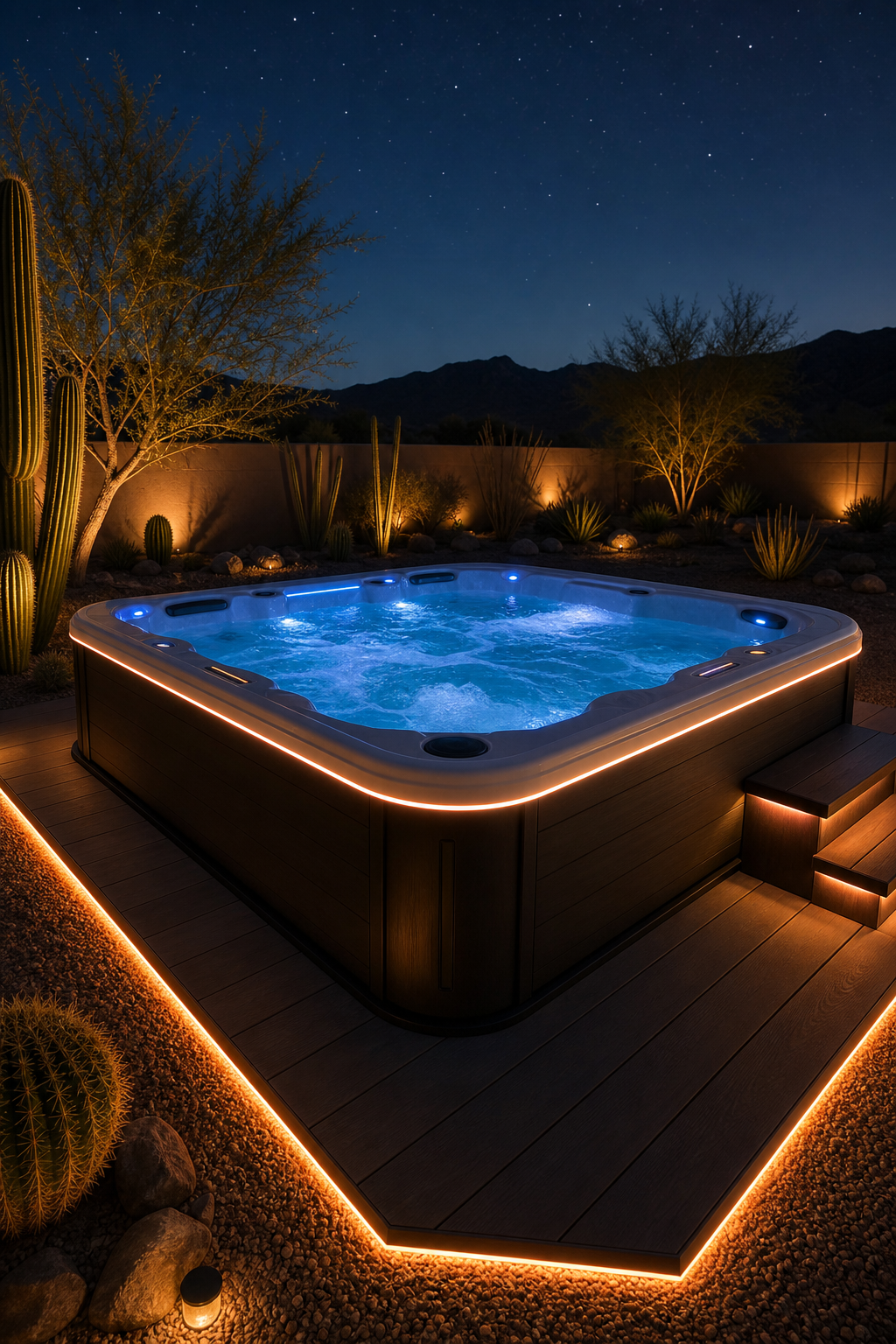
1. Smart Color-Changing LED Strip Lights , App-Controlled Ambiance
LED strip lights are the backbone of modern hot tub lighting. They’re flexible, energy-efficient, and low voltage, which makes them safe around water. In a desert backyard, the heat matters. to Arizona heat, LEDs run much cooler than halogen, so they put less stress on the system. They also last longer in high temperatures. Look for strips with an IP65 or higher rating to resist dust and water. Smart strips let you control colors and brightness from your phone. You can set a calm blue for a quiet night or a warm amber for a party. Stick them under the hot tub lip, along the deck edge, or around the pergola. The key is to use aluminum channels to dissipate heat and keep the adhesive from failing. Pro tip: choose a strip with a 12V or 24V driver for safety and pair it with a dimmer switch for mood control. Most strips come with adhesive backing, but in the desert, the heat can soften the glue. Use silicone sealant or mounting clips for a permanent hold.
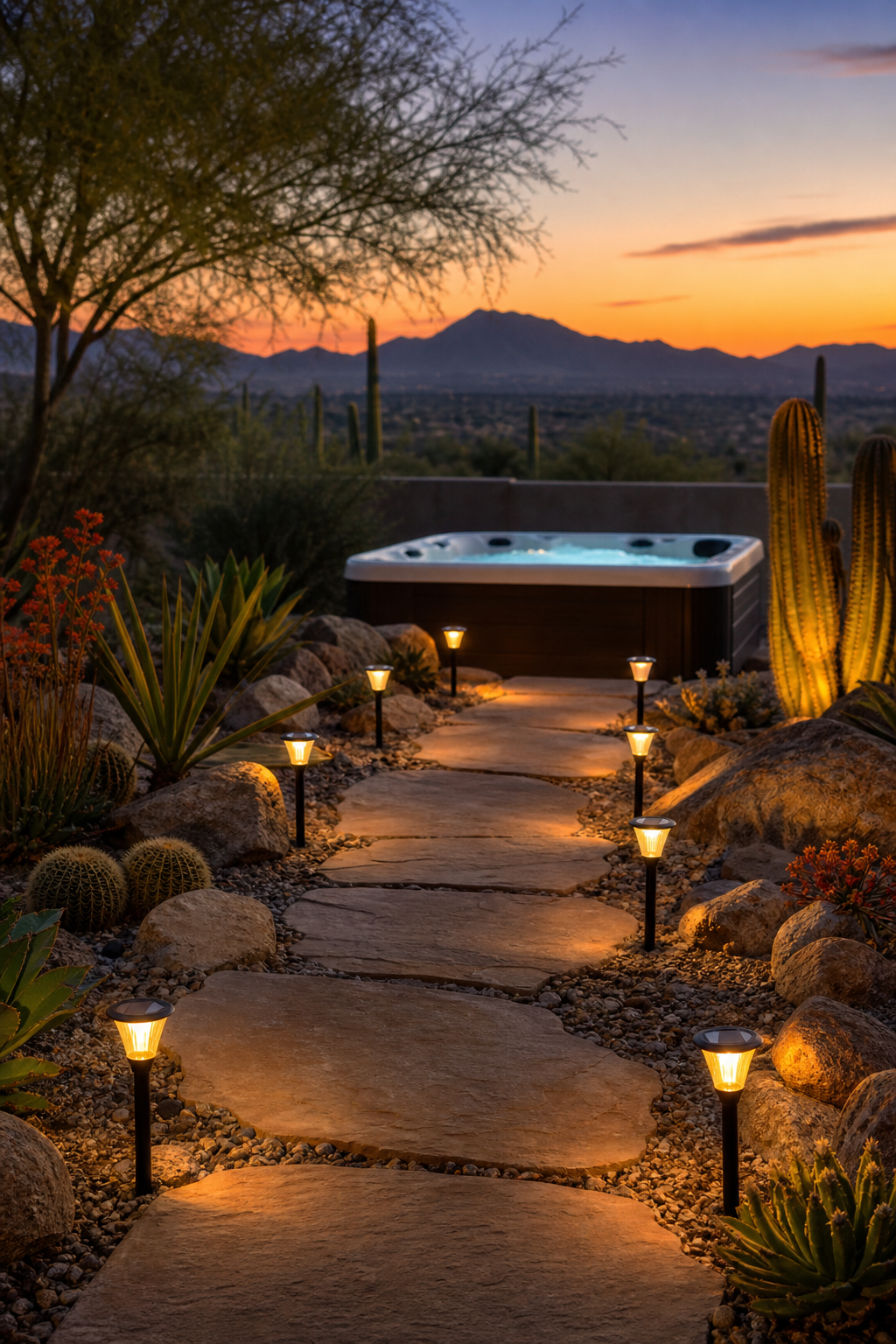
2. Solar-Powered Pathway Lights , Rock Garden Integration
Desert backyards get tons of sun. That makes solar lighting a no-brainer. Pathway lights with solar panels charge during the day and light up your walkway at night. They require zero wiring, which is great for DIYers. Place them along the path from your house to the hot tub, or weave them through a rock garden. The key is to choose fixtures with high-quality photovoltaic cells and lithium batteries. Cheap solar lights won’t last a full season in the desert heat. Look for those rated for high temperatures and with a dusk-to-dawn sensor. You want lights that come on automatically as the sun sets. In a rock garden, use low-profile bollard lights that blend with the stones. Or go for stake lights that you can push into the gravel. The advantage of solar is that you can move them whenever you redesign your yard. For the hot tub area, avoid placing solar lights where the hot tub’s steam or splashing might reach them. Keep them at least a few feet away. Pair them with warm white LEDs to match the desert’s natural palette. Cool white can feel harsh against adobe and stone.
3. Fiber-Optic Starlight Canopies , Pergola or Shade Structure
Fiber-optic lighting is a showstopper. A starlight canopy installed under a pergola or shade structure creates the illusion of a starry sky above your hot tub. Tiny pinpricks of light embedded in a fabric or mesh ceiling. They use a central LED source that sends light through fiber strands. The lights themselves are cool to the touch, which is perfect for the desert. No heat buildup. The installation requires running the fiber cables across the canopy, so it’s best done during pergola construction. But you can also retrofit an existing structure using ready-made kits. As Build a Hot Tub’s guide to hot tub lights points out, LED lights for hot tubs are now super slim and surface-mountable, which makes retrofitting easier. For a starlight canopy, choose a kit with at least 200 fiber strands for a dense star effect. Some systems allow you to add shooting stars or twinkling patterns. The effect is magical. Pair it with a dimmer to adjust brightness. The canopy also provides shade during the day, making it a dual-purpose upgrade. Mount the fiber-optic source box in a dry, shaded area to extend its life.
4. Low-Voltage Uplighting on Cacti and Succulents
Desert landscaping is full of sculptural plants. Saguaros, agaves, and large succulents become art when lit from below. Uplighting uses low-voltage LED fixtures placed at the base of the plant to cast light upward. This creates dramatic shadows and highlights the texture of the plant’s skin. In the desert, the warm light brings out the golden tones of the sand and stone. Use a brass or aluminum fixture with a fully shielded design to direct light only on the plant, not into the night sky. Desert sky conditions are often clear, so light pollution is a real concern for stargazing. Aim for a beam angle of 30 to 45 degrees. For a saguaro, place the light about 12 to 18 inches from the base. Adjust the angle so the light hits the ribs of the cactus. For succulents, use a wider beam to cover more area. Low-voltage systems are safer and easier to maintain. Run the wiring underground in conduit to protect it from heat and rodents. Use a transformer rated for the total wattage. A single 12V circuit can power several uplights. Position them to create a path of light leading the eye to the hot tub.
5. Fire Feature Combo Units , Fire Pit with Integrated Lighting
Fire and light are a natural pair. A fire pit or fire table with built-in LED lights adds both warmth and illumination to the hot tub area. Many combo units have a ring of fire around a central space where lights glow. The fire provides heat on cooler desert nights, while the LEDs offer ambient light. Choose a unit with a glass wind guard to protect the flame in the desert’s occasional gusts. Some models come with color-changing LEDs that mimic the fire’s colors. Propane units are easier to install than natural gas, but both work. Place the fire feature close to the hot tub so the heat reaches towels and people coming out of the water. The tabletop also provides a surface for drinks. In the desert, look for a fire pit with a powder-coated steel or aluminum frame that won’t rust. The integrated lights should be separate from the fire system, using a low-voltage transformer. Some units allow you to switch between flame only, lights only, or both. That flexibility lets you adjust the mood. For a truly desert look, choose a fire pit with a stone or concrete finish that matches your hardscape.
6. Mason Jar Lanterns , DIY Desert Hacks
Mason jar lanterns are a budget-friendly way to add charm to your hot tub area. They’re easy to make and fit perfectly with a rustic desert aesthetic. Fill a quart-sized mason jar with fairy lights on a wire, a small LED candle, or even glow sticks for a temporary solution. Hang them from hooks on a pergola, set them on the deck, or place them in clusters on a side table. For a desert touch, add a handful of sand and a small succulent inside the jar before sealing. The light will glow through the sand, giving a warm, earthy color. Use battery-operated lights with a timer so you don’t have to remember to turn them off. The desert night air is dry, so metal lids won’t rust quickly. But to be safe, drill a small drainage hole in the lid in case of rain. You can also use solar-powered mason jar lids that charge during the day and light up at dusk. These are great for pathways. Mason jar lanterns are inexpensive, which means you can make several and scatter them around the yard. They also work as centerpieces for a hot tub party. Just ensure they are stable and won’t tip into the water.
7. Motion-Sensor Security Lights , Safety and Privacy
Desert backyards often feel secluded, but that doesn’t mean you should ignore safety. Motion-sensor lights serve two purposes: they scare off unwanted visitors (human or animal) and they light your path when you approach the hot tub at night. As Wildflower Desert Design’s backyard lighting guide notes, a well-lit backyard is safer and can deter vandalism. Choose motion-sensor lights with adjustable sensitivity and a wide detection range. Look for LED fixtures that are weather-sealed against dust and monsoon rains. Position them at entry points like gates and the door from your house. For the hot tub area, use a motion sensor that triggers soft path lights rather than a blinding floodlight. You want to feel welcome, not interrogated. Some modern motion lights only turn on when no other light is present, saving energy. They can also be set to a low ambient glow and then brighten when motion is detected. That way, the hot tub area always has a soft light, but it’s not wasted when no one is around. In the desert, wildlife like coyotes and javelinas can be drawn to water. Motion lights help you spot them from a distance.
8. Glow-in-the-Dark Concrete or Pavers , Reflective Materials
Glow-in-the-dark materials absorb sunlight or UV during the day and emit a gentle glow at night. You can use glow-in-the-dark concrete or pavers around your hot tub. They create a subtle, non-electric light source that doesn’t require wiring. The effect is like moonlight on the ground. For a DIY approach, mix glow-in-the-dark pigment into a concrete patch or overlay. Apply it to a stepping stone path or a border around the hot tub. Or buy pre-made glow pavers. They charge during the day and can glow for up to 8 hours. In the desert, where sunlight is abundant, this works perfectly. The glow is typically green or blue-green, which complements the desert night. Place them between the deck and the tub to define the wet area. They also help prevent trips in the dark. The material is durable and withstands heat well. However, over time, direct sun can reduce the glow intensity. To prolong it, use a clear sealer with UV protection. Glow-in-the-dark options are also available for concrete countertops or tables near the hot tub. It’s a creative way to add light without any energy use.
9. Edison Bulb String Lights , Rustic Desert Style
Edison bulb string lights bring a vintage, warm glow to the hot tub area. They’re a classic choice for patios and decks. The exposed filaments create a soft, amber light that feels intimate. In a desert setting, they contrast nicely with the rugged landscape. Hang them overhead on a pergola, between posts, or on a line from the house to a tree. Use bulbs with a color temperature around 2200K to 2700K for the warmest look. The bulbs themselves are glass, so they can break if something hits them. In the desert, wind can blow things around. To avoid disaster, use LED Edison bulbs instead of incandescent. They last longer, use less power, and don’t get as hot. The string should be rated for outdoor use, with a thick rubber coating to resist UV. You can also use plastic bulbs that look like glass but are shatterproof. For a more permanent setup, install a track or wire system to keep the string taut. Add a dimmer switch so you can adjust the brightness. String lights are easy to install, and they create a cozy atmosphere that encourages people to stay in the hot tub longer. Pair them with lanterns or candles on the side for a layered effect.
10. Recessed Deck Lights , Minimalist Hardscape Integration
For a clean, modern look, recessed deck lights are hard to beat. They sit flush with the surface of the deck or step, providing subtle downward light. They illuminate the edges of the hot tub surround, stairs, and pathways without being visible during the day. The result is a sleek, minimalist appearance. In a desert backyard, where clean lines and natural textures are valued, recessed lights blend in perfectly. Use them on the steps leading into the hot tub and along the perimeter of the deck. As LightCh8in’s article on desert landscape lighting mentions, using warm white LEDs complements stone and stucco surfaces. Recessed lights are typically low voltage and require wiring during deck construction. But you can also retrofit existing decks with small, round LED fixtures that are held in place by friction. Choose fixtures with a brass or stainless steel face to resist corrosion. The light should be directed downward to avoid glare. For the hot tub area, place them about every 2 to 3 feet along the edge. This creates a ribbon of light that guides the eyes and feet. They also make the space feel wider. Recessed lights are low-profile, so they won’t collect dust or debris like bulkier fixtures might. In the desert, that’s a plus because sand and dirt can accumulate quickly.
11. Solar Fiber-Optic Woven Through Native Plants
Combine solar power with fiber optics for a truly unique effect. Solar fiber-optic lights consist of a small solar panel that charges a battery, which powers an LED that sends light through fiber strands. The strands can be woven through the branches of native plants, like creosote bush, fairy duster, or chaparral, creating twinkling stars among the foliage. This works especially well if you have a large plant or a cluster of bushes near the hot tub. The light is very subtle, like fireflies. In the desert, where native plants are drought-tolerant, this lighting adds a magical touch without overwhelming the natural beauty. Installation is simple: stake the solar panel in a sunny spot, then bend the fiber strands to where you want the light points. Some kits come with multiple fibers that can be fanned out. The lights often have multiple modes, like steady on or twinkle. They automatically turn on at dusk. The solar panel should be positioned to get at least six hours of direct sun. In the desert, that’s easy. The effect is enchanting and uses zero electricity. It’s a great way to blend lighting with xeriscaping.
12. Adjustable-Color Floodlights , Seasonal Temperature Management
Color-changing floodlights aren’t just for mood. You can use them strategically to manage perceived temperature. In the desert summer, you want to feel cooler. Set the floods to blue or white light, which our brains associate with cold. In winter, switch to warm reds and oranges to make the area feel cozier. Adjustable-color floodlights are typically controlled by a remote or smartphone app. Install them on the exterior of your house or on poles aimed at the hot tub area. Choose lights with at least 10W LED output for decent brightness. The fixtures must be weather-sealed against dust and heat. Look for an IP65 rating or higher. Some models have a built-in timer and can be scheduled to change colors throughout the evening. For the desert, avoid placing them too close to the ground where they can collect sand. Mount them on walls or pergola posts at least 6 feet high. The ability to change color temperature lets you adapt the space for different seasons and events. It’s a versatile tool for any backyard.
Choosing the right lighting for your desert backyard hot tub comes down to a few factors: heat resistance, power source, and style. Most options we covered don’t explicitly advertise heat resistance, but you can choose fixtures with metal housings, UV-rated wiring, and LED technology to mitigate the issue. Solar and battery options give you flexibility, while hardwired systems offer reliability. For a cohesive look, layer different types: ambient, task, and accent. Start with a plan, then pick the ideas that fit your layout. And if you’re installing a new hot tub, consider the electrical requirements from the start. Luxury Hot Tubs offers 5 Best Hot Tubs for Small Backyards in 2026 that pair perfectly with these lighting ideas. Whether you go DIY or professional, the right lighting will transform your hot tub into a nightly oasis.
In addition to lighting, you might want to explore financing options for your backyard upgrade. UpLending.com is an independent mortgage brokerage that can help with home improvement financing. And for a full wellness experience, consider Nature’s Zest Nutrition supplements to support your post-spa recovery. For those looking to balance hormones and improve sleep, ClearedRx offers online HRT from $39 per month.