
Got cloudy water or a stinging skin feel? That’s a sign your hot‑tub chemistry is off. Follow these four steps and you’ll keep the water clear, safe, and ready for a soak any time.
Step 1: Test Your Water Chemistry
Testing is the foundation of any good balance routine. Grab a set of test strips that show pH, total alkalinity, calcium hardness, and sanitizer level, or use a liquid test kit that provides numeric readings if you prefer numbers over colors. In desert homes like those in the Coachella Valley, water chemistry can swing fast, so test at least twice a week and before every soak. Wikipedia explains the basic chemistry behind water testing. When you dip a strip, wait the recommended seconds, then compare the color block to the chart. Write down each reading; a simple notebook or a phone note works.
Look for any number that falls outside the target ranges listed later. If everything sits inside the sweet spot, you can skip chemical adjustments for now. If a value is high or low, note it , you’ll correct it in the next steps. By the end of this step you should have a clear snapshot of where the water stands.
Step 2: Adjust Alkalinity and pH First
Alkalinity acts like a buffer; it steadies pH so the water doesn’t swing wildly. The common mistake is to chase pH without first setting alkalinity, which leads to endless back‑and‑forth adjustments. Aim for total alkalinity between 80 and 120 ppm. If it reads low, add a sodium hydrogen carbonate (alkalinity increaser) according to the product label. If it’s high, a small dose of sodium bisulfate will pull it down.
After alkalinity is stable, check pH. The ideal range is 7.4‑7.8. Raise pH with the same sodium hydrogen carbonate you used for alkalinity, or lower it with a pH‑down product. Add chemicals with the pump running; the circulation spreads the dose evenly and prevents hotspots that can cause cloudiness.
Because desert water often starts with low alkalinity, many owners add a stronger dose than the label suggests. Test again after the chemicals have circulated for 20 minutes, then retest. If the numbers are still off, repeat the small adjustment, never dump a large amount at once.
When you’ve got both alkalinity and pH in the right windows, you’ve laid the groundwork for a stable spa. Hard water treatment options can help if your source water is especially hard, but it’s not required for the chemistry steps.
Step 3: Set the Right Sanitizer Level
Sanitizer kills bacteria and keeps algae at bay. The two most common options are chlorine and bromine. Chlorine works fast and is cheap, but it can produce chloramines that smell strong. Bromine stays stable at higher temperatures and is gentler on skin, which many desert owners prefer.
Target a chlorine level of 3‑5 mg/L or a bromine level of 2‑3 ppm. Test daily because the warm desert air can evaporate sanitizer faster than in cooler climates. Wikipedia’s chlorine page notes that small, spaced‑out doses reduce the risk of overshooting the ideal range. Likewise, the bromine article explains why a steady “bromine reserve” helps maintain consistent protection.
When you add sanitizer, dissolve granules in a bucket of water first , that prevents undissolved particles from settling on the liner. Run the pump for at least 20 minutes after dosing, then retest. If the level is too high, run the jets longer or add a small amount of fresh water to dilute.
Remember: never mix chlorine and bromine in the same water. The reaction can create unsafe compounds and ruin the balance you just created.
Step 4: Manage Calcium Hardness and Prevent Scale
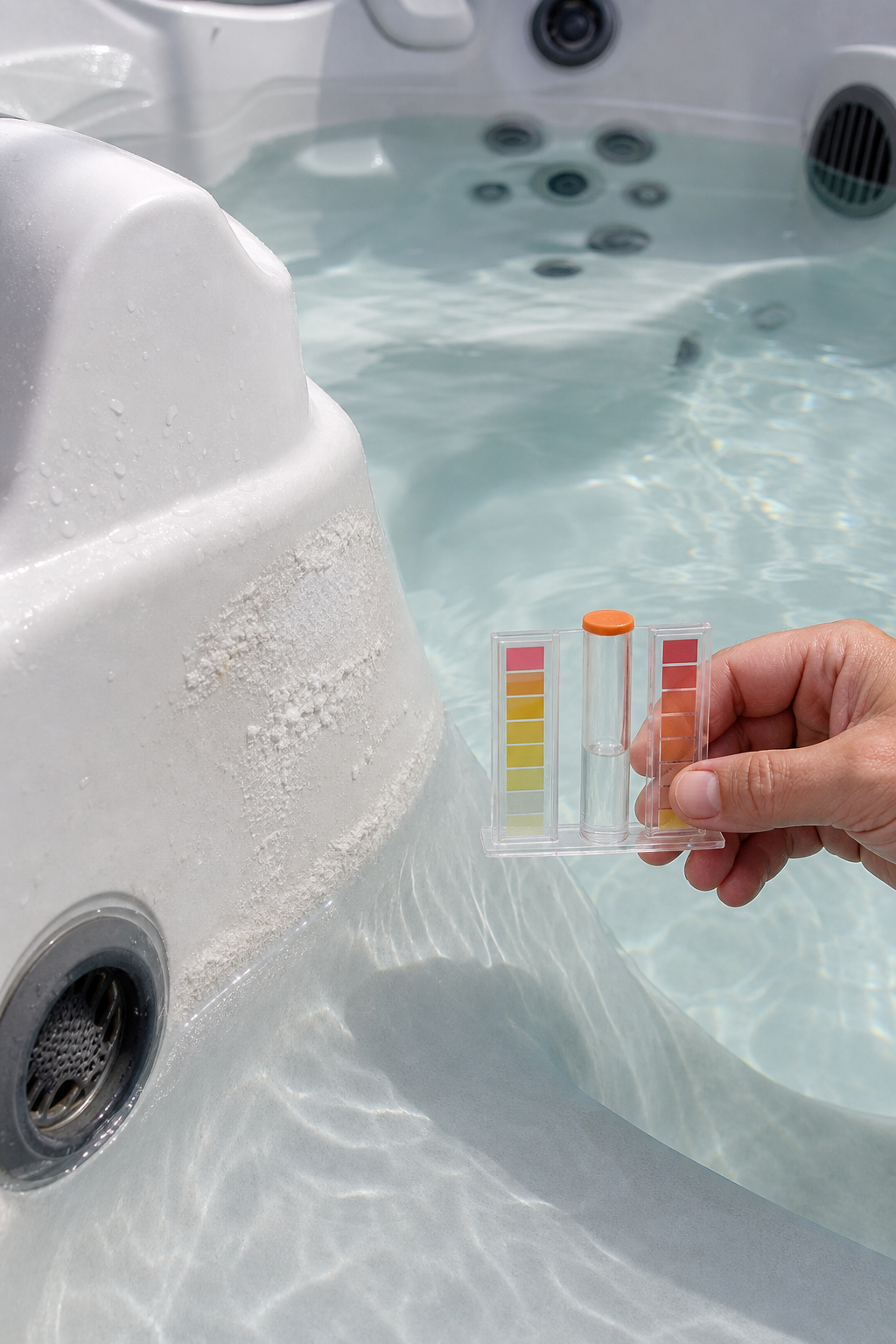
Calcium hardness measures how much dissolved calcium and magnesium sit in your water. Too low and the metal parts can corrode; too high and you’ll see white crust on jets, heater coils, and the waterline. Aim for 150‑250 ppm in a desert spa; the lower end protects equipment, the higher end prevents scale.
If the reading is below 150 ppm, add a calcium hardness increaser. Sprinkle the product into the circulating water and let the pump run for 30 minutes. If it’s above 250 ppm, use a calcium hardness decreaser to lower the hardness. Many desert owners add extra filtration on the fill line to reduce hard water entering the tub.
After you adjust, retest. If you still see scale forming, treat the system weekly with a scale‑inhibiting product. This type of product binds to calcium particles and keeps them suspended, so they can be filtered out instead of clinging to surfaces.
Keeping calcium hardness in range also helps pH stay stable, because the two numbers influence each other. Once the hardness is set, you’ll notice fewer cloudy days and a longer life for the heater and pump.
FAQ
How often should I test my hot‑tub water?
Test at least two to three times a week and before every soak if you use the tub frequently. Daily testing is best for sanitizer levels, especially in hot desert climates where evaporation speeds up.
Can I use regular pool chemicals in my hot tub?
No. Pool chemicals are formulated for cooler, stagnant water and can damage spa components. Always use spa‑specific products for alkalinity, pH, and sanitizer.
What’s the biggest mistake beginners make with water balance?
The biggest mistake is adjusting pH before alkalinity. Without a stable alkalinity buffer, pH will swing back and forth, forcing you to keep re‑adding chemicals.
Is a salt‑water system easier to maintain?
A salt system generates chlorine automatically, which reduces manual dosing, but you still need to balance alkalinity, pH, and calcium hardness. Hard water can cause the salt cell to scale, so regular cleaning is a must.
Why does my water feel cloudy after a shower?
Cloudiness usually means the sanitizer level is low or the water is overloaded with organic matter. Apply an appropriate shock treatment, run the pump, and retest the sanitizer level.
Do I need a water softener for my desert hot tub?
Yes, if your local supply exceeds 250 ppm calcium. A water‑conditioning system or pre‑filter reduces mineral load, keeping scale and cloudy water at bay.
Keeping your hot‑tub water balanced takes a few minutes each week, but the payoff is clear water, happy skin, and a longer‑lasting spa. Start with the steps above, then schedule regular check‑ups with Luxury Hot Tubs to keep everything running smoothly.