
Hard water can turn a soothing soak into a cloudy mess. In the desert, the problem gets worse because the water is loaded with calcium and magnesium. You need a system that pulls those minerals out before they coat your jets, heater, and filter. This list shows seven hot tub water softeners that actually work, explains how each one handles hardness, and gives tips for picking the right fit for a desert‑grade spa.
1. AquaGuard Hot Tub Water Softener , Our Pick for Balanced Water
AquaGuard is the first name we recommend because it balances softness with a low‑maintenance design. The unit attaches to your fill hose and treats water as it enters the tub, so you never have to dose chemicals by hand. It uses a resin‑based ion exchange that swaps calcium and magnesium for sodium, then automatically regenerates with a small salt cartridge.
What makes AquaGuard stand out in a desert climate is its capacity to handle up to 500 gallons of water per cycle. That matches the size of most luxury spas in the Coachella Valley. The system also includes a built‑in hardness monitor that flashes when regeneration is needed, letting you keep an eye on the process without pulling out a multimeter.
Installation is a weekend project at most. You connect the inlet hose to the AquaGuard inlet, run the outlet back to the spa fill line, and tighten the quick‑connect clamps. The unit comes with a step‑by‑step guide that uses simple language and pictures. Once installed, you’ll notice softer water within a single fill.
Because the resin lasts about 12 months in hard‑water zones, you only need to replace the cartridge once a year. That cost is far lower than the cumulative price of chemical additives that you would otherwise buy every month.
Owners in Palm Desert report that their jets stay clear longer and their heaters run cooler, which cuts electricity use. The softer water also feels smoother on the skin, a plus for anyone with sensitive skin.
While AquaGuard is a solid choice, you may want to compare it with a few other options that work better for very large tubs or for users who prefer a cartridge‑free design.
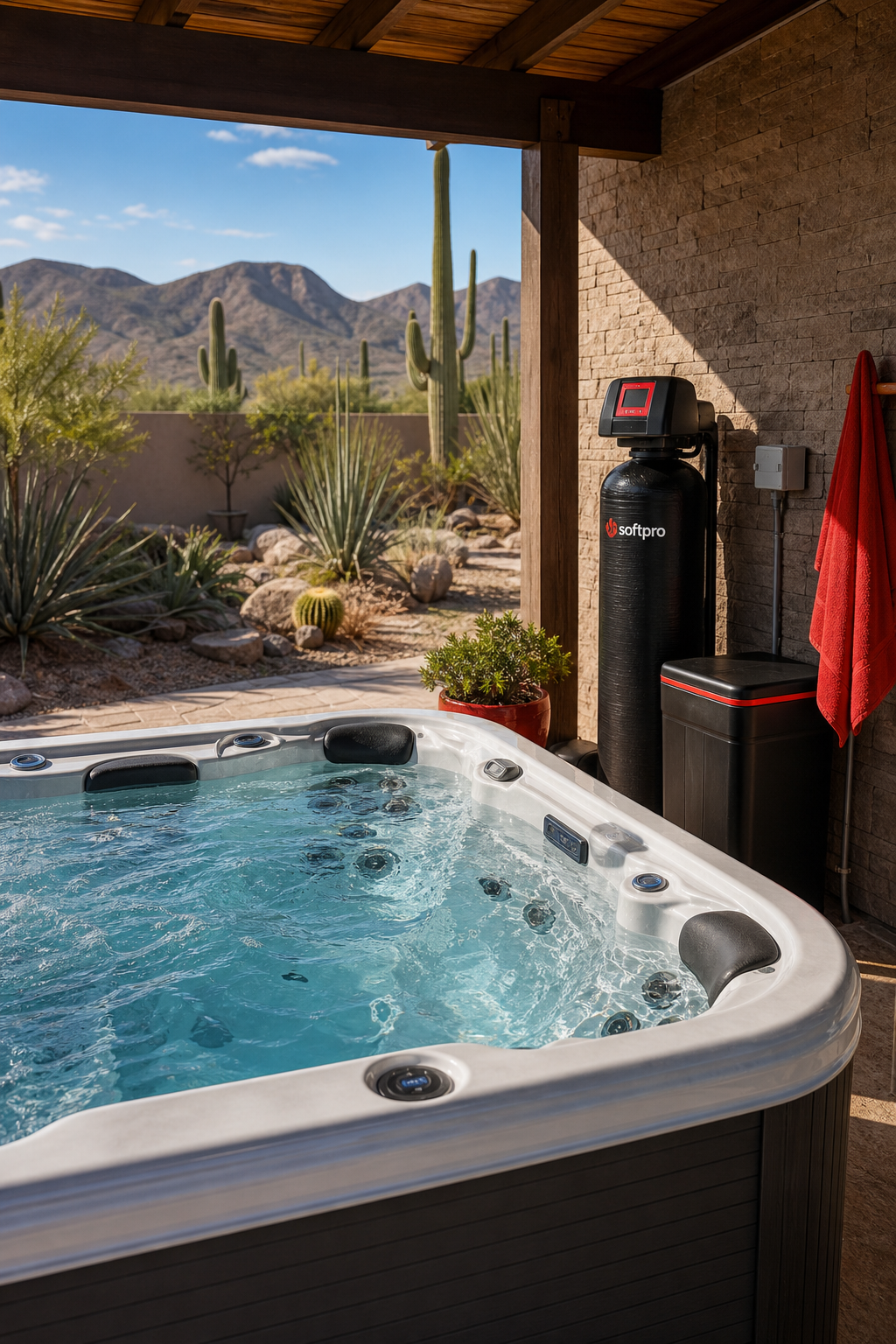
2. SpaGuard Spa Water Softener , Trusted Brand for Mineral Removal
SpaGuard’s 3‑Month Pre‑Measured Kit is a ready‑made solution for owners who want a set‑and‑forget approach. The kit includes a startup conditioner, a weekly shock packet, and a drain‑clean packet. Each component contains a proprietary blend of sodium‑based softeners and scale‑control chemicals that keep calcium from depositing on the shell.
The system is designed for tubs that hold 350‑450 gallons, which covers many of the Caldera® models we sell. It works with any sanitizer, chlorine, bromine, or mineral systems, so you can keep your existing sanitation method while adding hardness control.
According to the product’s Amazon page, the kit treats up to three months of use before a refill is needed. Users simply add the startup packet when they first fill the tub, then add the weekly packet each week. The drain‑clean packet is added before a full drain, helping to strip any scale that may have built up inside the plumbing.
One of the biggest advantages is the simplicity of the dosing schedule. You don’t have to monitor hardness levels daily; the pre‑measured packets handle it for you. That can be a lifesaver for busy homeowners who still want crystal‑clear water.
However, SpaGuard does not disclose the exact resin capacity or regeneration method, which can make it harder to size the system for larger installations. If you have a 500‑gallon spa, you may need to run the weekly packet twice or supplement with a dedicated softener.
For more details on how mineral‑heavy water affects spa components, see the hard‑water guide from PDC Spas. It explains why a product like SpaGuard can prevent scale on heaters and prolong filter life.
3. Leisure Time Spa Soft , Budget‑Friendly Granular Option
Leisure Time Spa Soft is a granular water softener that you add directly to the spa water. It’s sold in a 5‑pound bag and works by releasing sodium ions that bind to calcium and magnesium. The product is formulated for hot‑water temperatures, so you won’t lose effectiveness when the tub sits at 104 °F.
Because it’s a bulk granule, the upfront cost is lower than a cartridge system. A single bag can treat a 500‑gallon tub for about six weeks if you follow the recommended dosage of 1 oz per 100 gallons.
Leisure Time markets the softener as “enzyme‑based,” which means it also helps break down organic oils that cause scum rings. Users report that after a few applications the water feels silkier and the filter clogs less often.
One downside is the need for manual dosing. You’ll have to measure the granules each week and add them to the water. That can be easy if you set a reminder, but it does add a small task to your maintenance routine.
For homeowners in the Coachella Valley, the granular approach can be a good fit if you already use a pre‑filter on the fill hose. The pre‑filter catches sand and grit, while the granules handle the mineral hardness.
We often recommend this product to customers who want a low‑cost entry point and don’t mind a little weekly dosing. It’s especially handy for inflatable spas that don’t have space for a full‑size softener unit.
on Best Hot Tubs for Mineral‑Heavy Water for model suggestions that pair well with granular softeners.
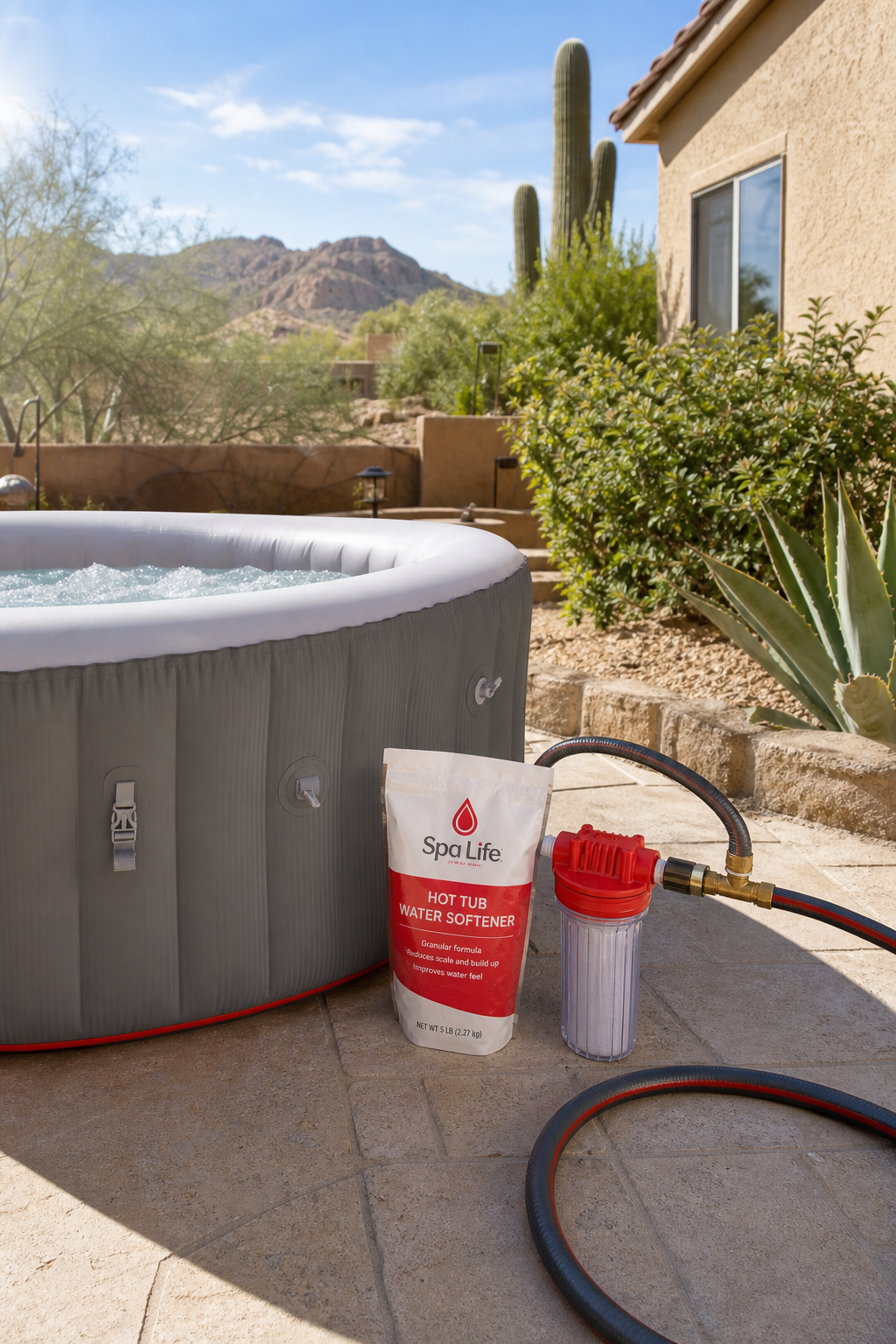
4. PortaSoft Exchange Tank , Delivered Soft Water Service
PortaSoft takes a different route by offering a subscription service that delivers pre‑softened water straight to your home. A small exchange tank sits in your garage or utility room and holds 50 gallons of softened water ready for each fill.
The service works like a water‑filter delivery: a truck drops off the tank, you hook it up to your spa’s fill line, and the water passes through the softener before entering the tub. The system uses a high‑capacity resin that can treat up to 2,000 gallons before the tank needs a swap.
Because the softening happens off‑site, you never have to handle salt or chemicals yourself. The subscription includes monthly tank swaps and a quick‑change cartridge, making it virtually maintenance‑free.
PortaSoft is ideal for larger homes or for owners who want a hands‑off experience. The only extra step is arranging a delivery window, which can be done online.
One caveat is the cost: the service runs about $120 per month, which adds up over time. For a homeowner who values convenience above all else, that price may be worth it.
When the tank runs low, a notification lights up on the unit. You can then schedule the next swap, ensuring you never run out of soft water during a soak.
Because the system is independent of your spa’s built‑in filtration, it works with any make or model, including the Caldera® line we sell.
Overall, PortaSoft offers a premium, worry‑free approach that eliminates the need for on‑site salt handling.
5. AquaChek TruTest , All‑in‑One Softener and Tester
AquaChek TruTest bundles a compact water softener with a digital hardness tester. The unit fits in the side of the spa cabinet and connects directly to the pump line, so you get continuous softening and real‑time readouts on a small LCD screen.
The softening element uses a small resin cartridge that holds enough capacity for a 400‑gallon tub for about eight weeks. The tester draws a tiny water sample each hour and displays calcium hardness in ppm. When the reading spikes above 250 ppm, the unit flashes and prompts you to replace the cartridge.
Installation is straightforward: you cut the pump inlet, insert the TruTest inline, and secure the clamps. The unit includes a built‑in pre‑filter to catch debris that could shorten resin life.
One advantage of having a built‑in tester is that you no longer need separate test strips. You can see the exact hardness level at a glance, which helps you decide whether to add a booster dose before a long soak.
Because the resin cartridge is smaller than stand‑alone units, you’ll need to replace it more often if you have very hard water. The cost per cartridge is modest, however, and the convenience often outweighs the extra swaps.
For customers who love data, the TruTest logs the last 30 readings and lets you download them via USB. That can be handy if you want to track trends or show a technician how the water quality has changed over time.
6. Frog @ease System , Automatic Hardness Management
Frog @ease is a floating cartridge system that combines mineral conditioning with a SmartChlor cartridge. The float sits in the spa water and releases a steady dose of softening minerals and low‑level chlorine. The system is self‑regulating: when the SmartChlor cartridge empties, it flips over, signaling it’s time for a replacement.
Because the minerals are released slowly, the water stays soft without a high sodium load. The SmartChlor cartridge lasts three to four weeks, while the mineral cartridge lasts about four months.
The float works with any standard spa size, making it a flexible add‑on for existing hot tubs. Users report that the water feels smoother and that they spend less time balancing chemicals.
One thing to watch: the system works best when pH stays between 7.2 and 7.8. High pH can degrade the SmartChlor cartridge faster, so you’ll need to monitor pH with a strip or digital tester.
If you have a very large spa or extremely high calcium hardness, you may still need a dedicated ion‑exchange softener in addition to Frog @ease.
Overall, Frog @ease offers a low‑maintenance way to keep water soft and clear, especially for owners who travel often and can’t check the tub daily.
7. Natural Chemistry Spa Flush , Enzyme‑Based Hard Water Treatment
Natural Chemistry Spa Flush is an enzyme‑based weekly treatment that tackles both organic buildup and mineral hardness. The formula contains plant‑derived enzymes that break down body oils, sunscreen residues, and other organics that can trap minerals and cause cloudiness.
When you add the recommended dose, about 1 oz per 500 gallons, the enzymes start working within minutes. They bind to calcium particles and keep them suspended, preventing them from forming scale on the shell or jets.
Because it’s a liquid, you can pour it directly into the spa while the pump runs. The treatment works alongside your regular sanitizer, so you don’t have to stop chlorinating or brominating.
One of the biggest benefits is that it reduces the need for harsh chemicals. Users say they can cut chlorine usage by 20‑30 % after a few weeks of regular enzyme treatment.
The product is also safe for inflatable spas, as it does not contain harsh acids or bleach. It’s made in the USA and carries a clear safety label that warns against mixing with other chemicals, a good practice for any spa owner.
While it doesn’t replace a full ion‑exchange softener, it works well as a supplemental treatment in areas with moderate hardness (150‑250 ppm). For extremely hard water, you’ll still want a dedicated softener.
In our experience, the weekly dose fits easily into a maintenance schedule. Add it after you shock the tub, let the pump run for 10 minutes, then enjoy a clearer soak.
Buyer’s Checklist , What to Look for in a Hot Tub Water Softener
Before you decide, run through this quick list:
- Capacity: Can it treat the gallons your spa holds?
- Regeneration method: Manual salt refill or automatic?
- Maintenance frequency: How often do you need to replace cartridges or add granules?
- Compatibility with your sanitizer: Chlorine, bromine, mineral, or salt‑cell?
- Installation effort: Plug‑and‑play vs. professional install.
- Cost over time: Up‑front price plus recurring cartridge or salt costs.
Use this checklist to match a product to your lifestyle, budget, and the hardness level of your local water.
FAQ
How often should I replace the resin cartridge in a softener?
Most resin cartridges last between 12 and 18 months in typical hard‑water conditions. If you have water hardness over 300 ppm, expect closer to 12 months. Keep an eye on the hardness monitor or test strips; when the reading spikes, it’s time to swap the cartridge. Regularly checking the softener’s indicator light can also alert you before performance drops.
Can I use a household water softener on my hot tub?
It’s not recommended. Household systems add a high level of sodium to the water, which can corrode metal components in the spa’s pump and heater. Most manufacturers, including Caldera®, advise using a spa‑specific softener that treats water at the point of fill, keeping the internal plumbing safe.
Do enzyme‑based treatments replace a softener?
No. Enzyme treatments, like Natural Chemistry Spa Flush, break down organics and help keep minerals in suspension, but they don’t remove calcium or magnesium from the water. For very hard water (above 250 ppm), you’ll still need an ion‑exchange softener to prevent scale buildup.
What’s the difference between a pre‑filter and a softener?
A pre‑filter catches sand, rust, and debris before water enters the spa, protecting the pump and filter. A softener chemically removes calcium and magnesium, preventing scale. Using both gives the best protection: the pre‑filter stops particles, while the softener handles mineral hardness.
Is it safe to run a salt‑water generator with a softener?
Yes, as long as you follow the manufacturer’s guidelines. Some softeners add sodium, which can raise the total salt level. Keep the total salt concentration below 3,500 ppm to avoid excess corrosion. Monitoring both salt and hardness levels will keep the system balanced.
How can I tell if my spa water is still hard after treatment?
Test the water with a hardness test strip or a digital tester. The ideal range is 150‑250 ppm. If you see readings above 250 ppm after a softener cycle, the unit may need a cartridge change or you might need a larger capacity system for your tub size.
Do softeners affect the feel of the water on my skin?
Softened water feels smoother because the sodium ions replace the harsher calcium and magnesium ions. This can reduce skin dryness and make the water feel silkier, which many users prefer, especially after a long soak.
Can I install a softener myself, or do I need a pro?
Many softeners, like AquaGuard and Leisure Time Spa Soft, are designed for DIY installation with a simple hose‑to‑hose connection. If you’re uncomfortable working with plumbing or electrical components, especially for larger units like PortaSoft, it’s best to hire a professional to ensure a leak‑free fit.
Conclusion
Choosing the right hot tub water softener can turn a mineral‑laden soak into a silky, crystal‑clear experience. AquaGuard offers balanced performance with low maintenance, while SpaGuard provides a convenient pre‑measured kit. Leisure Time’s granular option keeps costs down for DIY fans. PortaSoft’s subscription service removes the hassle of salt handling. AquaChek TruTest adds real‑time testing for data lovers. Frog @ease delivers a floating, self‑regulating system, and Natural Chemistry’s enzyme flush helps control organics and softens water without harsh chemicals.
Use the buyer’s checklist to match a product to your tub size, water hardness, and lifestyle. Remember to monitor hardness levels, keep pH in range, and service your softener according to the manufacturer’s schedule.
If you want a deeper dive on spa maintenance, check out our step‑by‑step hot‑tub maintenance guide. It covers everything from filter cleaning to seasonal drain‑and‑refill, giving you the tools to keep your oasis running smoothly all year.