
Cloudy water, weird smells, or foamy surface? Those are the signs your spa is begging for a fresh start. Below is a clear, step‑by‑step routine that tells you exactly when and how to drain your hot tub so it stays sparkling and safe.
Step 1: Identify When It’s Time to Drain
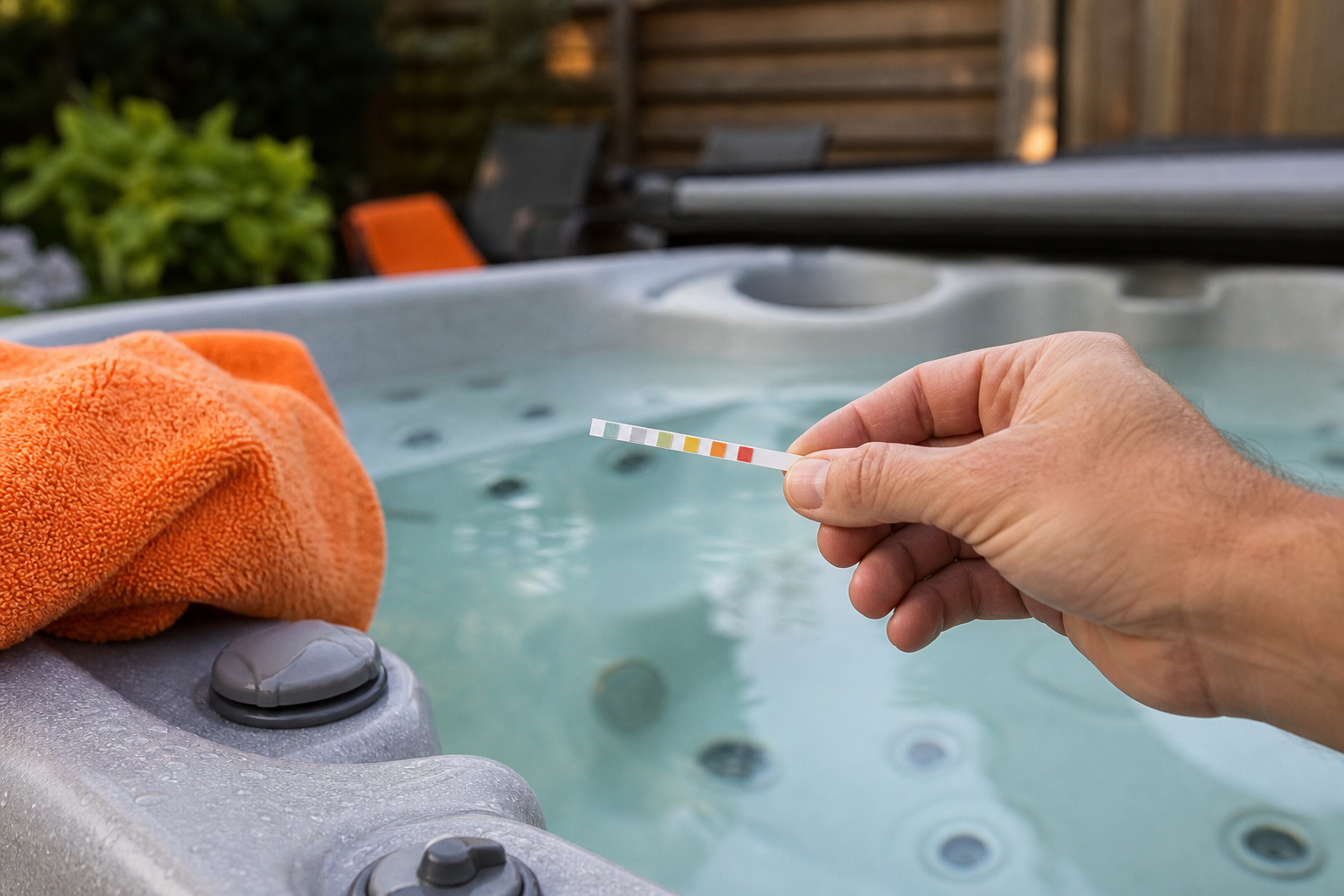
First, watch the water. If the surface loses its clarity even after you’ve balanced chemicals, it’s time to act. A persistent cloud that won’t clear with a shock indicates buildup that a filter can’t handle.
Next, smell the spa. A strong chlorine odor or a sour, musty scent means the sanitizer is working overtime and the water chemistry is off balance.
Foam that forms quickly after you run the jets is another red flag. It shows surfactant residue that regular chemicals can’t dissolve.
Finally, check the total dissolved solids (TDS). When TDS climbs above 1,500 ppm, the water is saturated with minerals and organic matter, and a full drain is the only cure.
In desert climates like the Coachella Valley, those signs appear faster because heat accelerates chemical use and mineral leaching.
By now you should know the exact moments that call for a drain, whether you’re a casual soak‑er or a daily‑use enthusiast.
Step 2: Gather Tools and Choose a Drain Method
You’ll need a few basics before you start: a screwdriver or drill to remove the front panel, a garden hose with a 3/4‑inch diameter, a pump or a shop‑vac, and cleaning cloths.
The internal drain assembly is the simplest route. It lives behind the front skirt near the control panel. Remove the panel, unscrew the drain cap, and attach the hose. Water will flow by gravity.
If your tub sits low on the ground or you need speed, a pump does the job in minutes. Place it in the deepest part of the footwell, connect a discharge hose, and watch the water disappear.
For a quick, tool‑light option, you can siphon with a garden hose. Prime the hose, then let gravity do the work while you prep the interior.
Master Spas recommends checking local ordinances before you dump water, especially in desert neighborhoods where runoff can affect landscaping.
Pick the method that matches your time constraints and the space you have around the spa.
Step 3: Safety Precautions Before Draining
Turn off power at the circuit breaker. Running the pump or heater with low water can cause costly damage.
Let the water cool below 100 °F. Hot water can burn skin and stress plastic components during the drain.
Wear rubber gloves and eye protection. You’ll be handling chemicals and possibly sharp metal parts.
Check the drain location. Make sure the discharge won’t flow into a storm drain or onto plants that can’t handle chlorine.
Using a 3/4‑inch hose can reduce drain time compared to smaller hoses, so choose the appropriate size to avoid back‑pressure.
Once the power is off and the area is clear, you’re ready to start the actual draining.
By now you should have a safe environment set up and be ready to move the water.
Step 4: Execute the Drain
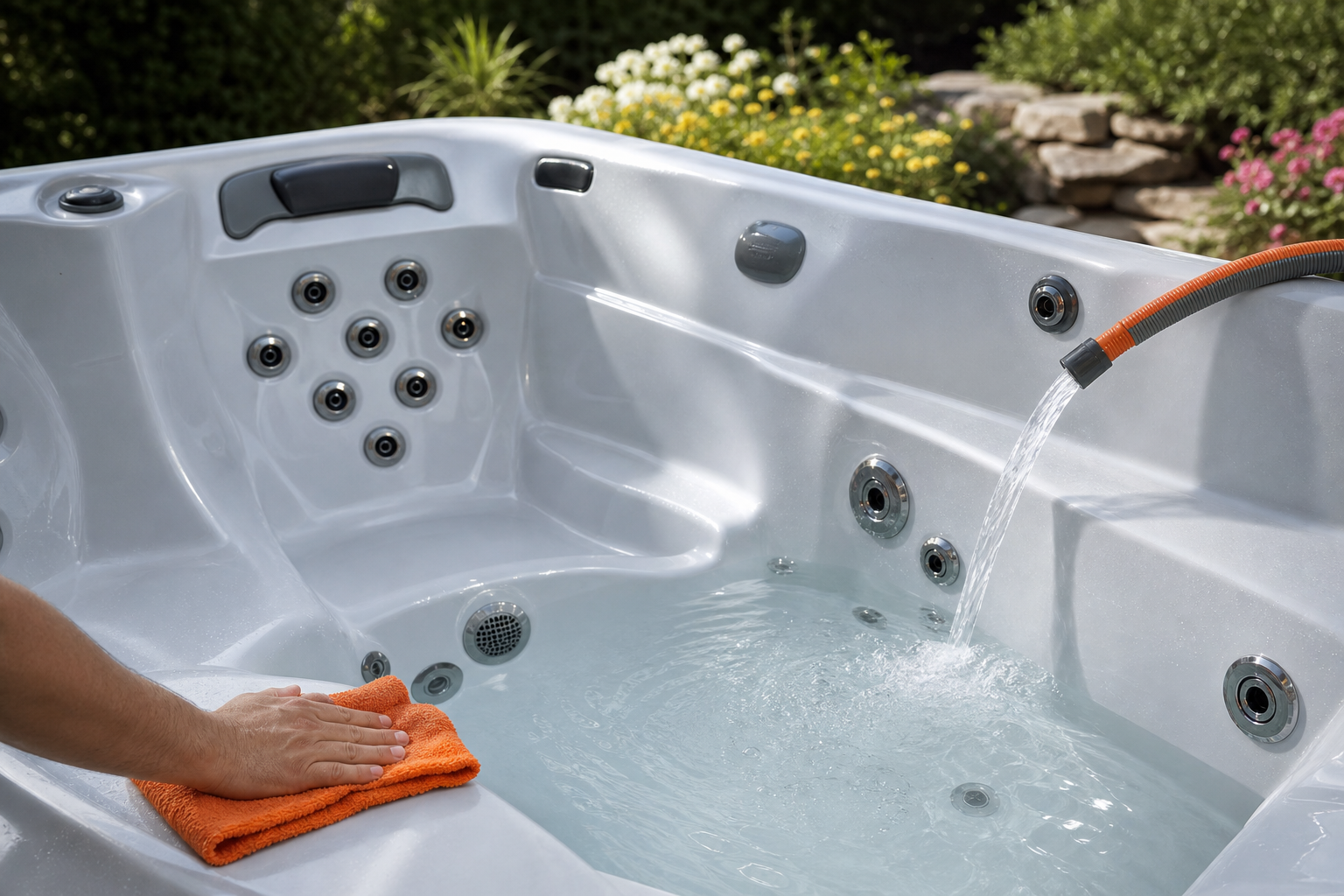
Open the drain valve fully. If you’re using the internal drain, watch the water flow into the hose and out to your chosen drainage spot.
When using a pump, start it and monitor the discharge hose for kinks. Let the pump run until the water level is just an inch above the bottom.
After the bulk of the water is gone, switch to a wet/dry shop‑vac to pull the remaining pockets from the footwell and jets.
Keep an eye on the pump; shut it off the moment the water level drops below the intake to prevent dry‑run damage.
When the tub is empty, close the drain valve and remove any hoses.
Now the interior is exposed and ready for a deep clean.
Step 5: Clean, Refill, and Extend Future Intervals
Start with the filter. Remove it, rinse with a garden hose, then soak it in a mild cleaning solution for several hours. A clean filter helps maintain chemistry longer.
Next, wipe down the acrylic shell with a gentle vinegar‑water mix. Pay special attention to the waterline where scum often builds.
Before refilling, run a line‑flush cleaner through the jets for 20‑30 minutes. This dissolves any biofilm left in the plumbing.
Now fill the tub with fresh water, using a hose filter to catch hard‑water minerals. Turn the power back on, prime the pump, and let the system circulate.
Balance the chemistry as you normally would, pH, alkalinity, and sanitizer. Because you’ve removed most dissolved solids, the next few weeks should require fewer chemical adjustments.
To stretch the next drain interval, consider using a mineral cartridge, which can reduce the buildup that forces frequent water changes.
Frequently Asked Questions
How often should I actually drain my hot tub?
You should aim for a full drain every 3, 4 months for typical residential use, but heavy daily use or high TDS levels can shorten that to as little as 2 months.
What are the biggest signs that it’s time to drain?
Cloudy water that won’t clear, a strong chemical odor, persistent foam, and a TDS reading over 1,500 ppm all signal that a full water change is needed.
Can I just do a partial water change instead of a full drain?
Partial changes (6‑12 inches) can help extend the interval, but they won’t remove biofilm or high mineral buildup, so a full drain is still required periodically.
Is a sump pump safe for my hot tub?
Yes, as long as you use a pump designed for hot‑tub drainage, monitor the water level, and turn it off before the pump runs dry.
Do I need to test the water after refilling?
Absolutely. Test pH, alkalinity, and sanitizer levels before you use the spa, then adjust as needed to keep the water balanced.
Keeping a regular drain schedule prevents costly repairs and ensures every soak feels like a fresh experience.
Conclusion
For desert‑ready spas, we recommend a full drain every 3, 4 months, or sooner if any of the warning signs appear. Start your next cycle by following the steps above, and consider a quick check of TDS levels to fine‑tune the schedule. Need help planning your service? Learn how to maintain a hot tub with our expert guide.
Ready to put this into practice? Luxury Hot Tubs was built for exactly this.