
In the desert, a hot tub fights things it never faces anywhere else: 115° afternoons, mineral-heavy tap water, and sun that bakes covers and shells year-round. Most spas aren’t built for that. A few are. Here are the best luxury hot tubs for a desert climate, grouped by the feature that matters most for where you live, plus who each pick is actually for.
1. Luxury Hot Tubs (Our Top Pick)
Luxury Hot Tubs is the Coachella Valley specialist, and our pick for anyone choosing a luxury hot tub for desert climate. It’s a desert-based dealer serving Palm Desert, Indio, La Quinta, Rancho Mirage, Indian Wells, and the nearby communities. Every spa in the lineup has to do two jobs: look right in a high-end backyard and survive desert ownership.
Best for: homeowners in the valley who want one company to handle the whole thing, from placement to long-term water care.
Here’s why it earns the top spot. Luxury Hot Tubs is the authorized Caldera® Spas dealer for the region, and Caldera is the one luxury line in our research sample that openly markets shells “engineered for extreme heat, mineral-heavy water resistance.” That’s a rare claim. In the durability data we reviewed, only 1 of 9 entries (about 11%) made it, while most brands leaned on generic UV-resistant or all-climate cabinetry instead. Caldera’s in-line salt water system self-monitors water in a way no other model in the sample matched.
The service side is what most dealers skip. Luxury Hot Tubs starts with an on-site visit to plan placement, electrical, and access, then delivers and installs, then sticks around with a water care and service program. If you want to see how the full process works before you commit, their hot tub buying guide walks through budget, sizing, and maintenance for desert homes.
One honest caveat: this is a regional dealer, so the white-glove install and service program is built for the Coachella Valley. If you live far outside the valley, you’ll want a local equivalent.
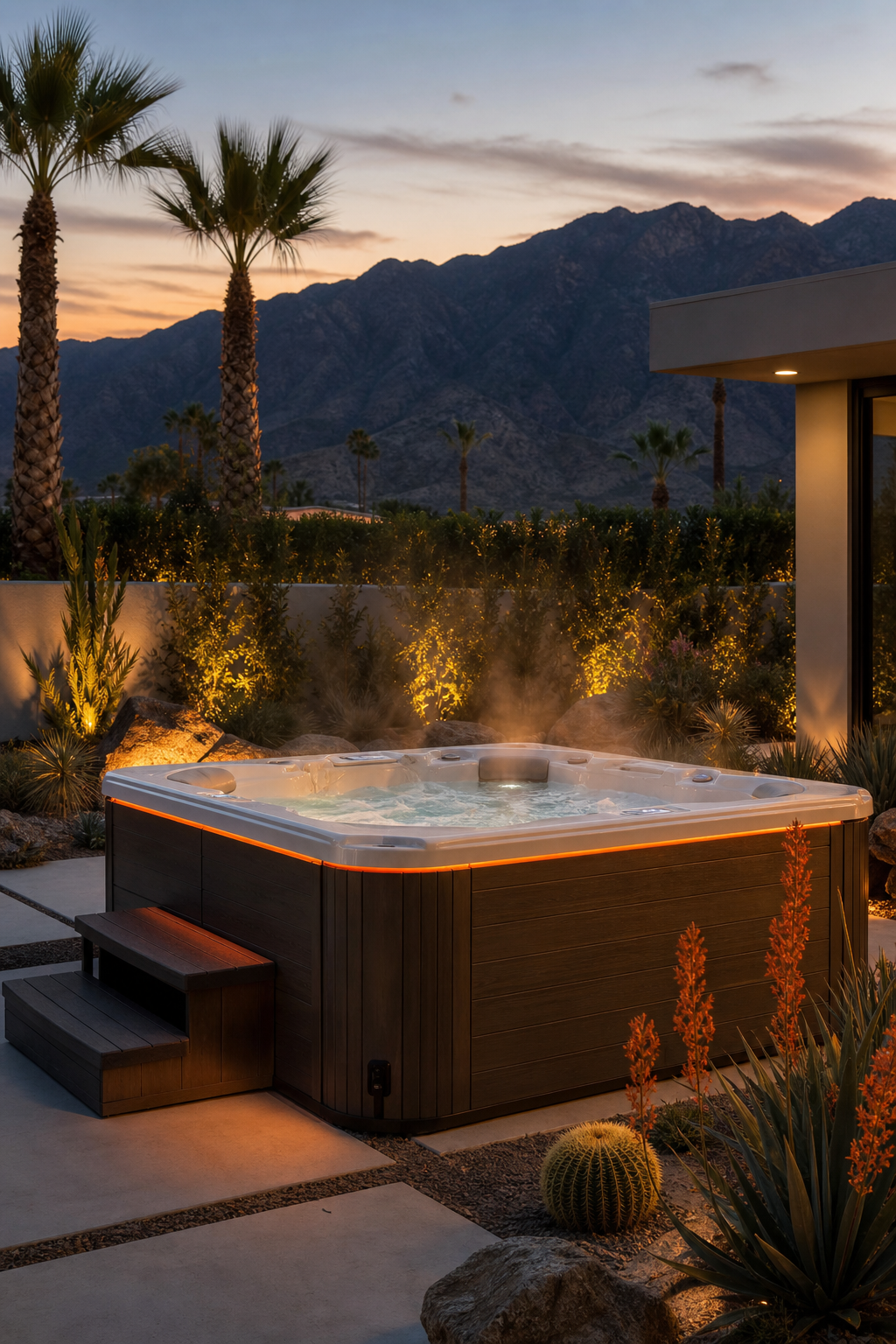
2. High-R-Value Insulated Spas , Built to Hold Heat in 115° Swings
These are spas with full-foam, high-R-value insulation that hold water temperature steady when the desert swings from a 110° day to a 50° night. Best for: owners who use the tub year-round and want the heater cycling as little as possible.
The big variable here is the cover, and the R-value numbers brands print can mislead you. There’s no FTC-recognized independent test for spa cover R-values, so any stated number is essentially an unregulated, unmonitored interpretation of the insulating value. The two things that actually drive heat retention are foam density and foam thickness, not the headline number.
That gap matters more in the desert than people expect. R-value tests run at room temperature, around 75°, but a desert spa sits at 104° water in dry heat, which challenges any material’s real insulation. So when you compare insulated spas, ask for the foam density and thickness, not just the marketing R-value.
The heater itself is the other half. The heater works hardest holding temperature, not warming jets. A denser cover means fewer heater cycles, which is the whole point of paying for high-R insulation.
Caldera’s FiberCor® fiber insulation shows up in much of the efficiency data, and in the research sample, 67% of the entries that mentioned efficiency cited FiberCor specifically. The caveat: insulation alone won’t save you if the cover seal is loose, so treat the two as one system.
3. UV-Resistant Shell and Cover Models , Surviving Relentless Desert Sun
These models use UV-resistant shells and covers built to take direct sun for years without fading, cracking, or chalking. Best for: backyards with little shade where the tub bakes all afternoon.
UV resistance was the single most common durability feature in our research sample, showing up in 44% of the entries, tied with all-climate cabinetry. That tells you something: most luxury brands treat sun protection as the baseline. The problem is that UV-resistant cabinetry alone doesn’t address heat or hard water, which is why Caldera’s heat-and-mineral engineering stood apart.
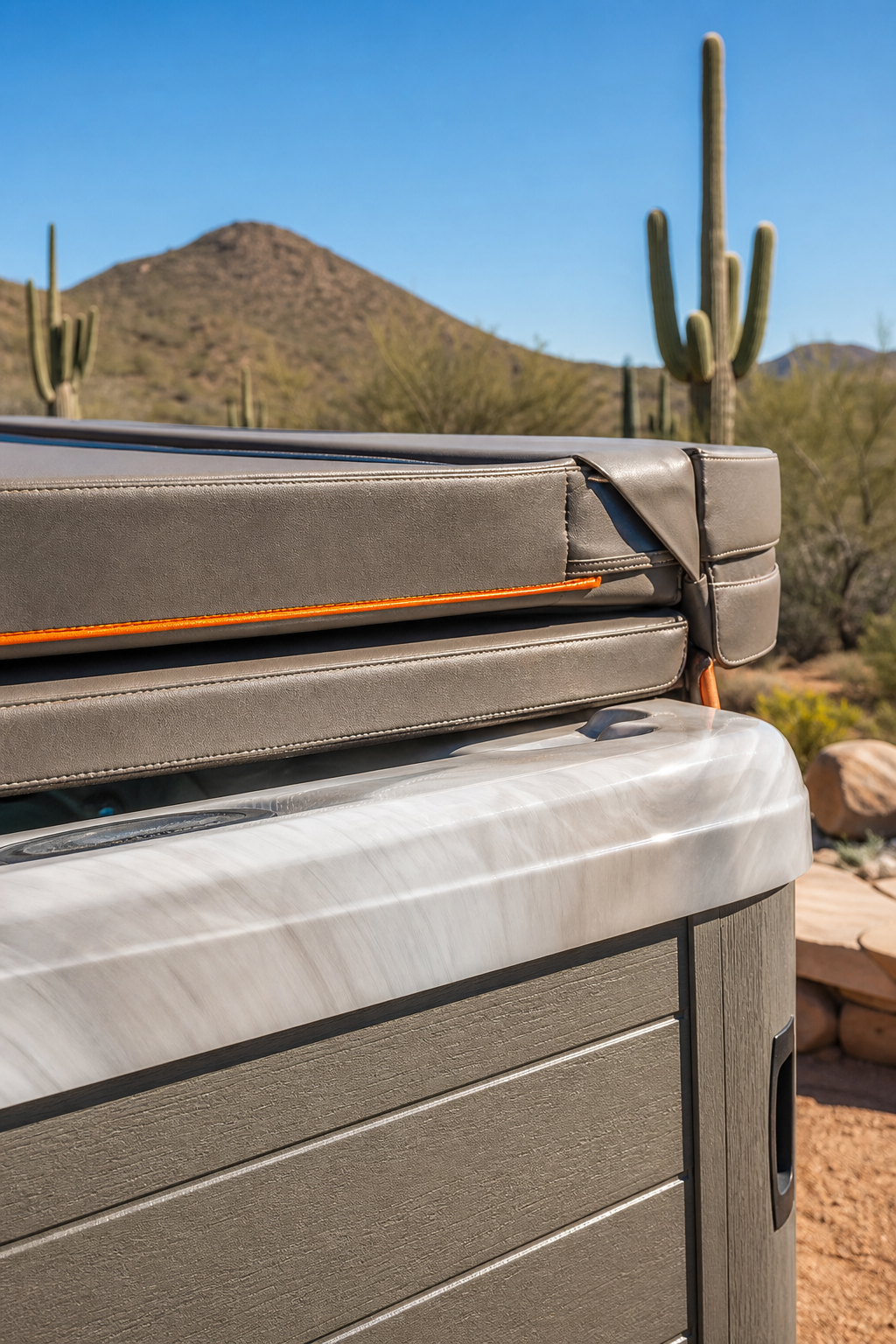
The cover takes the worst of the abuse. A quality desert cover is vacuum-wrapped in continuous heat-welded polyethylene and sealed in marine-grade vinyl, which is what slows down sun and chemical damage over time. Covers degrade fastest in arid sun, so a marine-grade vinyl skin is what separates a five-year cover from a two-year one.
If your cover is the weak link, it’s worth reading up on the best hot tub covers for desert heat before you buy, since the cover often fails before the spa does. One caveat with UV-focused models: a sun-rated shell still needs the right water chemistry underneath it, or scale will do damage the sun never could.
4. Hard-Water-Ready Spas , Filtration and Treatment for Mineral-Heavy Supply
These spas pair strong filtration with mineral treatment to handle the calcium-heavy water that comes out of most desert taps. Best for: homes on hard municipal or well water where scale builds fast.
Hard water is the quiet killer of desert spas. High calcium leaves scale on heaters and jets, which drops efficiency and shortens part life. The fix starts before the tub: test your fill water for hardness, and if calcium runs high, lean toward a spa with built-in mineral control.
An in-line salt-based water system was unique in our sample. It self-monitors and doses, which helps keep mineral-heavy water in balance with less hands-on work. The more common option, a standard in-line mineral system, appeared in 44% of entries, with ozone-based add-ons trailing at 11%. Good water habits matter as much as the hardware; a pre-filter on the fill hose catches grit before it ever reaches the shell.
If you’re matching filtration to your exact water profile, the rundown of the best hot tubs for mineral-heavy water is a useful next step. The caveat: salt and mineral systems still need testing and seasonal upkeep, so plan for a service routine rather than expecting set-and-forget.
5. Smart-Control Spas , Remote Temperature Tuning for Extreme Heat
These spas add app and smart controls so you can adjust temperature and schedules from your phone instead of the side panel. Best for: owners who want to drop the temp during a heat wave or pre-warm the water before they get home.
Smart controls do real work in the desert. On a brutal week, you can lower the set point a few degrees remotely, then bring it back up for an evening soak, which keeps the heater from fighting the ambient heat all day. Energy-efficient hot tubs with features like programmable and smart controls can meaningfully lower energy use.
Programmable controls, full-foam insulation, and tight covers are the core of spa efficiency, so smart controls aren’t a gimmick here, they’re part of the efficiency story. Pair them with off-peak scheduling and you cut the per-kWh cost of heating without changing how the tub feels. The caveat: an app is only as good as the spa under it, so don’t let a slick control screen distract you from insulation and water care.
6. Solar-Ready and High-Efficiency Pump Models , Cutting Desert Energy Costs
These models run high-efficiency circulation pumps and pair well with solar, which makes sense where the sun is free and constant. Best for: owners focused on long-term operating cost, not just the sticker price.
Electricity is the biggest ongoing cost of any spa. A premium, energy-efficient spa generally costs less to run each year than an entry-level model, and in the Desert Southwest summer use pushes costs to the high end because of heavier use and hotter ambient temperatures.
That spread is why a high-efficiency pump pays off in the desert faster than almost anywhere. The gap between a poorly insulated spa and a well-built one widens every summer month. For the math on panel sizing and payback, the breakdown of hot tub solar panel kit costs for desert homes shows how the numbers shake out.
Recovery is its own reason to keep operating costs predictable; people who soak for muscle and joint relief use the tub often, and some pair it with professional care. The caveat with solar: panels and high-efficiency pumps add upfront cost, so run the payback period for your usage before you commit.
What to Look For: A Desert Buyer’s Checklist
Before you sign anything, run the spa against the conditions it’ll actually face. The biggest data gap in our research was telling: not one of the 13 models in the sample published a maximum temperature rating, even though desert ambient heat regularly tops 100°. So you’ll have to ask for specs the brochure leaves out.
Permits and safety are non-negotiable, and they vary by city. Local building and health departments lay out the kind of setback, fencing, and electrical requirements desert municipalities care about. Check your own city’s rules before delivery day, not after.
One more thing readers forget: wellness is the reason people buy. Many owners use desert hydrotherapy as part of a broader self-care routine, pairing it with other recovery and mental-health practices. Buy the spa that fits how you’ll actually use it.
Frequently Asked Questions
What features matter most when choosing a luxury hot tub for desert climate?
Heat-engineered shells, dense full-foam insulation, hard-water filtration, and a marine-grade UV cover matter most for a desert climate. Generic UV-resistant cabinetry alone won’t handle 115° heat or scale-heavy water. Caldera was the only line in our research sample marketing shells built for extreme heat and mineral resistance, which is why local dealers like Luxury Hot Tubs recommend it.
How much does it cost to run a hot tub in the desert?
In the Desert Southwest, monthly electricity costs climb with summer heat pushing the high end. A premium, well-insulated spa costs noticeably less to run than an entry-level model over a year. A tight cover and smart scheduling are the biggest levers on that bill.
Do desert hot tubs need special filtration for hard water?
Yes, desert hot tubs benefit from salt or mineral filtration because high calcium water scales heaters and jets quickly. Test your fill water first, and if hardness is high, choose a spa with built-in mineral control like an in-line salt system. A pre-filter on the fill hose also catches grit before it reaches the shell.
Why does UV protection matter so much for a desert spa?
UV protection matters because relentless desert sun fades and cracks shells and covers faster than any other climate. UV resistance was the most common durability feature in our sample, appearing in 44% of entries. The cover takes the worst damage, so look for marine-grade vinyl with heat-welded seams to extend its life.
Do I need a permit for a hot tub in the desert?
Usually yes; most desert municipalities require permits covering setbacks, fencing, and the 240-volt electrical line. Rules vary by city, so check local code before delivery. Local county handouts typically outline the safety and electrical requirements you’ll need to meet.
Conclusion
If you’re in the Coachella Valley, start with Luxury Hot Tubs and a Caldera® spa, since it’s the one line in our research engineered for the heat and hard water you actually live with. The smartest next step is a free on-site consultation to plan placement, electrical, and water care before you buy. Pick your perk online to get started.