
So you’re thinking about getting an infrared sauna at home. Smart move. Infrared saunas offer a ton of health perks, from better sleep to faster recovery after workouts. But with all the options out there, it’s easy to get lost. That’s why I put together this guide with 35 tips to help you pick the right sauna, set it up properly, and get the most out of every session. I’ll cover everything from different types and sizes to EMF safety, pricing, and even debunk some marketing hype. By the end, you’ll know exactly what to look for when buying an infrared sauna at home.
Health Benefits of Infrared Saunas
Infrared saunas use light to heat your body directly, not the air around you. That means you can sweat it out at lower temps compared to traditional saunas. The benefits are real and backed by research.
First up,detoxification. The deep heat makes you sweat more, which helps flush out toxins like heavy metals. A study from the Restore blog notes that infrared sauna sessions boost circulation and support your body’s natural detox pathways.
Second,pain relief. If you have sore muscles or joint pain, infrared heat penetrates deep into tissues, reducing inflammation and speeding up recovery. Athletes love it for post-workout relief.
Third,better heart health. Regular sauna use can mimic moderate exercise by raising your heart rate and improving blood flow. Over time, this helps lower blood pressure and reduce cardiovascular risk.
Fourth,stress reduction. The warmth calms your nervous system, lowers cortisol, and boosts endorphins. It’s like a mini vacation without leaving home.
Fifth,glowing skin. Increased blood flow brings oxygen and nutrients to your skin, promoting collagen production and a clearer complexion.
Sixth,weight loss support. Your body works harder to cool itself, burning extra calories. A 30-minute session can burn 300-600 calories.
Seventh,better sleep. The drop in body temperature after a session signals your brain it’s time to rest. Many people fall asleep faster and sleep deeper.
“The best time to start using an infrared sauna was yesterday. The second best time is today.”
But here’s the thing: not all infrared saunas are created equal. The benefits depend on the quality of the heaters, the wavelength range, and how you use it. That’s why choosing the right model matters.
Bottom line:Regular use of an infrared sauna at home can significantly improve your physical and mental well-being.
Types and Sizes of Home Infrared Saunas
Picking the right type and size is crucial. You don’t want to buy a sauna that’s too big for your space or too small for your needs.
There are three main types:cabin saunas,portable tent saunas, andsauna blankets. Cabin saunas are the most common for home use. They come in 1-person, 2-person, and larger sizes. Portable tents are cheaper and fold away, but they don’t heat as evenly. Blankets are for solo use and fit in a closet.
When it comes to sizing, measure your space carefully. A 1-person cabin typically needs about 4 feet by 4 feet. A 2-person needs about 5 feet by 5 feet. Don’t forget clearance for the door and ventilation.
Sun Home Saunas offers a range of models. Their Equinox 2-person is a top pick for full-spectrum heating. It reaches 165°F and fits in most spare rooms. TheSolstice 1-personis great for solo users who want far-infrared heat with low power draw.
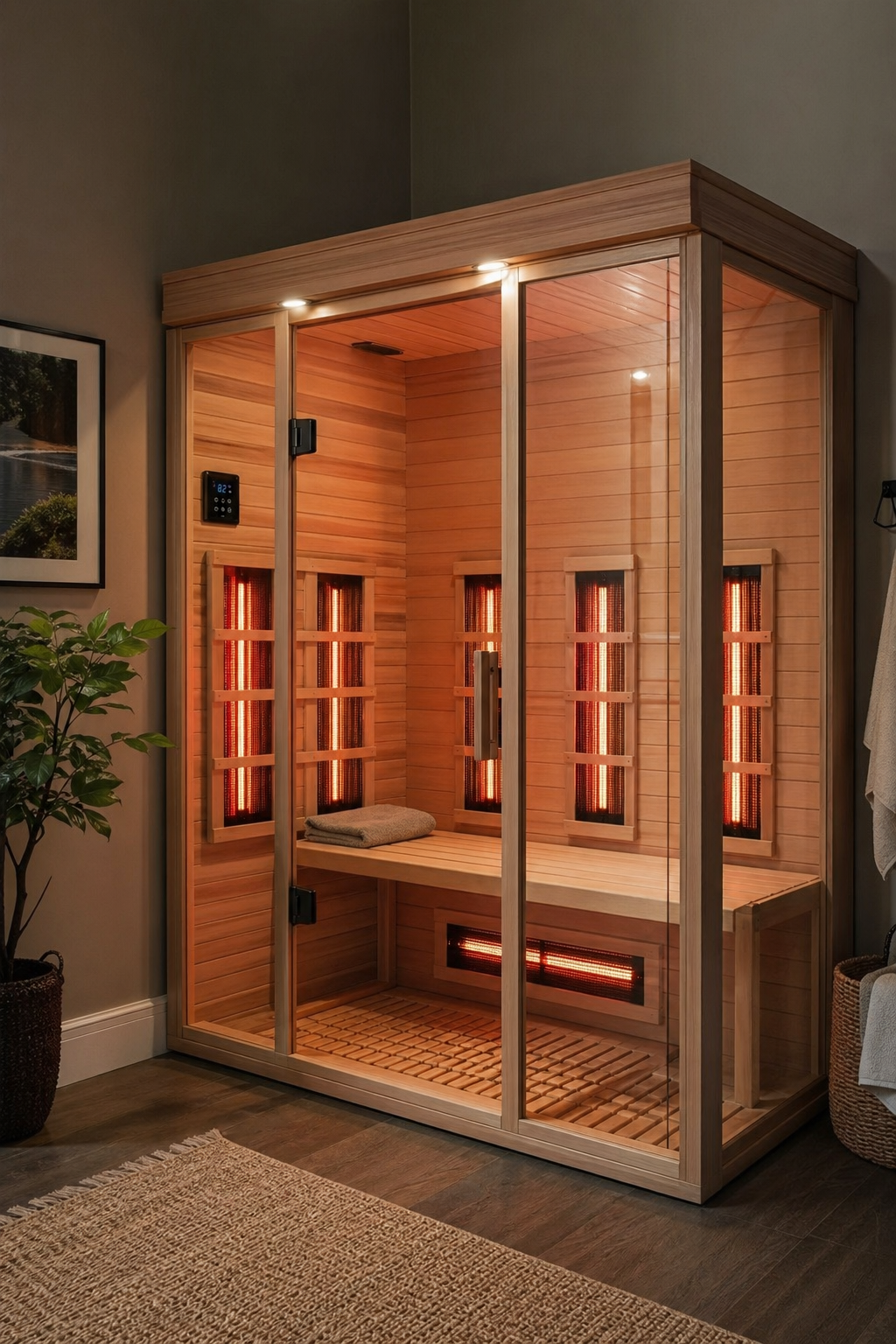
For couples, theEclipse 2-personadds red light therapy panels. It’s bigger and needs a dedicated circuit, but the dual benefits are worth it if you have the budget.
Below is a quick comparison of popular 2026 models. Note that some specs are from manufacturer claims; always cross-check with third-party reviews.
| Model | Type | Capacity | Max Temp | Price Range | Best For |
|---|---|---|---|---|---|
| Sun Home Equinox | Full Spectrum | 2 | 165°F | $5,000–$6,100 | Overall quality |
| Dynamic Barcelona | Far Infrared | 2 | 140°F | $1,800–$2,200 | Budget buy |
| Clearlight Sanctuary 2 | Full Spectrum | 2 | 160°F | $6,500–$8,000 | Low EMF |
| HigherDose Full Spectrum | Full Spectrum | 2–3 | 160°F | $7,000–$9,000 | Design aesthetic |
| Sun Home Luminar Outdoor 5P | Full Spectrum | 5 | 140–170°F* | $8,000–$12,000 | Outdoor groups |
*Discrepancy noted: Forbes lists 140°F, manufacturer claims 170°F. Verify before buying.
Bottom line:Match the sauna type and size to your space, budget, and how many people will use it regularly.
Installation, Space, and Ventilation Tips
Installing an infrared sauna at home isn’t rocket science, but you need to get a few things right.
Pick the right spot. Most 1-2 person cabins can go in a spare bedroom, basement, or even a walk-in closet. Make sure the floor can support the weight. A 2-person sauna can weigh 400+ pounds plus people. Concrete floors are ideal. On upper floors, check with a contractor if you’re unsure.
Electrical requirements. Many infrared saunas run on 120V, but they need their own dedicated circuit. Models with more heaters or red light therapy may require 240V. Sun Home’s Eclipse 2P, for instance, needs a 20A 120V circuit with a NEMA L5-30P twist-lock plug. Always hire a licensed electrician.
Ventilation is key. Even though infrared saunas don’t produce steam, you’ll sweat a lot. The moisture needs to escape. Most cabins come with roof vents. Leave the door open for 30 minutes after your session to let the wood dry out. for more details.
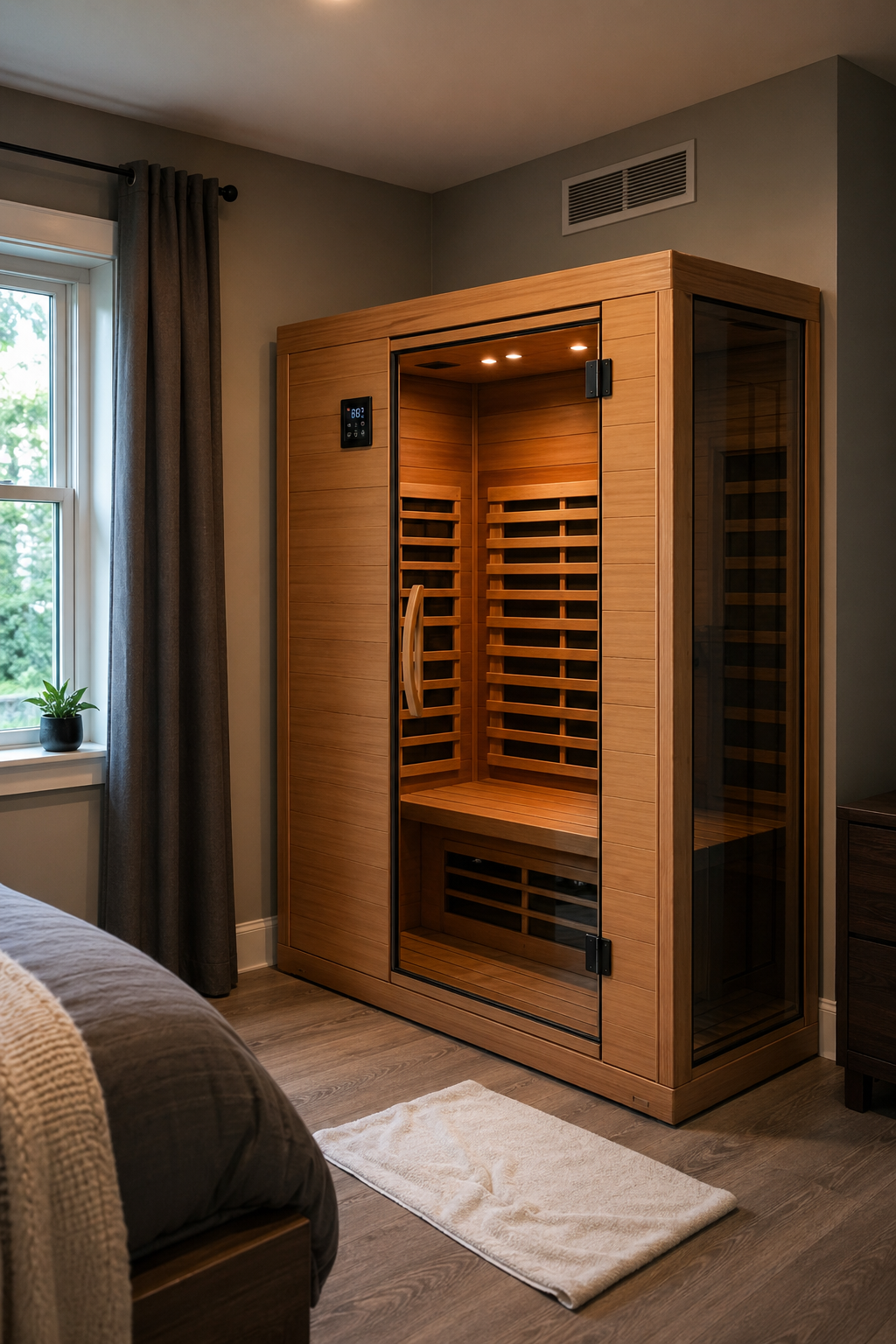
Prevent mold. Use a hygrometer to keep humidity below 20% inside the sauna. Wipe down benches after each use. Clean weekly with a mild wood cleaner. Cedar and eucalyptus woods are naturally resistant to mold, so they’re a good choice.
“An ounce of prevention is worth a pound of cure , especially when it comes to mold in your sauna.”
Bottom line:Proper installation, a solid electrical setup, and good ventilation ensure your infrared sauna at home stays safe and lasts for years.
EMF Safety, Low‑EMF Technology, and Chromotherapy
EMF (electromagnetic fields) is a hot topic. Every electrical device produces EMF, but you want your sauna to have low levels, especially where your body sits.
There are two types:magnetic fields(mG) andelectric fields(V/m). Most brands only report magnetic. Good brands test both. Backyard Discovery, for example, publishes independent third-party data showing magnetic fields under 3 mG and electric fields under 10 V/m in their saunas.
Look for a sauna that isultra-low EMForlow EMF. But beware: the term isn’t regulated. Always ask for third-party test reports. Sun Home saunas have independent Vitatech certification showing 0.5 mG at seated position.
Chromotherapyis colored LED lighting inside the sauna. It’s not the same as red light therapy, but it can enhance mood. Red light energizes, blue calms, green balances. Many high-end saunas include it as a standard feature.
If you’re sensitive to EMF, consider a model withcarbon heatersinstead of ceramic. Carbon heaters generally produce lower EMF. Also, keep the control panel outside the cabin if possible.
Bottom line:Prioritize low-EMF saunas with third-party testing, and don’t confuse chromotherapy with red light therapy.
Pricing, Budgeting, and Quick‑Assembly Portables
Prices for infrared saunas at home range from a few hundred to over $12,000. Here’s what you need to know.
Entry-level: Portable tent saunas like the Noerishia Infrared Steam Sauna cost around $200-$400. They include a steam generator and red light LEDs. Assembly takes 10-15 minutes. Performance is okay , expect moderate heat and some condensation. Great for testing the waters.
Mid-range: Indoor cabins like Dynamic Barcelona 2-person are $1,800-$2,500. They have carbon heaters, wood interiors, and standard warranties of 3-5 years. Heat coverage is decent but not perfect. No low-EMF claims.
Premium: Sun Home, Clearlight, and HigherDose range from $5,000 to $10,000+. You get full-spectrum or far-infrared with better heater layout, low EMF, red light options, and longer warranties (7-10 years). Some include app control and tool-free assembly.
Don’t forget installation costs. If you need a 240V circuit, budget $500-$1,500 for an electrician. Floor protection pads cost $50-$100. Accessories like towels, mats, and aromatherapy add more.
Bottom line:Set a realistic budget that includes installation and accessories. A mid-range cabin for $2,000-$4,000 is a sweet spot for most households.
Debunking Full‑Spectrum Claims and Wavelength Differences
The term “full spectrum” is everywhere in the sauna world. But what does it actually mean?
Infrared light has three ranges: near, mid, and far. Far-infrared (FIR) is the most researched for deep heating and detox. Near-infrared (NIR) is used for skin health and cellular repair , but only if delivered at the right wavelengths and intensity.
Most budget saunas claiming “full spectrum” use carbon heaters that only produce far-infrared. They add a few colored LEDs and call it full spectrum. That’s misleading. True full spectrum requires specific heater technologies, like halogen elements for near-IR and separate LED panels for red light therapy.
Sun Home’s approach is honest: their Equinox uses halogen + carbon heaters to deliver near + far IR, and the Eclipse adds dedicated 660+850nm red light towers. That’s the real deal.
Before you pay extra for a full spectrum label, ask these questions:
- What heater types are used? Carbon-only saunas cannot produce meaningful near-IR.
- Are there separate red light therapy LEDs at 660nm and 850nm?
- Is the EMF low and verified?
“Not all ‘full spectrum’ saunas are equal. Know what you’re buying.”
Bottom line:Understand the wavelength claims. Far-infrared alone is fine for most benefits; full spectrum adds value only if properly engineered.
Frequently Asked Questions
How long does it take for an infrared sauna to heat up?
Most infrared sauna cabins need 15 to 30 minutes to reach their maximum temperature. Portable tents heat up in 10 to 15 minutes. Factors include ambient room temperature, heater power, and insulation. To save time, use a model with remote preheat so you can start the sauna before you step in.
Can I use an infrared sauna every day?
Yes, daily use is safe and even recommended for maximum benefits. Start with 20-minute sessions and work up to 45 minutes. Listen to your body , if you feel dizzy, get out and cool down. Stay hydrated before and after. Many wellness experts suggest 3-5 sessions per week for optimal results.
What should I wear in an infrared sauna?
Most people wear a towel or lightweight clothing like shorts and a tank top. Some prefer going nude for better heat penetration. Avoid synthetic fabrics that trap heat. Cotton is fine. Always bring a towel to sit on for hygiene and sweat absorption.
Do infrared saunas help with weight loss?
Yes, but indirectly. A single session can burn 300, 600 calories as your body works to cool itself. Over time, regular use can support weight loss when combined with a healthy diet and exercise. The primary benefit is improved metabolism and reduced water retention, not fat burning alone.
Is it safe to use an infrared sauna during pregnancy?
Pregnant women should consult their doctor first. The increase in core body temperature could pose risks, especially in the first trimester. If approved, keep sessions short (under 15 minutes), stay hydrated, and avoid overheating. Some studies suggest infrared saunas are safer than traditional ones, but medical advice is crucial.
How do I clean my infrared sauna?
After each session, wipe down the benches and floor with a soft cloth to remove sweat. Weekly, use a mild wood cleaner like Murphy Oil Soap diluted in water. Avoid harsh chemicals that can damage the wood or leave residues. Vacuum the floor if needed. Deep clean monthly by checking vents and corners for dust.
What is the difference between near, mid, and far infrared?
Near-infrared (NIR) has shorter wavelengths that penetrate the skin superficially and is used for skin health and cellular repair. Mid-infrared (MIR) reaches deeper but is less studied. Far-infrared (FIR) has the longest wavelengths and penetrates deep into tissues, raising core temperature and promoting detoxification. Most saunas use far-infrared primarily.
What is the lifespan of an infrared sauna?
With proper care, a quality infrared sauna cabin can last 15, 20 years. Heater elements typically last 5, 10 years and are replaceable. Wood will last longer if kept dry and clean. Portables and tents have a shorter lifespan of 1, 3 years due to fabric wear. Warranties are a good indicator of expected longevity; look for 5, 7 years on heaters.
Conclusion
Choosing an infrared sauna at home is a big decision, but it’s one that pays off in health and relaxation. You’ve learned the key benefits: detox, pain relief, better sleep, and more. You know the types , cabin, tent, blanket , and how to match them to your space. You understand the importance of EMF safety, ventilation, and proper installation. Pricing ranges from budget portables to premium full-spectrum cabins, so there’s an option for every wallet.
Remember, not all claims are equal. Full spectrum doesn’t always mean what it says. Ask for third-party EMF reports, check heater types, and read the warranty fine print. If you’re in the Coachella Valley, consider reaching out toLuxury Hot Tubs. They specialize in premium spa installations and can help you choose and set up your sauna so it’s ready for daily use. Their team offers on-site consultations and expert service.
Ready to start your infrared sauna journey? Schedule a yard consultation with Luxury Hot Tubs or give them a call at (760) 874-3023. Your body will thank you.