
Choosing between a swim spa and a hot tub can feel like a big decision. One side promises workout power, the other offers pure soak comfort. In this guide you’ll see eight solid picks, learn how they differ, and walk away with a clear idea of which unit fits your space, budget, and lifestyle.
1. Self‑Contained Swim Spa , All‑In‑One Wellness Hub
A self‑contained swim spa is a single shell that holds both a swim‑current zone and a spa‑jet zone. You can swim in place, then flip to a massage seat without leaving the water. This design works well for families who want fitness and relaxation in one place.
Because the unit is built as one piece, the shell is usually made of insulated acrylic or reinforced vinyl. The insulation helps keep heat in, so the water stays warm even in desert nights. The current system can be adjusted from a gentle stroll to a strong resistance for serious training.
One big plus is the all‑in‑one control panel. You set temperature, current speed, and jet intensity all from the same screen. Some models even let you pair a phone app for remote start.
“A self‑contained swim spa gives you a pool‑like workout and a hot‑tub soak without two separate installations.”
When it comes to space, you’ll need a length of 12, 20 feet and a width of 8 feet at least. The larger footprint means you may have to level a concrete pad or a sturdy deck. In the Coachella Valley, the extra size can be a challenge during summer heat, but a well‑insulated model will still heat efficiently.
Maintenance is a mix of pool‑like and spa‑like tasks. You’ll filter more water than a hot tub, so chemicals are used a bit more often. However, many modern swim spas include UV‑light or ozone systems that cut down on chemical use.
Cost wise, entry‑level self‑contained models start around $7,000 and can climb past $30,000 for premium brands. Installation can add $5,000, $8,000 because of the foundation work and electrical needs.
For families that love water play, the swim zone can become a safe place for kids to splash while adults enjoy the jet massage. For athletes, the adjustable current offers low‑impact cardio that is easy on joints.
In the desert market, the data shows most premium units are swim spas (75% of the sample). That tells us many buyers value the dual‑purpose design, even if it means a bigger investment.
Because the system is self‑contained, you only need one set of wiring and one water loop, which can simplify service calls. A single contractor can handle both the plumbing and the electrical work.
Bottom line:If you want a single unit that lets you swim, jog, and soak without buying two separate products, a self‑contained swim spa is the way to go.
2. Portable Swim Spa , Flexible Installation Anywhere
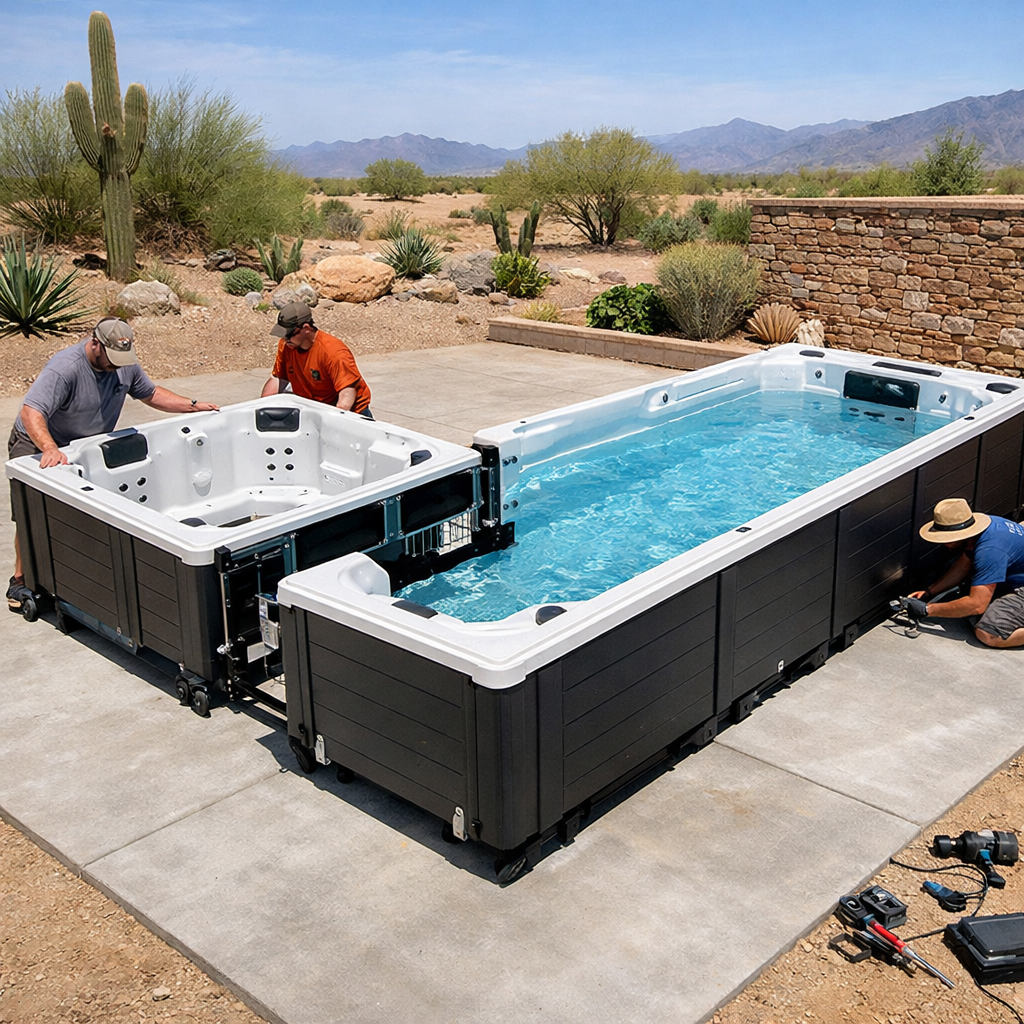
Portable swim spas are built in sections that can be moved through standard doorways. The most common brand ships a 15‑foot model with Hydrodrive™ technology that creates a smooth, adjustable current.
The modular design means you can install it above ground, partially in‑ground, or even inside a garage. Because the pieces are smaller, you can bring the spa into a basement or a rooftop deck with a crane and a few helpers.
Installation is fast. The factory‑pre‑plumbed system connects to a standard 240‑V outlet and a garden hose for fill. No major excavation is needed, which saves on labor costs.
Performance wise, the current can be set to three speeds, letting beginners start slow and athletes push harder. The spa also offers hydro‑massage jets in the rear, so you get a post‑workout soak.
Energy use is lower than a full‑size self‑contained unit because the water volume is smaller. The insulated cabinet helps keep heat in, and a smart controller can shut the heater off when the water reaches the set temperature.
Because it is portable, you can relocate the spa if you move house or want to try a new backyard layout. The modular pieces are designed to survive multiple moves without damage.
Maintenance is similar to a regular swim spa but on a smaller scale. Filters should be cleaned weekly, and chemicals are needed to keep the water clear. Many owners appreciate the optional ozone system that reduces chemical use.
Pricing for a 15‑foot portable model typically lands between $12,000 and $20,000, depending on accessories like steps, LED lighting, and optional covers.
When you compare the portable option to a self‑contained one, the biggest win is flexibility. If your lot is narrow or you plan to remodel, a modular spa can adapt.
Here’s a quick checklist to see if a portable swim spa fits you:
- Do you need a unit that can move later?
- Is your backyard size limited?
- Do you want lower installation costs?
One of the manufacturers notes that their Hydrodrive™ system is turbulence‑free, which means the water feels calm even at higher speeds. That makes it easier for beginners to learn proper swimming technique.
In a desert setting, the insulated cabinet works well year‑round. You can keep the water at 85 °F for a cool workout, then raise it to 104 °F for a relaxing soak.
Bottom line:If you value flexibility and want a swim spa that can fit tight spaces or be moved later, the portable modular option is a smart pick.
3. Inflatable Hot Tub , Budget‑Friendly Relaxation
Inflatable hot tubs are the most affordable way to own a spa. The whole unit is a big air‑filled bladder that you pump up, fill with water, and plug into a regular 110‑V outlet.
Price is the headline feature. Quality models range from $400 to $1,200, a fraction of the cost of permanent tubs. This low entry price lets renters or seasonal homeowners test out a spa without a big commitment.
Setup takes about an hour. You lay the tub on a flat surface, inflate the walls with the included pump, hook up the filter‑pump unit, and fill with a garden hose. No concrete pad, no electrical upgrade.
Because the walls are made of PVC, insulation is limited. It can take 12, 24 hours for the water to reach the set temperature, and the heater runs longer to keep the water warm.
Most inflatables use a bubble‑type air‑massage system rather than high‑pressure water jets. The bubbles feel nice but don’t give the deep muscle work that a jet spa provides.
Maintenance is simple but regular. You need to check the filter weekly, add bromine or chlorine tablets, and keep the cover on when not in use to retain heat.
Durability is a consideration. Sharp objects or pet claws can puncture the bladder. Most manufacturers include a repair patch kit, but a large tear may mean replacement after a few years.
Life expectancy is usually 2, 5 years, which aligns with the lower upfront cost. If you plan to move often, an inflatable tub can travel with you.
Here are three tips to get the most out of an inflatable hot tub:
- Use a high‑R‑value cover to cut heat loss.
- Place the tub on a wooden deck or insulated mat to protect the floor.
- Schedule a weekly water test with pH strips to keep chemistry balanced.
For families that want a simple soak without the hassle of a permanent install, an inflatable hot tub fits the bill. It won’t replace a full‑size spa for serious hydrotherapy, but it offers a nice warm soak for relaxation.
Bottom line:If budget and portability matter more than power jets and long‑term durability, go with an inflatable hot tub.
4. Traditional Hot Tub , Classic Comfort and Jets
Traditional hot tubs are built with a sturdy acrylic shell, a full‑foam insulated cabinet, and a set of powerful hydro‑massage jets. They focus on comfort, social time, and targeted hydrotherapy.
Size ranges from two‑person models (about 5 ft long) to large eight‑person units (up to 9 ft long). This makes them a good fit for patios, decks, or even indoor spa rooms.
Jet layouts vary. Some tubs have a few high‑flow jets aimed at the back, while premium models offer multi‑directional jets that target neck, shoulders, lower back, and feet.
Energy efficiency has improved a lot. Full‑foam insulation, tight‑fitting covers, and variable‑speed pumps can cut electricity use by up to 30 % compared to older models.
Maintenance is easier than a swim spa because the water volume is lower. You’ll still need to balance chemicals, clean filters, and replace the cover every few years.
In the desert, a well‑insulated hot tub holds heat well even when outside temps hit 115 °F. Brands like Caldera Spas design their units specifically for hot‑climate durability, with UV‑resistant shells and corrosion‑proof components.
According to Wikipedia, hot tubs can improve circulation, reduce stress, and help with arthritis pain. The focused jets give a deep massage that can reach muscle knots better than the bubble systems in inflatables.
Pricing starts around $5,000 for a basic two‑person model and can exceed $30,000 for a high‑end eight‑person spa with smart controls and LED lighting.
Installation usually needs a concrete pad and a dedicated 240‑V circuit. The job can be done in a day by a professional installer.
When comparing to swim spas, hot tubs are cheaper to run because they heat less water. The trade‑off is that you lose the swim‑current workout feature.
Bottom line:If your main goal is deep massage, relaxation, and a gathering spot, a classic hot tub is the clear winner.
5. Hybrid Swim Spa/Hot Tub , Best of Both Worlds
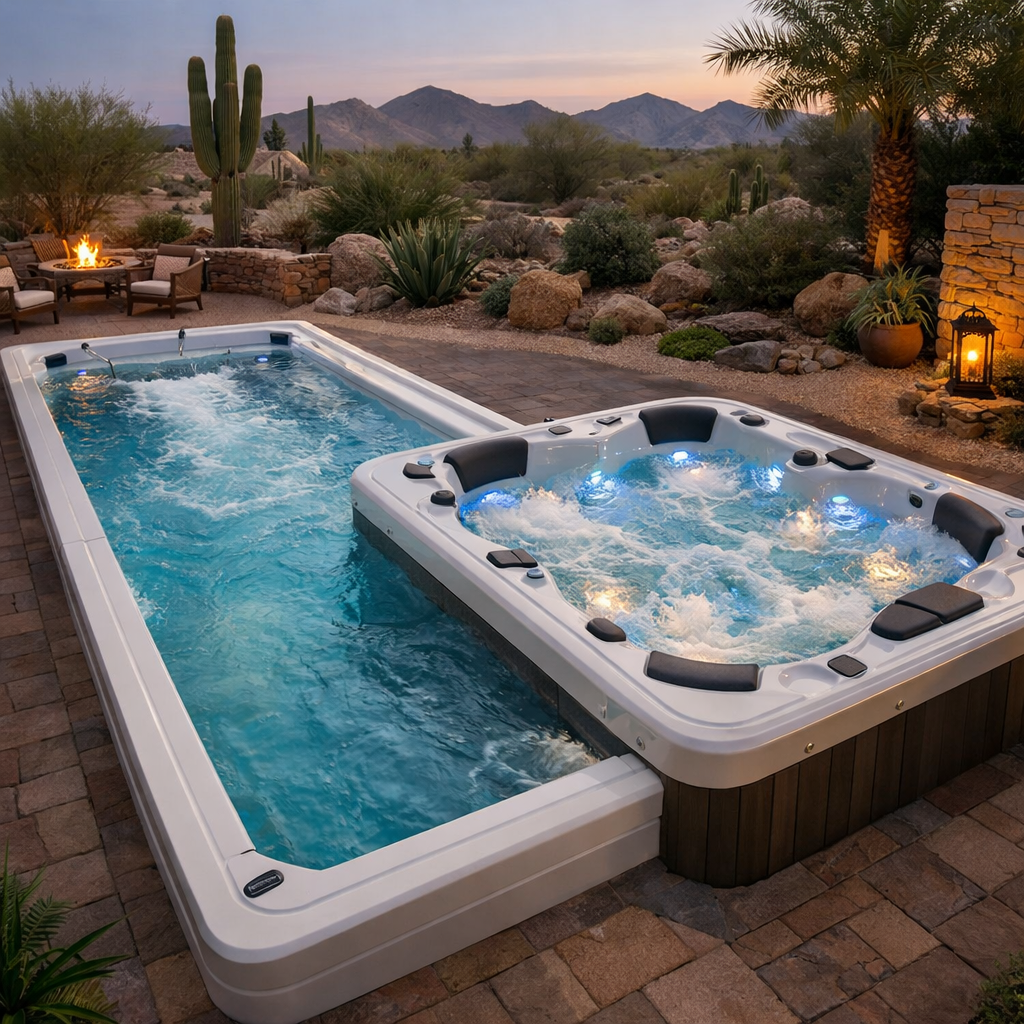
Hybrid units blend a swim‑current lane with a dedicated spa zone that has high‑flow jets. You get a place to swim laps and a place to soak without needing two separate installations.
Manufacturers like Sundance Spas offer models with Fluidix™ jet technology that can be programmed for both gentle massage and intense muscle work. The swim zone typically runs the length of the unit, while the spa zone occupies the rear quarter.
These hybrids often come with smart controls, LED lighting, and optional waterfall features. The control board lets you switch between swim mode and spa mode with a single button.
Because the unit is larger than a regular hot tub, you’ll need a longer footprint, usually 12, 16 feet in length. The water volume can be 1,500, 2,400 gallons, so heating costs are higher than a pure hot tub but lower than a full‑size pool.
Energy‑efficiency features such as EcoWrap insulation and variable‑speed pumps help keep running costs down. In the Coachella Valley, a hybrid can stay at 85 °F for workouts and then boost to 104 °F for a soak without a major energy spike.
Price points start near $20,000 and can climb past $35,000 for luxury finishes and custom lighting. While the upfront cost is steep, the dual functionality can replace both a swim spa and a separate hot tub.
One real‑world example: A family in Palm Desert installed a Sundance hybrid that lets the kids play in the shallow swim area while the parents use the rear jets after a round of golf. The unit fits under a pergola, and the owners say it feels like a mini‑resort at home.
When you weigh a hybrid against a pure hot tub, think about how often you’ll actually swim. If you only need occasional laps, a traditional hot tub may be enough. If you plan regular fitness sessions, the hybrid’s current can replace a pool lap‑track.
Bottom line:For homeowners who want both workout and soak in one sleek package, the hybrid swim spa/hot tub is the most versatile choice.
How to Choose the Right Option , Key Decision Factors
Picking the right water‑wellness unit boils down to four main factors: space, budget, primary use, and climate resilience. Measure your backyard first. A self‑contained or hybrid swim spa needs at least a 12‑by‑8 ft area, while a traditional hot tub fits in a 7‑by‑7 ft footprint.
Budget includes purchase price, installation, and five‑year total cost of ownership (TCO). Use a simple calculator: add monthly electricity, chemicals, and a 3 % reserve for repairs. For example, a $10,000 hot tub with $30 /month electricity and $20 /month chemicals runs about $12,600 over five years.
Decide on primary use. If you crave cardio, a swim current is essential. If you need deep massage for arthritis, look for a high‑flow jet count.
Finally, think about the desert climate. Look for models with UV‑resistant shells and strong insulation. Caldera Spas, the only pure hot‑tub brand in our dataset, builds units specifically for 115 °F summers, making them a reliable low‑maintenance pick.
Need help narrowing the field? Our Hot Tub Buying Guide walks you through size charts, energy‑efficiency ratings, and financing options.
Bottom line:Evaluate space, cost, purpose, and desert durability to find the water‑wellness solution that fits your life.
Comparison Table: Features & Use‑Cases
Use this table to see which option lines up with your primary goal. If fitness is king, lean toward a swim‑current model. If you just want a place to unwind after golf, a traditional hot tub or hybrid will serve you well.
Bottom line:Match the feature set to your lifestyle, and the right water‑wellness unit will feel like a natural extension of your home.
FAQ
What is the main difference between a swim spa and a hot tub?
A swim spa includes an adjustable water current that lets you swim or jog in place, while a hot tub focuses on hydro‑massage jets for relaxation. The swim spa offers workout options; the hot tub offers deeper massage and social soaking.
Can I install a swim spa on a concrete patio?
Yes, most self‑contained and hybrid swim spas sit on a level concrete pad. The pad must support the unit’s weight, which can be several thousand pounds when filled with water.
How much electricity will a portable swim spa use?
Typical portable models use about 3, 5 kWh per day for heating and current operation. In desert climates, good insulation can keep that number toward the lower end.
Are inflatable hot tubs safe for pets?
Inflatable tubs are made of puncture‑resistant PVC, but sharp claws can still cause leaks. Supervise pets and consider a protective ground mat to avoid accidental damage.
Do hybrid swim spas need two separate filtration systems?
Many hybrids offer dual filters, one for the swim lane and one for the spa zone. This keeps water clarity high in both areas and reduces wear on each pump.
What maintenance does a traditional hot tub require?
Regular tasks include checking chemical balance weekly, cleaning or replacing the filter every 4, 6 weeks, and draining and refilling the water every 3, 4 months. Keep the cover on when not in use to preserve heat.
How long does it take to heat an inflatable hot tub?
Because the walls are thin, it can take 12, 24 hours for the water to reach the set temperature. Using a high‑R‑value cover can cut heating time by several hours.
Is a hybrid swim spa worth the extra cost?
If you plan to use both a swim current for fitness and a spa zone for recovery, a hybrid can replace two separate units and save space. The higher upfront cost pays off when you value both functions in one package.
Conclusion
Now you’ve seen the full range of swim spa vs hot tub options, from the budget‑friendly inflatable to the deluxe hybrid that does it all. Each choice has its own sweet spot: self‑contained swim spas for serious athletes, portable modular units for flexible homes, inflatables for renters, traditional hot tubs for deep massage, and hybrids for the ultimate two‑in‑one experience.
Remember the four decision factors, space, budget, primary use, and desert durability. Match those to the shortlist above, and you’ll end up with a backyard oasis that feels right for you.
Luxury Hot Tubs is the authorized Caldera® dealer for the Coachella Valley. Their team will measure your site, handle the electrical work, and deliver a spa built to survive 115 °F summers. Whether you pick a Caldera hot tub for low‑maintenance soaking or a hybrid model for fitness, you’ll get a product backed by years of desert experience.
Take the next step today: explore the Salt Water Hot Tub Guide for a look at low‑maintenance chemistry, or browse the full catalog to find the perfect fit for your home.
Bottom line:With the right info and a clear set of priorities, picking the perfect swim spa or hot tub becomes a simple, confident choice.