
Desert nights can leave your hot tub feeling like an ice bath. The trick is picking the right heater size so you get quick, steady warmth even when the sun drops. Below is a short list of the most common heater choices, how they work in the desert, and which buyers they suit.
1. Luxury Hot Tubs (Our Top Pick) , Professional Heater Sizing for Desert Homes
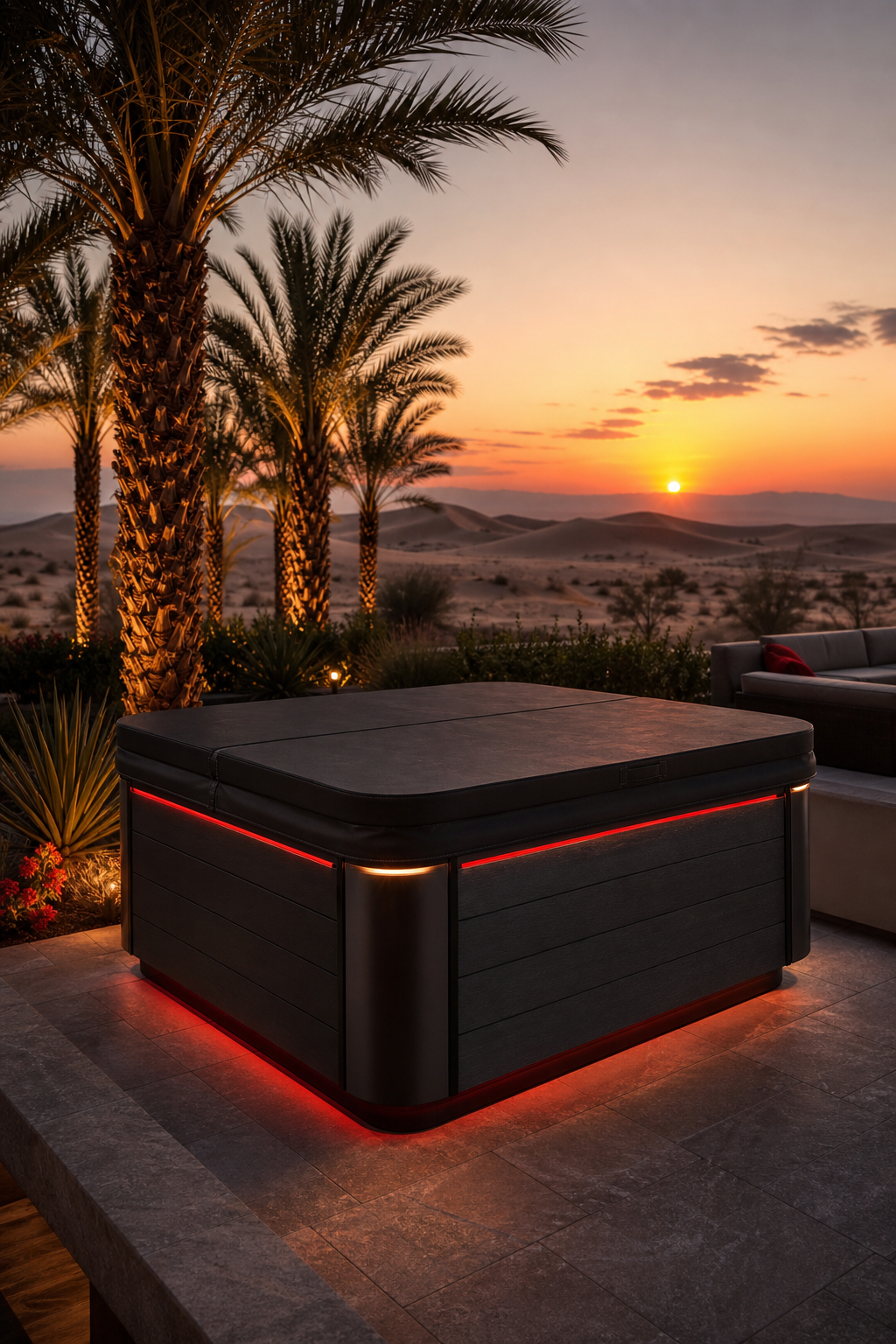
Luxury Hot Tubs offers Caldera® Spas that are built for the Coachella Valley’s scorching days and chilly nights. They size their 4,000 W EnergyPro™ titanium heater to match each model’s volume, which means the heater isn’t over‑ or under‑sized.
Because Caldera lists no generic wattage, you’ll need to ask the dealer for the exact rating. That extra step protects you from the one‑size‑fits‑all 5.5 kW myth that shows up in many competitor specs.
These tubs also have high‑R foam walls and insulated base pans, so the heater runs less often. In a desert home that means lower bills and fewer temperature swings.
Bottom line: Ask Luxury Hot Tubs for the model’s heater rating before you sign.
2. Electric Heaters (5.5, 11 kW) , Budget‑Friendly for Smaller Spas
Electric heaters run on standard 240 V circuits and are the most common choice for compact tubs under 250 gal. A 5.5 kW unit can lift water 10 °F in about 8 hours for a 150‑gal tub.
They’re easy to install and need no venting, which keeps the upfront cost low. In the desert, the night‑time temperature dip means the heater will fire more often, so pick the higher end of the range if you plan long soaks.
Watch the electricity use; a 7 kW heater draws roughly 29 A, so you’ll need a dedicated 30‑amp breaker.
Pro tip: Pair an electric heater with a tight‑fitting cover to cut the run‑time in half.
For more on cutting energy use, see Hot Tub Energy Efficiency Guide – Luxury Hot Tubs.
3. Gas Heaters (125,000, 400,000 BTU) , Fast Heat Recovery for Large Spas
Natural‑gas units deliver a lot of heat quickly. A 250,000 BTU heater can raise a 400‑gal tub by 20 °F in under an hour, even when desert nights sit at 60 °F.
They need a gas line and proper venting, so installation costs rise. The upside is that gas heat isn’t affected by electricity rates, which can spike in summer.
Because gas burns hotter, you’ll see less cycling, which means the heater lasts longer.
Caveat: In the desert, you may need a flame‑retardant vent cap to keep dust out of the exhaust.
4. Solar‑Assisted Heaters , Eco‑Friendly Option for Sunny Desert Days
Solar collectors capture free sun energy and feed it to a small backup electric heater. In the Coachella Valley, a 4‑panel flat‑plate array can supply 15,000 BTU/day, enough to keep a 300‑gal tub at 95 °F on sunny afternoons.
These systems shave the electric bill by up to 70 % when the sun shines, and they qualify for the federal Residential Clean Energy Credit.
They work best when paired with a good cover and an insulated tub shell.
Limitation: On cloudy winter nights the backup heater must run longer, so size it for the worst‑case scenario.
, a typical collector uses only 50, 150 W of pump power, a fraction of a conventional electric heater’s draw.
Solar‑powered hot‑tub heating guide provides detailed sizing rules.
5. Wood‑Fired Heaters , Off‑Grid Charm with Dust Maintenance Considerations
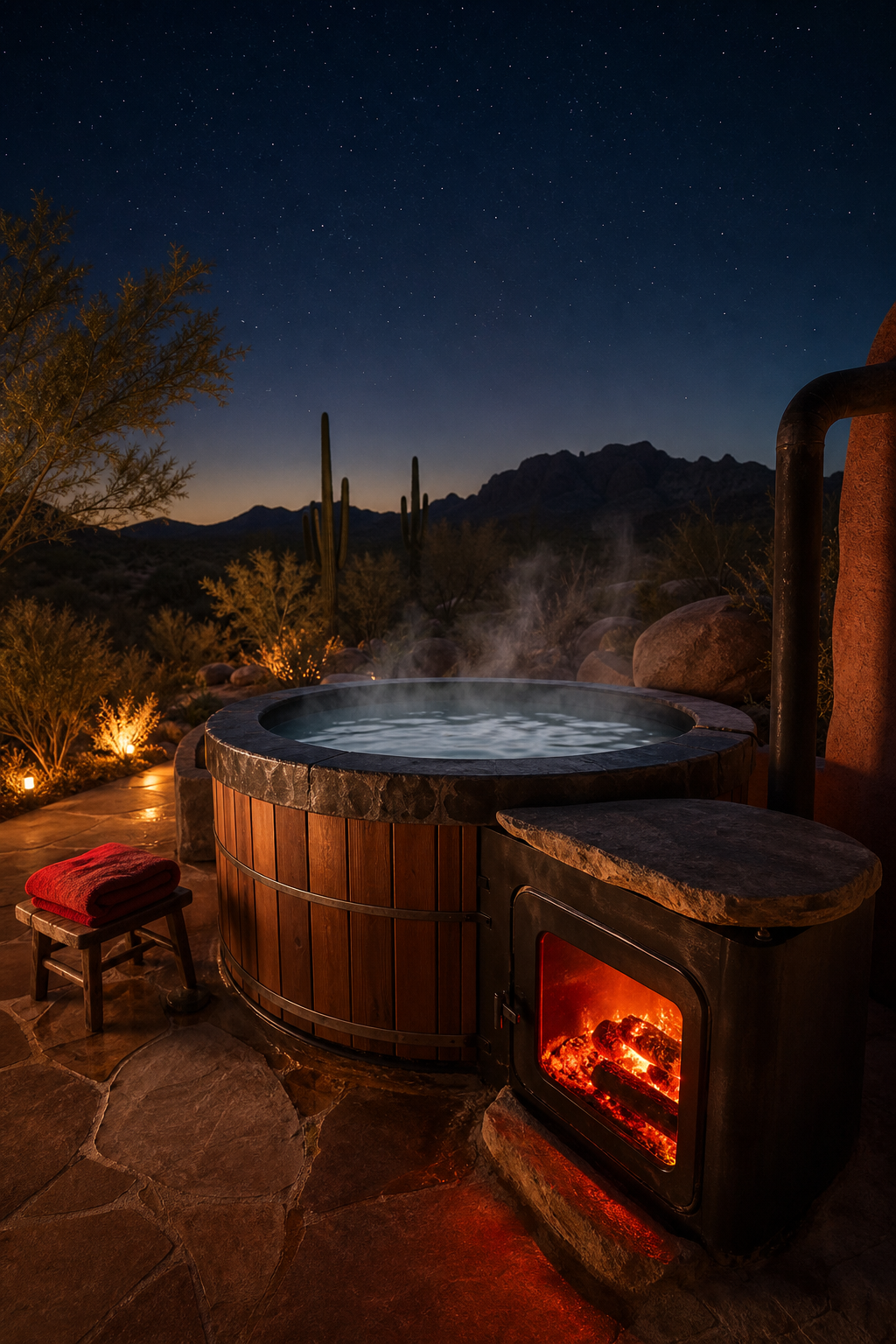
Wood‑fired tubs use a submerged firebox that transfers heat directly to the water. The AlumiTub’s 50‑liter firebox can bring a 250‑gal spa up 30 °F in under two hours.
They’re perfect for off‑grid cabins or eco‑conscious homeowners who love the crackle of fire.
The design includes triple‑wall insulation, so once the water is hot it holds temperature well even when desert winds blow.
Caveat: Desert dust can clog the chimney and firebox. Regular cleaning of the ash pan and chimney cap is a must.
For full specs, see AlumiTub wood‑fired hot tub.
6. Dual‑Fuel Heaters , Flexibility for Varied Desert Temperatures
Hybrid units let you switch between gas and electric power with a single control panel. Cedar Tubs’ dual‑fuel model offers a 6 kW electric mode and a 150,000 BTU gas mode.
This gives you fast heat on demand (gas) and quiet, low‑cost runs when the sun is out (electric).
The system senses ambient temperature and picks the most efficient source automatically.
Drawback: The unit is larger and costs more up front than a single‑fuel heater.
Details are available on Cedar Tubs’ hybrid heater page.
7. High BTU Heaters (Above 16 kW or 200,000 BTU) , For Rapid Heat‑Up in Extreme Cold
When you need water hot fast, high‑output units deliver. An 18 kW electric heater can raise a 500‑gal tub by 30 °F in under four hours.
These heaters use heavy‑duty elements and a larger heat exchanger, so they run cooler and last longer.
They’re ideal for large family spas that see heavy night‑time use.
Watch out for the electrical load; you’ll need a 60‑amp service.
For more on high‑output heat pumps, see Cedar Tubs’ heat‑pump overview.
8. Low BTU Heaters (Under 5.5 kW) , Suitable for Well‑Insulated Spas in Mild Winters
Small‑capacity electric heaters work well with tightly insulated tubs. A 3 kW unit can keep a 200‑gal, well‑covered spa at 95 °F with minimal run‑time.
They’re cheap to buy and easy to wire, making them a good fit for starter homes.
Because they run longer to reach the target temperature, you’ll feel the benefit of a high‑R cover the most.
If your desert nights drop below 50 °F, a low‑BTU heater may struggle.
Island Hot Tub’s Chofu wood‑fired heater line shows how low‑output systems can still be efficient when paired with good insulation.
9. Heat Pumps , Efficient but Slower in Low Humidity Desert Conditions
Heat pumps pull ambient air heat and move it into the water. In dry desert air, the coefficient of performance (COP) drops, so they heat slower than in humid climates.
When the night temperature stays above 70 °F, a heat pump can maintain 100 °F with just a few minutes of run‑time each hour.
They use far less electricity than a comparable electric element, saving up to 80 % on bills.
However, on clear winter nights below 50 °F the pump may need a backup heater.
Choosing the right size means matching the pump’s output (kW) to the tub’s volume.
10. Dedicated Circulation Pump Systems , Enhancing Heating Efficiency
A dedicated pump moves water past the heater constantly, unlike jet‑pump cycling. This steady flow lets the heater work at a stable load, which improves efficiency.
In desert homes, the constant flow also helps prevent hot spots caused by uneven heating.
The trade‑off is a slightly higher upfront cost and a bit more noise.
If you already have a high‑efficiency pump, you may not need a dedicated system.
11. Jet Pump vs. Circulating Pump , Impact on Heater Performance in Desert Climates
Jet pumps turn on only when the thermostat calls for heat, so they create pauses in water flow. A circulating pump runs all day, keeping the water moving and the heater at a consistent temperature.
In the desert, the constant flow reduces the night‑time cooling effect, so the heater cycles less.
Jet pumps are quieter when idle, but they can cause the heater to over‑work during long soak periods.
For a balanced setup, many owners pair a low‑speed circulating pump with a high‑efficiency heater.
Hot Spring’s Pulse model demonstrates how a dedicated circulation system can improve energy use.
12. Insulation and Cover Strategies , Complementing Your Heater Choice
Good insulation is the unsung hero of desert hot tubs. A 2‑inch rigid foam wall can cut heat loss by up to 30 %.
Thermal blankets that float on the surface add another 5, 15 °F of passive gain on sunny days.
Invest in a cover with an R‑value of 14 or higher; it keeps night‑time cooling to a minimum.
Neglecting insulation means you’ll waste energy no matter how big your heater is.
How to Choose the Right Heater Size for Your Desert Hot Tub
Start by measuring your tub’s water volume. Multiply gallons by 8.34 to get pounds of water. Then divide that weight by the heater’s BTU output per hour to estimate how long it will take to raise the temperature by one degree.
Next, decide how fast you need the water warm. If you want a 10 °F rise before sunset, pick a heater that can add at least 0.8 BTU per pound per hour.
Factor in insulation, cover quality, and night‑time ambient temperature. A well‑covered 300‑gal tub in the Coachella Valley may need only 5 kW, while the same size with a thin cover could require 7 kW.
Finally, check your home’s electrical service or gas line capacity. Oversizing a heater without the right circuit can trip breakers or cause unsafe gas pressure.
When in doubt, ask Luxury Hot Tubs for a custom sizing quote. They’ll run the numbers and match you with the right Caldera model.
FAQ
What heater size do I need for a 300‑gallon desert hot tub?
A 300‑gallon tub (≈2,500 lb of water) typically needs a 5 kW electric heater or a 150,000 BTU gas unit to raise the temperature 10 °F in about 5 hours.
Can I use a solar heater as the sole heat source in a desert home?
Solar can handle most of the load on sunny days, but you’ll still need a small electric backup for cloudy evenings and early mornings.
Are wood‑fired heaters usable for a backyard in the desert?
Yes, if you enjoy the fire experience and can manage regular ash and dust cleaning. They work off‑grid and provide rapid heat.
Do high‑BTU heaters waste more energy in the desert?
Not if the tub is properly insulated. A high‑BTU heater only runs longer when it’s needed, so the extra capacity doesn’t equal waste.
How does a dedicated circulation pump affect heating costs?
The pump keeps water moving past the heater at a steady rate, which lets the heater run at a constant, efficient load and reduces cycling losses.
Conclusion
For desert homes, Luxury Hot Tubs’ Caldera line offers the most reliable, properly sized heaters backed by solid insulation. Choose the model that matches your tub’s volume, then confirm the exact heater rating with the dealer. Start by contacting Luxury Hot Tubs for a free sizing consultation and get your spa ready for year‑round comfort.