
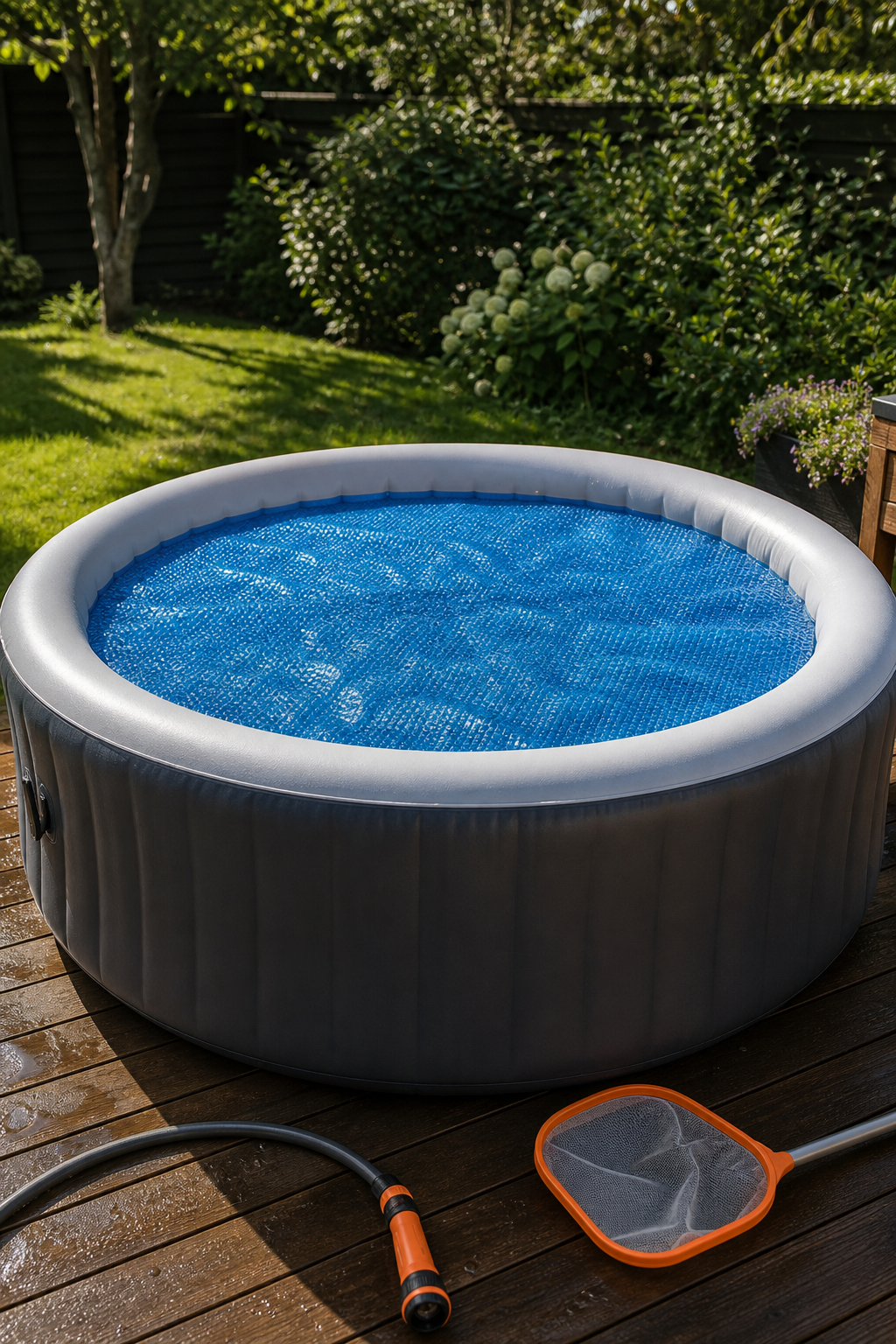
A hot tub solar cover is basically a giant sheet of bubble wrap that floats on your water. It doesn’t heat the water itself, but it traps the sun’s heat and stops evaporation, which is how most heat escapes. The result is warmer water, lower energy bills, and fewer chemical adjustments. Here are the best options for 2026, starting with our top pick.
1. Luxury Hot Tubs (Our Top Pick) , Premium Solar Covers for Desert Spas
If you own a high-end spa in a place like Palm Desert or Indian Wells, you need a cover that can handle extreme heat and mineral-heavy water. Luxury Hot Tubs, the Coachella Valley’s authorized Caldera dealer, offers premium-grade solar blankets that are UV stabilized and built to last in desert conditions. They pair each cover with expert advice on sizing and reel systems to minimize handling hassle. For a complete energy-saving strategy, pair your cover with the tips in our hot tub energy efficiency guide. The caveat: these covers are not cheap, but the longevity and performance justify the cost for serious spa owners.
2. Budget 8 mil Solar Cover , Best Budget Option
A lightweight, 8-mil-thick solar cover costs around $45 for a 5-foot round. It’s a no-frills entry point: the blue bubble design absorbs solar energy and reduces evaporation by up to 95%. It’s easy to trim with scissors and light enough to handle without a reel. Who it’s for: anyone on a tight budget who just wants to cut heating costs. But don’t expect it to last more than a couple of seasons, thin covers degrade faster under UV exposure and the bubbles can pop over time.
3. Blue Wave 12 mil Solar Blanket , Best Durability
Blue Wave’s 12-mil blanket is a step up in toughness. It’s made from fade-resistant polyethylene and comes with a 5-year limited warranty. The thicker material resists tearing and holds up better against sharp objects and chemical exposure. Best for owners who leave their cover on most of the time and don’t want to replace it every year. The downside: it’s heavier, so you’ll want a reel system to make removal manageable.
4. Solar Cover Reel System , Easiest Handling
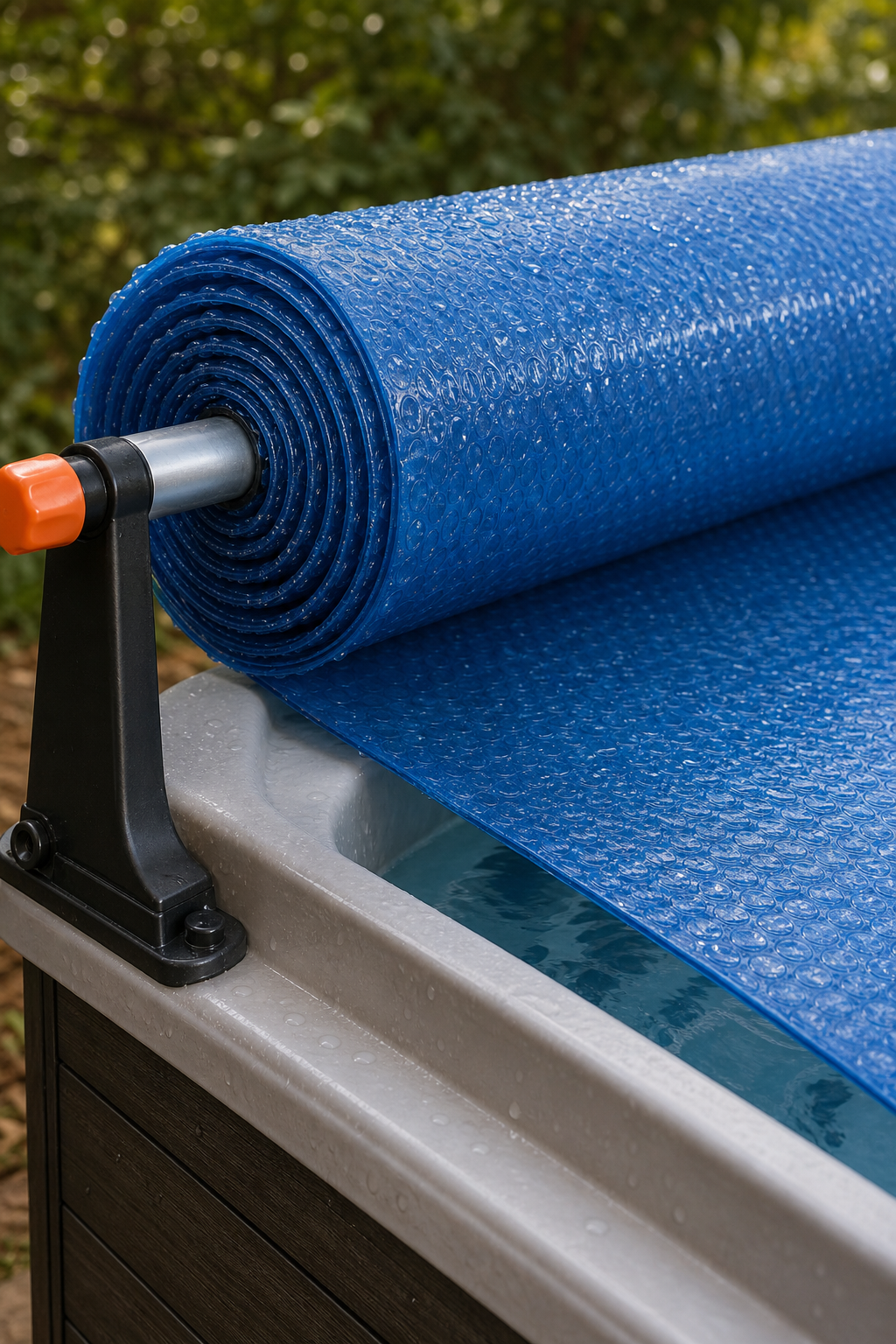
A solar cover only works if you use it, and struggling with a wet, heavy blanket is a pain. Solar cover reels mount to your pool deck or spa rim and let one person roll the cover on and off in seconds. The systems use smooth bearings and heavy-duty aluminum frames. The Cover Guy, a major reel distributor, says proper storage with a reel can double the life of your cover by preventing tears and sun damage. This is the upgrade to buy after you get a cover, it’s not a cover itself, but it makes any solar blanket far more usable.
5. 10-mil Round Solar Cover, Best for Round Tubs
Some manufacturers make a 10-mil round cover that fits standard spa shapes without needing to trim. It’s thick enough to provide decent insulation but still flexible enough to fold or roll by hand. The bubbles are UV-resistant, and the cover includes a 7-year warranty. It’s a strong middle-ground choice for round-tub owners who want a balance of price, durability, and ease of use. Just note that no R-value is published, so you can’t compare thermal performance directly.
6. Solar Cover Reel with Wheels , Convenient Storage
If your spa sits on a deck or patio, a reel with wheels lets you move the rolled cover out of the way when not in use. These units typically have telescoping poles that adjust to fit your tub’s width and lock in place. The wheels are large enough to roll over uneven ground. Using a reel can extend cover life by reducing creases and sun exposure when stored. This is the best option if you hate wrestling with a wet cover. The trade-off is that the reel takes up storage space when not in use.
7. Thick 16-mil Solar Cover for Maximum Insulation
A 16-mil cover is among the thickest available. More material means better heat retention and longer lifespan. The blue color absorbs solar energy while the thick bubbles trap heat. The cover is made of durable polyethylene and is available in rectangular sizes for above-ground and in-ground spas. The catch: it’s heavy and requires a strong reel or multiple people to handle. Best for owners in cooler climates who want maximum insulation.
8. Liquid Solar Cover by Natural Chemistry , Chemical Alternative
Liquid solar covers are a chemical that spreads a microscopically thin layer on the water surface to reduce evaporation. Natural Chemistry’s product is one of the most popular. It won’t raise water temperature like a blanket, but it cuts evaporation by about 30-50% and is invisible. It’s applied weekly and works best when the filter is off at night. It’s a good supplement if you can’t use a blanket (e.g., oddly shaped tub) or want extra chemical savings. The downside: it doesn’t keep out debris, doesn’t provide the same temperature boost, and can be finicky with water chemistry.
9. Floating Solar Discs
Floating solar discs are individual discs that you scatter on the water. Each disc has a bubble top that traps heat and reduces evaporation. They’re easy to install and remove, and you can leave them on while using the spa. They’re cheaper than a full blanket. But because they don’t cover the entire surface, gaps allow heat and water to escape. They’re best as a temporary or partial solution, like for inflatable spas or to supplement a full cover. The effectiveness is lower than a blanket, but the convenience is higher.
10. DIY Solar Cover with Tarp , Budget Homemade Option
If you’re handy and cheap, you can build your own solar cover for under $50. The idea: sandwich a layer of reflective insulation (like the foam used for coolers) inside a waterproof tarp, then staple wooden slats to the top to keep it flat and allow rolling. It’s not as effective as a real solar blanket, the bubbles are what trap heat, but it will reduce evaporation significantly. The main drawbacks: it’s bulky, doesn’t seal as well, and takes time to build. Only try this if you’re on an extreme budget or enjoy the project.
Quick Comparison: Top Hot Tub Solar Covers
Here’s a side-by-side look at the key specs for the most popular options. Keep in mind that no manufacturer publishes an R-value, so thickness and warranty are your best proxies for quality.
The average warranty across our research sample was 8.5 years, but that includes a few outliers. Thicker covers generally last longer, but handling becomes harder. Choose based on your climate and how much effort you’re willing to put in.
Frequently Asked Questions
Do hot tub solar covers really work?
Yes. Solar covers reduce evaporation by up to 95%, which is the main way heat escapes. By trapping the sun’s warmth and preventing water loss, they can raise water temperature by 10, 15°F without any heater. They also conserve chemicals and keep debris out.
Which side of the solar cover goes down?
The bubble side should face down toward the water. The bubbles create an insulating layer of trapped air that transfers heat to the water. Facing the bubbles up exposes them to UV and reduces effectiveness.
How long does a hot tub solar cover last?
Depending on thickness and care, most solar covers last 2, 5 years. A 16-mil cover can last up to 5 years, while an 8-mil may need replacement after 2, 3 years. Using a reel to store it out of the sun when not in use can extend life. Imbalanced water chemistry is a common cause of early failure.
Can I use a solar cover in winter?
Yes, but the primary benefit shifts from heating to insulation. The cover reduces heat loss overnight, especially if paired with a hard cover on top. In snowy areas, brush snow off to prevent the foam from cracking. A vapor barrier tarp underneath can also help.
What’s the difference between a solar cover and a regular hot tub cover?
A regular hot tub cover is a thick, insulated hard cover that sits on top of the spa rim. A solar cover is a thin, flexible blanket that floats directly on the water. Many people use both: the solar cover for daytime heating, and the hard cover for maximum insulation at night.
Do I need a reel for my solar cover?
Not strictly, but it makes handling much easier. Thicker covers are heavy when wet and can be a hassle to remove alone. A reel system pays for itself by saving time and reducing wear and tear on the cover. For covers 12 mil and above, we recommend one.
Conclusion
If you want the best balance of performance and longevity, go with a 12-mil or thicker cover from a reputable brand. Luxury Hot Tubs offers premium options and expert support for desert homeowners. For everyone else, an 8-mil solar cover is a fine entry point, just be ready to replace it sooner. Whichever you pick, use a reel to make daily use painless.